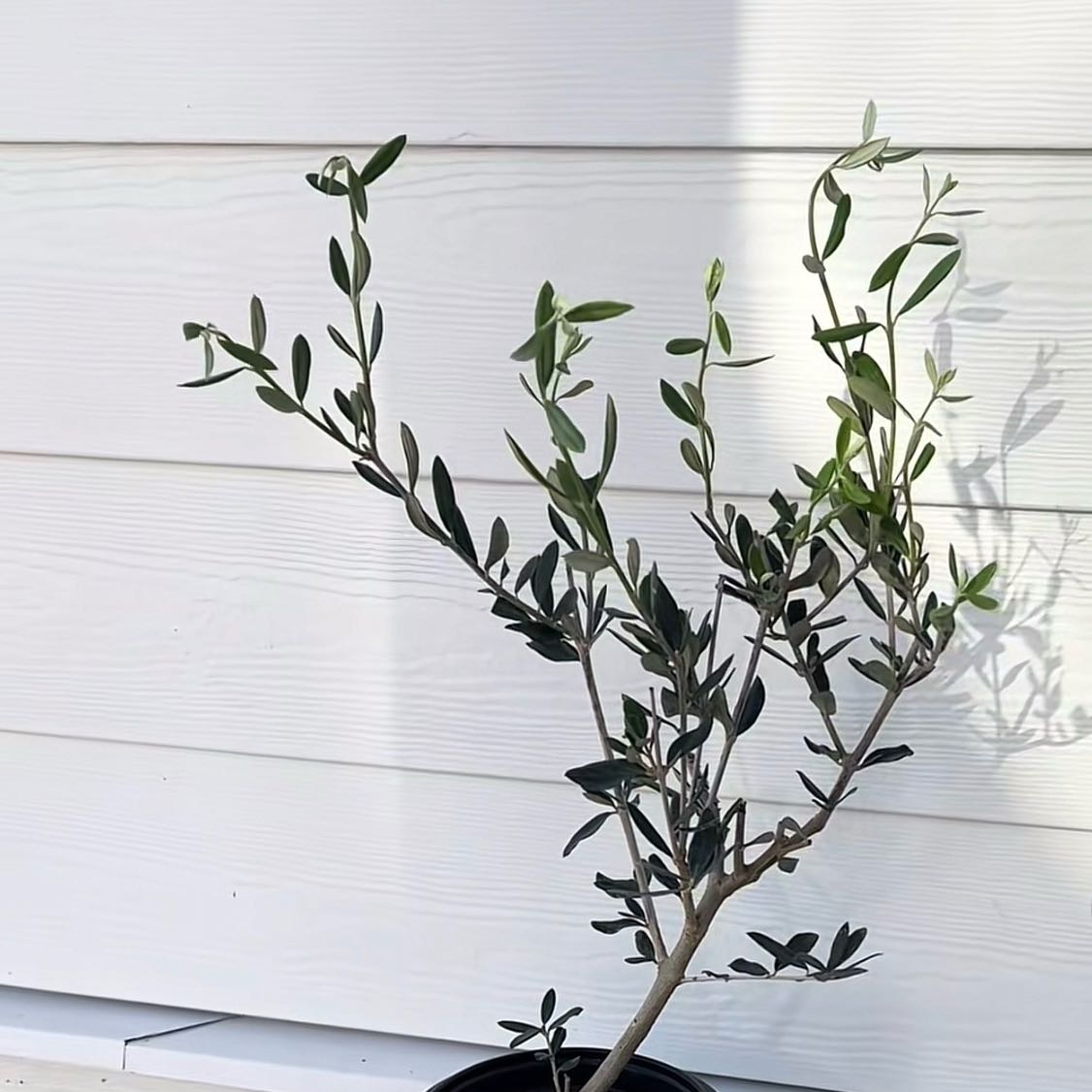
How to Water an Olive Tree
Olea europaea
Reviewed by Kiersten Rankel M.S.
Quick Answer
Water your olive tree deeply every 7 to 14 days when the top 2 inches of soil are dry. Stretch to every 3 to 4 weeks in winter when growth slows. Olives evolved on dry rocky hillsides and rot fast when their roots stay wet.
Soak the rootball completely, then wait until the soil is genuinely dry through the top third before the next drink. Frequent shallow watering is the most common olive tree killer.

Stay on top of plant care
Get seasonal reminders for watering and fertilizing — personalized for your plants.
How Often and How Much to Water
Adjust the sliders below for your pot size, light, and setting. The numbers assume a gritty fast-draining mix and a pot or site with drainage.
Setting
Every
9days
Use
1cup
Your Watering Rhythm Across the Year
Soil dries faster in the growing season, which varies by region. Slow down watering in the off-season to avoid overwatering.
Pacific
Mountain
Midwest
Northeast
Southeast
JFMAMJJASOND
Growing season
Growing season
9days
Resting season
3–4weeks
How to Water Your Olive Tree
Soak deeply, then leave it alone. The steps below load up the rootball without trapping water around the trunk.
1
Water at the base of the trunk in the morning so the soak reaches the root zone before the day heats up.
2
Pour slowly until water runs out the drainage holes — olives need a real soak, not a sip.
3
Empty the saucer within 15 minutes. Standing water at the base is the leading cause of root rot in potted olives.
Should You Water Your Olive Tree Today?
Olive trees would rather be too dry than too wet. When in doubt, wait another day and check the soil instead of watering on a schedule.
Hold off
Top 2 inches of soil are slightly cool and damp
Leaves are silvery-green and full of water
Pot feels heavy
Soil sits tight against the pot wall
Branches feel pliable rather than brittle
Ready for water
Top 2 inches of soil are dry
Leaves feel soft, or curl lengthwise along the midrib
Pot feels light
Visible gap between soil and pot wall
Older inside leaves start to drop
If Something Looks Off
Olive trees show distress slowly. By the time leaves yellow or drop, the issue has been building for weeks. Check the soil first to know what kind of stress you are looking at.
Underwatered
Soil
Powder-dry through the pot, pulled from the wall
Stem
Young branches feel brittle and dry
Leaves
Curl lengthwise along the midrib and feel papery, sometimes turning gray
Pace
Inside leaves drop first as decline builds
Next steps
Set the pot in a basin of room-temperature water for 30 minutes so the rootball rehydrates evenly
Drain fully and move out of direct sun for a few days
Resume the deep-soak rhythm — do not overcorrect with extra water
Overwatered
Soil
Stays wet for a week or more, sometimes with mossy growth on top
Stem
Soft or darkening at the soil line, sometimes with a sour smell
Leaves
Yellow and drop in clusters, especially older leaves on the inside of the tree
Pace
Steady decline that worsens even after you stop watering
Next steps
Stop watering until the top half of the rootball is bone-dry, even if that takes 2 to 3 weeks
Move to the brightest spot you have to speed up evaporation
Slip the tree out. Trim any dark mushy roots back to firm pale tissue and repot in fresh gritty mix
Resume watering only when the top 2 inches of fresh soil are dry. Olives recover from drought far better than rot
Got More Questions?
How long should I wait to water after repotting an olive tree?
Water deeply right after repotting to settle the new soil around the roots.
Then wait at least 7 to 10 days before the next watering. Olives push new roots faster into slightly drier soil.
Do indoor olive trees need different watering than outdoor ones?
Yes. Indoor olives dry slower and rarely get the same airflow, so they need less frequent watering than the same tree outside.
Let the top 2 to 3 inches of the rootball dry between waterings indoors. Bright direct sun and a fan or open window dramatically improve survival.
Can I let my olive tree dry out completely?
Yes, briefly. Mature olives tolerate the rootball drying through and bounce back from a deep soak.
Long dry stretches in active growth can stunt leaves and slow new shoots, so do not lean on it as a strategy. Aim for the top third of the soil dry before each watering.
Why are my olive leaves yellow and dropping?
In a potted olive, yellowing and dropping is almost always overwatering. The roots cannot get oxygen and start dying back.
Let the soil dry completely and check the roots. If they are firm and pale, the tree will recover with a longer wet to dry cycle. Mushy dark roots need a repot into fresh gritty mix.
Should I water differently if my olive is fruiting?
A little. Olives need consistent moisture during flowering and early fruit set, then less water as fruits mature.
Missed waterings during flowering cause flower and tiny-fruit drop. Once fruits are sized up, the tree handles longer dry stretches without losing the crop.
My olive tree is losing leaves indoors in winter. Help?
Some leaf drop is normal. Olives are evergreen but shed older interior leaves in dim winter conditions.
Water less in winter — the rootball stays wet much longer when growth slows. Move closer to the brightest window you have and avoid heating vents that dry the canopy without warming the soil.
Stay on top of plant care
Get seasonal reminders for watering and fertilizing — personalized for your plants.
About This Article

Kiersten Rankel M.S.
Botanical Data Lead at Greg · Plant Scientist
Editorial Process
Watering guidance verified against Olea europaea growth data from Greg's botanical database, cross-referenced with USDA hardiness zone data and published horticultural research.
6,847+ Greg users growing this plant
USDA hardiness zones 8a–11b