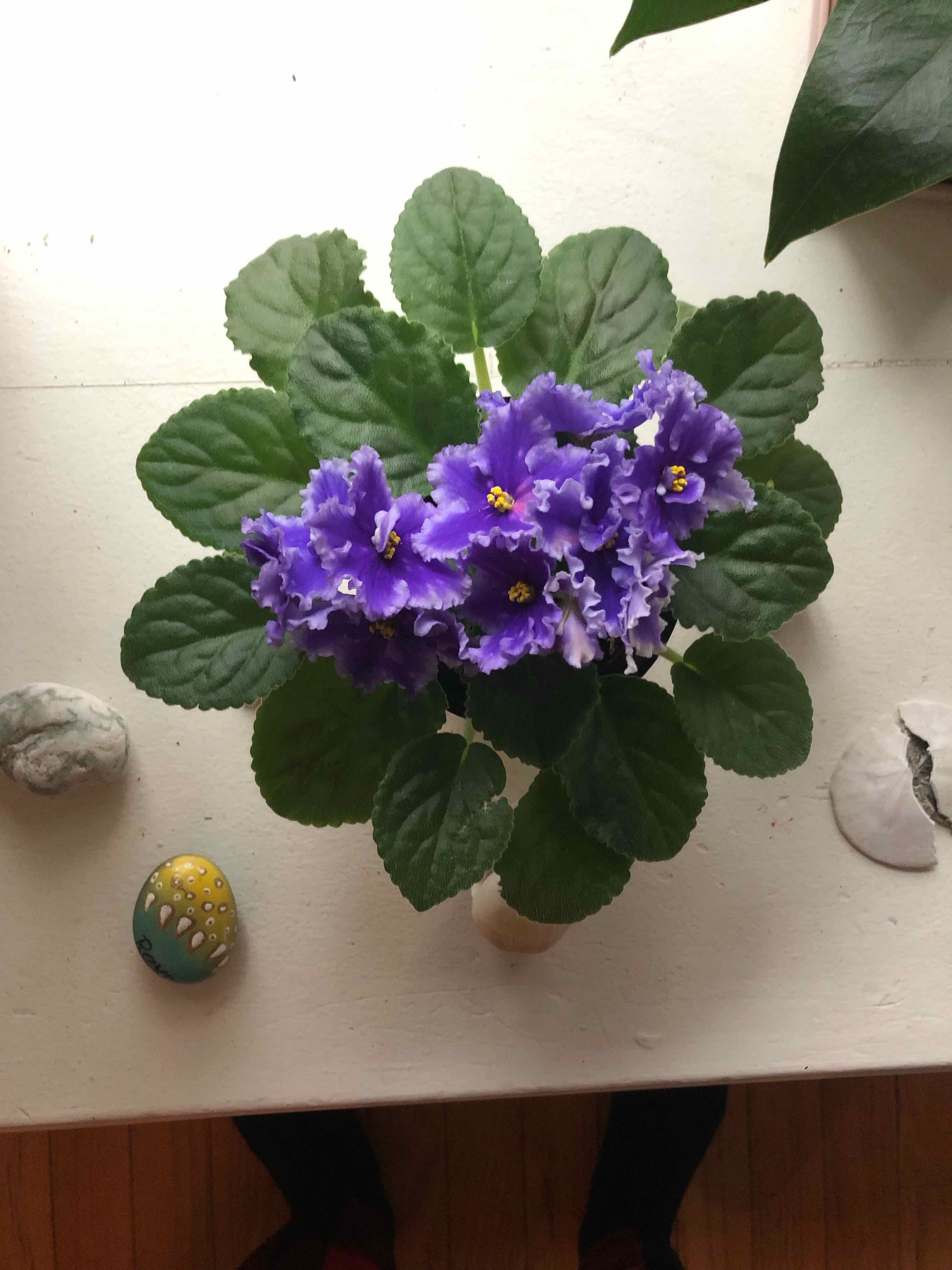
What's Wrong with My African Violet?

Common African Violet Problems
Not flowering
African Violets bloom almost year-round when light is right, but they need bright indirect light to power that continuous flowering. In low-light spots the plant stays alive but channels energy into leaves only, and flower buds stall before they open.
African Violets are native to the cool highlands of Tanzania and are sensitive to temperature swings. Drafts from air conditioning vents, cold windows, or sudden temperature drops below 60°F (15°C) trigger the plant to stop budding and hold its energy in reserve.
Overfeeding African Violets with a high-nitrogen fertilizer pushes lush, dark leaf growth at the expense of flowers. The plant has plenty of energy but redirects it to foliage rather than blooms.
Ring spots on leaves
African Violet leaves are covered in fine hairs that trap cold water droplets against the leaf surface. Cold water causes the cells underneath to contract suddenly, rupturing them and leaving the distinctive pale or brown ring. The damage is permanent and specific to this species because of those hairs.
Wrinkled leaves
When the soil dries out completely, African Violet's thin leaves lose their turgor and go limp and wrinkled. The leaves feel papery and dry rather than soft and wet, and the whole plant droops evenly rather than collapsing from the center.
African Violet's growing point sits at the very center of the rosette right at soil level. When water pools there, it rots the crown and the inner leaves collapse, turning soft and mushy from the center outward. Unlike drought wrinkle, the leaves feel wet and slimy rather than papery and dry.
Yellow leaf edges
African Violet leaves are thin and have almost no insulation against cold. Leaf tissue near a cold window pane or in the path of an AC vent yellows at the edges first, where the cold hits hardest. The damage often shows up on one side of the plant facing the cold source.
African Violets want bright light but their leaves bleach and yellow at the edges when direct sun hits them. The outer leaves and the side facing the window take the damage first.
Leaf spots
African Violet's fuzzy leaves trap moisture when watered overhead or misted, and that trapped moisture creates ideal conditions for fungal growth. Spots appear as tan or brown patches with a darker border, often where water sat longest near the center of the rosette.
Pests
Cyclamen mites are the classic African Violet pest and almost invisible to the naked eye. They congregate in the growing crown where conditions are humid and tight, stunting new leaves, causing them to curl inward and look stunted or gnarled. New growth coming out deformed at the center is the giveaway.
White cottony clumps tucked into leaf axils and along the petioles where the fuzzy leaf stems meet the crown. African Violet's dense rosette and fuzzy texture give mealybugs plenty of shelter, so infestations build up in the crown before they are noticed.
Preventing African Violet Problems
About This Article
