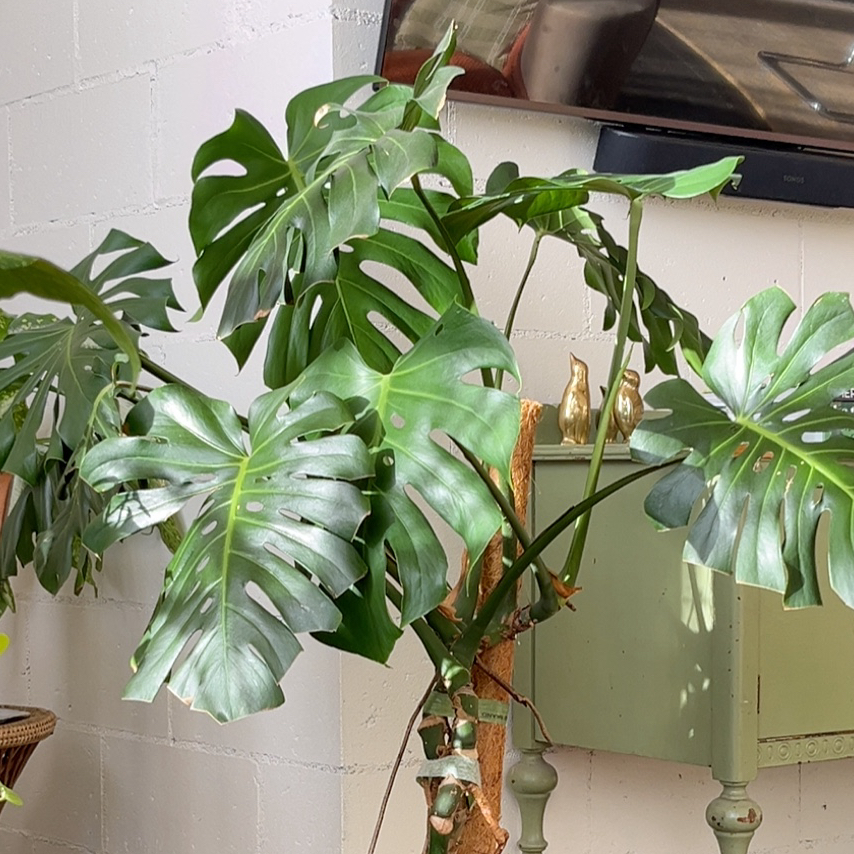
Monstera

Best Pot for Monstera

Monstera deliciosa
Reviewed by Kiersten Rankel M.S.
Quick Answer
Unglazed ceramic or wood pots work best for Monstera because they let excess moisture escape through the walls, reducing root rot risk. Start with a pot 2 inches wider than the root ball, and size up gradually as the plant grows. Drainage holes are non-negotiable for this plant.

What Size Pot Does a Monstera Need?

Monstera has a climbing, spreading root system that appreciates room to expand but doesn't need a giant pot from the start. A pot 2 inches wider than the current root ball is the right move each time you repot.

Going too large is a common mistake. A big pot holds more soil than the roots can drink, and that wet soil invites rot. Monsteras can handle some drought between waterings, so it's better to err on the snug side.

As a climbing epiphyte, Monstera roots also benefit from support. If you use a moss pole or stake, factor that into your pot choice so there's enough soil depth to anchor it securely.

Seedling or cutting (under 6 in tall) 4โ€“6" pot
Young plant (6 in to 2 ft tall) 8โ€“10" pot
Established plant (2โ€“4 ft tall) 12โ€“14" pot
Mature specimen (4+ ft tall) 16โ€“20" pot

What Material Pot Is Best for Monstera?

In the wild, Monstera clings to trees and sends aerial roots downward into loose, fast-draining forest soil. Its roots need steady access to moisture without ever sitting in water, and they benefit from a container that breathes a little so the soil dries out between waterings.

Because it grows quickly and develops a chunky root system, it appreciates a pot that holds enough soil to buffer moisture swings without becoming waterlogged. Good drainage at the bottom is essential.

Dries fastest → Slowest
Best for Monstera
Fabric
You'll water more often, but the extra airflow keeps roots healthy.
Unglazed Ceramic
Porous walls help prevent overwatering between drinks.
Wood
Breathable and naturally insulating. A solid everyday pick.
Glazed Ceramic
Holds moisture a bit longer, which Monstera handles easily.
Plastic
Lightweight and works perfectly. Most Monsteras live in plastic.
Metal
Fine indoors. If it's on a sunny patio, keep it out of direct afternoon sun.

Monstera's thick, fleshy roots store some moisture on their own, so the pot material matters less than it does for thirstier plants. Fabric and unglazed ceramic let the soil dry out between waterings, which mimics the fast-draining forest floor where Monstera grows naturally.

Wood and glazed ceramic hold moisture a bit longer, giving those big leaves a steady supply without staying soggy. Plastic is lightweight and easy to move when you're chasing light around the house.

Metal works fine indoors, but skip it on a sunny patio. Monstera's shallow roots sit close to the pot walls where heat builds up fast.

Stay on top of plant care
Get seasonal reminders for watering and fertilizing โ€” personalized for your plants.
Try Greg Free

Does My Monstera Need Drainage Holes?

Yes, always. Monstera roots are prone to rot when they sit in standing water, and without a drainage hole there's no way for excess water to escape after you water. Even a single good watering can saturate the bottom of a pot with no drainage, and that moisture lingers for days.

If you love a pot without a hole, use it as a cachepot. Drop a plain nursery pot with holes inside, and pour off any collected water after each watering. That way you get the look without the rot risk.

When Should I Repot My Monstera?

Monstera is a moderate-to-fast grower, so plan on repotting every 1โ€“2 years when kept in good light. Spring is the best time because the plant is entering its active growing season and will recover quickly.

When you repot, move up just one pot size (2 inches wider). This keeps the soil-to-root ratio manageable and prevents the soil from staying wet too long. Shake off old soil gently and inspect roots, trimming any that are brown and mushy before replanting.

If your Monstera has been in the same pot for more than two years and growth has slowed noticeably, that's a good sign it's ready for a new home even if you don't see roots escaping yet.

Signs It's Time to Repot
Roots growing out of drainage holes
Roots circling visibly at the soil surface
Water runs straight through without being absorbed
Growth has slowed despite good light and regular feeding
Pot tips over easily from top-heavy foliage

Can I Keep My Monstera in a Pot Its Whole Life?

Absolutely. Most Monsteras spend their entire life in a container and do just fine. The key is sizing up the pot every 1 to 2 years as the root system expands. A healthy Monstera in a 14-inch pot can live for decades indoors.

If you are in zones 10a-12b, you can move your potted Monstera outdoors in summer to a shaded patio. Bring it back inside before nighttime temperatures drop below 50ยฐF. The pot makes this seasonal shuffle easy, which is one advantage over planting in the ground.

Got More Questions?

Can I grow Monstera in a pot without drainage holes?
It's risky. Monstera roots rot quickly in standing water, so a pot without drainage makes it very hard to avoid overwatering. If you love the look of a pot without holes, nest the plant's nursery pot inside it and pour off any water that collects at the bottom.
How do I know if my Monstera pot is too big?
If the soil stays wet for more than 10 days after watering, the pot is probably too large for the root system. Look for yellowing lower leaves and a sour smell from the soil as early warning signs.
Should I use a terracotta pot for Monstera?
Yes, terracotta (unglazed ceramic) is a great choice. It wicks moisture away from the roots gradually, which suits Monstera's preference for moist but not waterlogged soil. Just be prepared to water a bit more frequently than you would with plastic.
Can I put a moss pole in any pot?
You can, but make sure the pot is wide enough to anchor the pole without crowding the roots. A pot that's 10 inches or wider usually provides enough stability for a standard moss pole.
Does pot color matter for Monstera indoors?
Not for the plant's health. Dark pots absorb slightly more heat, which can matter in a sunny window, but for a typical indoor setup the material matters far more than the color.
Stay on top of plant care
Get seasonal reminders for watering and fertilizing โ€” personalized for your plants.
Try Greg Free

About This Article

Kiersten Rankel M.S.
Botanical Data Lead at Greg ยท Plant Scientist
About the Author
Kiersten Rankel holds an M.S. in Ecology & Evolutionary Biology from Tulane University. A certified Louisiana Master Naturalist, she has over a decade of experience in science communication, with research spanning corals, cypress trees, marsh grasses, and more. At Greg, she curates species data and verifies care recommendations against botanical research.
See Kiersten Rankel's full background on LinkedIn.
Editorial Process
Container guidance verified against Monstera deliciosa growth data from Greg's botanical database, cross-referenced with USDA hardiness zone data and published horticultural research.
77,751+ Greg users growing this plant
USDA hardiness zones 10aโ€“12b