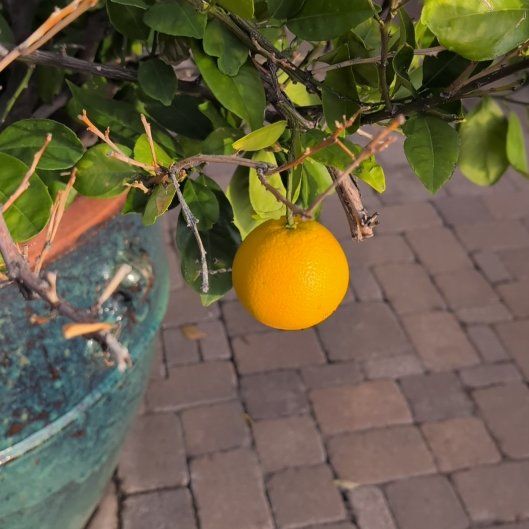
An unglazed ceramic or wooden pot with excellent drainage is ideal for a Meyer Lemon Tree. Start with a pot 2-3 inches wider than the nursery container and size up gradually. Good drainage is essential because citrus roots rot quickly in soggy soil.
What Size Pot Does a Meyer Lemon Tree Need?
Meyer Lemon Tree has a branching root system that needs room to spread but should not sit in excess wet soil. Start with a pot about 2-3 inches wider and deeper than the nursery container.
Size up gradually, moving to the next pot size every 1-2 years. A mature indoor Meyer Lemon will typically end up in a 16-20 inch pot. Going too big too fast leaves wet soil around the edges where roots have not yet reached.
If the tree dries out quickly between waterings, drops fruit, or seems stunted despite good light and feeding, it has likely outgrown its pot.
Young tree (under 2 ft)10–12" pot
Growing tree (2–4 ft)14–16" pot
Mature container tree (4–6 ft)18–20" pot
Large specimen (6+ ft)22–24" pot
What Material Pot Is Best for Meyer Lemon Tree?
Citrus roots need well-aerated soil that dries out evenly between waterings. They are prone to root rot in stagnant, wet conditions, so breathable pot materials that allow some moisture to escape through the walls give the roots a healthier environment.
Since Meyer Lemon Trees often spend summers outdoors in full sun, the pot also needs to handle heat without baking the roots. Weight is a practical bonus, keeping the tree stable in wind.
Dries fastest → Slowest
Best for Meyer Lemon Tree
Fabric
Excellent root aeration and prevents circling. Just water more frequently since it dries out fast in summer.
Unglazed Ceramic
The top pick for citrus. Breathable, heavy for stability, and keeps roots cool in warm weather.
Wood
Half-barrels are a classic citrus container. Line the inside with plastic to slow wood decay from frequent watering.
Glazed Ceramic
Works well with a fast-draining citrus soil mix. The extra moisture retention means watering slightly less often.
Plastic
Affordable and lightweight for moving indoors seasonally. Avoid dark colors that absorb heat in direct sun.
MetalOVERHEATS
Gets dangerously hot in direct sun, which cooks surface roots. Only suitable if the tree stays fully indoors.
Citrus trees grow best in pots that drain well and let air reach the roots. Unglazed ceramic is the classic pick for Meyer Lemons because it breathes, stays cool, and adds enough weight to keep a top-heavy tree from tipping.
Fabric and wood containers also work nicely, though fabric will need more frequent watering in summer. Plastic is the lightest option, which is a real advantage if you move your tree indoors for winter.
Steer clear of metal outdoors. It absorbs heat quickly in the sun and can cook the fine feeder roots along the pot walls.
Stay on top of plant care
Get seasonal reminders for watering and fertilizing — personalized for your plants.
Yes, drainage is non-negotiable for citrus. Meyer Lemon roots are highly susceptible to root rot, and even a few days of standing water can cause irreversible damage. Every pot must have at least one large drainage hole, and bigger pots benefit from several.
Elevate the pot on feet or a rolling stand so water flows freely from the bottom. This also makes it easier to move the tree indoors for winter if you live outside its hardy range.
When Should I Repot My Meyer Lemon Tree?
Young Meyer Lemon Trees grow steadily and benefit from repotting every 1-2 years. Once the tree reaches a 18-20 inch pot, you can slow to every 3-4 years. The best time to repot is late winter or early spring, before the spring growth flush.
When repotting, gently loosen the outer roots and trim any that are circling tightly. Set the tree at the same depth, making sure the graft union stays above the soil line. Water deeply with a dilute fertilizer solution after repotting.
For large trees, replace the top 3-4 inches of soil each spring instead of full repotting. This refreshes nutrients without disturbing the root system.
Signs It's Time to Repot
Roots growing out of drainage holes
Water runs straight through without soaking the soil
Fruit drops prematurely despite adequate light
Yellowing leaves that do not respond to fertilizer
Tree dries out within a day of thorough watering
When Can I Plant My Meyer Lemon Tree in the Ground?
Meyer Lemon can go in the ground year-round in USDA zones 9a through 11b. It is more cold-tolerant than most citrus, handling brief dips to around 28F, but sustained freezes will damage or kill it. Plant in a sunny, sheltered spot with well-drained soil.
In zones 8 and cooler, keep your Meyer Lemon in a container and bring it indoors when nighttime temperatures consistently drop below 40F. Many growers move the tree to a sunny window or enclosed porch for winter. The transition between indoor and outdoor living is much easier with a pot on a wheeled stand.
Got More Questions?
Can I use a pot without drainage holes for a Meyer Lemon Tree?
No. Citrus roots rot very quickly in waterlogged soil. Always use a pot with drainage holes, and elevate it so water exits freely.
How do I know if my Meyer Lemon Tree's pot is too big?
If the soil around the edges stays wet for more than a week, the pot is oversized. Wet soil the roots have not reached invites fungal problems. Size up gradually, 2-3 inches at a time.
Should I keep the graft union above the soil when repotting?
Yes. The graft union, the bumpy area near the base of the trunk, must stay above the soil line. Burying it can cause the rootstock to send up shoots that do not produce good fruit.
Can I grow a Meyer Lemon Tree in a self-watering pot?
Self-watering pots can keep the soil too consistently wet for citrus. If you use one, make sure it has an overflow drain and let the reservoir dry out between refills.
How do I move a large potted Meyer Lemon indoors for winter?
Use a wheeled plant caddy under the pot. Before bringing it inside, check for pests and acclimate the tree to lower light gradually over a week. Place it near your brightest window indoors.
Stay on top of plant care
Get seasonal reminders for watering and fertilizing — personalized for your plants.
Kiersten Rankel holds an M.S. in Ecology & Evolutionary Biology from Tulane University. A certified Louisiana Master Naturalist, she has over a decade of experience in science communication, with research spanning corals, cypress trees, marsh grasses, and more. At Greg, she curates species data and verifies care recommendations against botanical research.
See Kiersten Rankel's full background on LinkedIn.
Editorial Process
Container guidance verified against Citrus x limon 'Meyer' growth data from Greg's botanical database, cross-referenced with USDA hardiness zone data and published horticultural research.