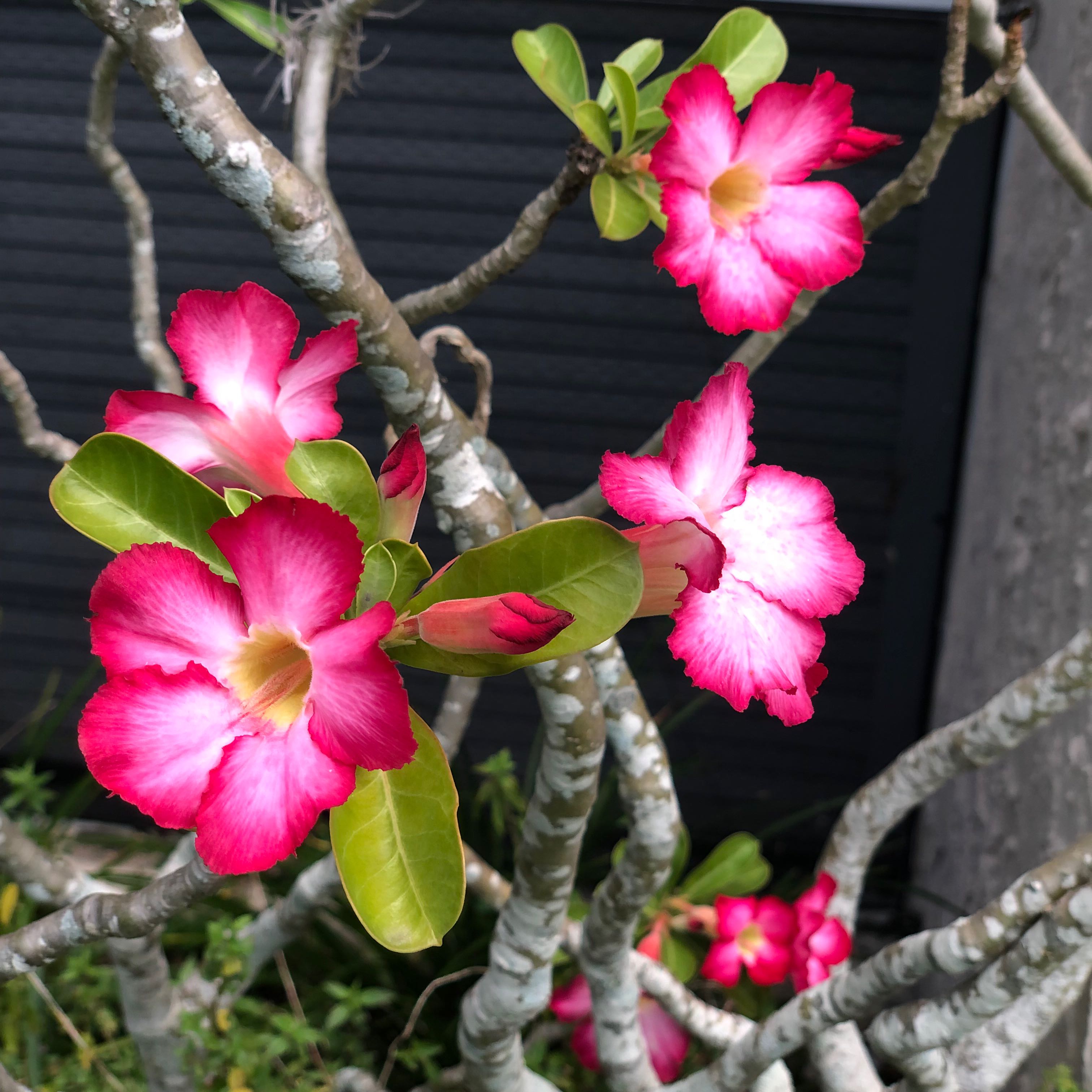
A shallow, wide terracotta or unglazed ceramic pot is ideal for a Desert Rose because it dries quickly and prevents root rot around the moisture-sensitive caudex. Pick a pot only slightly wider than the swollen trunk base. Generous drainage holes are absolutely essential.
What Size Pot Does a Desert Rose Need?
Desert Rose plants have a thick, swollen base (called a caudex) with relatively sparse roots fanning out beneath it. The pot should be just wide enough to fit the caudex with about an inch of space around it. A shallow pot works better than a deep one.
Many growers choose a pot that looks almost too small. This is intentional. A snug fit keeps soil volume low, so it dries fast, and it shows off the sculptural trunk that makes this plant so striking.
When sizing up, go just 1-2 inches wider. Desert Roses can eventually reach 3 feet tall and wide, but they grow slowly and don't need a lot of root room to thrive.
Seedling (under 6 in)3–4" pot
Young plant (6–12 in)5–6" pot
Established plant (1–2 ft)8–10" pot
Mature plant (2–3 ft)12–14" pot
What Material Pot Is Best for Desert Rose?
Desert Rose roots and caudex are adapted to arid conditions and store their own water reserves. They are extremely sensitive to moisture sitting around the base, which quickly leads to caudex rot. The pot material needs to dry out fast and allow air to reach the roots.
Because Desert Roses are often placed in full sun outdoors during the growing season, thermal properties matter too. A pot with some thermal mass keeps root temperatures more stable during hot afternoons.
Dries fastest → Slowest
Best for Desert Rose Plant
Fabric
Dries very fast, which Desert Roses love, though you'll water more often in summer.
Unglazed Ceramic
The top choice for Desert Rose, offering fast drying, stability, and a classic look that complements the caudex.
Wood
Breathable and insulating, a solid option as long as it has drainage holes.
Glazed Ceramic
Can work if you water carefully, but the slower drying demands more attention.
PlasticTOO SLOW
Retains too much moisture for this desert species, making caudex rot a real risk.
MetalOVERHEATS
Overheats rapidly in the direct sun Desert Roses need, cooking the shallow roots.
Desert Rose stores water in its swollen base (called a caudex), so it needs soil that dries fast and a pot that helps that happen. Unglazed ceramic is the top choice, offering quick drying, stability, and a look that shows off the caudex beautifully.
Avoid plastic and metal for this plant. Plastic holds too much moisture and puts the caudex at risk of rot. Metal overheats in the direct sun Desert Roses need, cooking shallow roots on hot afternoons.
Stay on top of plant care
Get seasonal reminders for watering and fertilizing — personalized for your plants.
Absolutely, and bigger holes are better. Desert Rose plants are among the most rot-prone houseplants. Without fast-draining soil and generous drainage holes, even one heavy watering can start caudex rot, which is often fatal.
Some growers even elevate their Desert Rose pots on pot feet or a wire rack to improve airflow underneath. If your pot has only one small hole, consider drilling additional ones.
When Should I Repot My Desert Rose?
Desert Roses are slow growers, so repotting every 2-3 years is typical. The best time is in spring, just as the plant breaks dormancy and starts pushing new leaves. Avoid repotting during the winter rest period.
When you repot, let the roots air-dry for a day or two before placing the plant in fresh, fast-draining soil. A cactus mix with extra perlite or pumice works well. Set the caudex at or slightly above the soil line to keep it dry.
Handle the plant carefully. The sap is toxic and can irritate skin, so wear gloves during repotting.
Signs It's Time to Repot
Caudex pressing tightly against the pot rim
Roots circling the bottom with no room to spread
Soil breaking down into a dense, slow-draining mass
Plant rocking in the pot as roots fill all available space
Slower growth than usual despite good light and feeding
When Can I Plant My Desert Rose in the Ground?
Desert Roses are tropical plants hardy only in USDA zones 11a through 12b. In these warm, frost-free climates, you can plant them in the ground in a raised bed or on a slope with extremely well-draining sandy or rocky soil.
Everywhere else, keep your Desert Rose in a container. It thrives outdoors in full sun during summer but must come inside before night temperatures drop below 50F. Many growers keep it in a pot year-round for easy seasonal transitions.
Got More Questions?
Can I use a pot without drainage holes for my Desert Rose?
No. Desert Roses are extremely prone to caudex and root rot. A pot without drainage is a death sentence for this plant. Always use a pot with at least one large drainage hole.
How do I know if my Desert Rose pot is too big?
If the soil stays moist for more than 4-5 days after watering, the pot is too large. The excess wet soil around the caudex invites rot.
Should I expose the caudex above the soil line?
Yes. Planting the caudex slightly above soil level keeps it dry and shows off its sculptural shape. Burying it too deep traps moisture and encourages rot.
Can I use a bonsai pot for my Desert Rose?
Bonsai pots are actually a great choice. They're shallow, have large drainage holes, and complement the Desert Rose's natural bonsai-like form.
Why is my Desert Rose mushy at the base after repotting?
The caudex may have been damaged or stayed too wet. Let it dry out completely, trim any soft tissue back to firm wood, and repot in dry, fast-draining soil.
Stay on top of plant care
Get seasonal reminders for watering and fertilizing — personalized for your plants.
Kiersten Rankel holds an M.S. in Ecology & Evolutionary Biology from Tulane University. A certified Louisiana Master Naturalist, she has over a decade of experience in science communication, with research spanning corals, cypress trees, marsh grasses, and more. At Greg, she curates species data and verifies care recommendations against botanical research.
See Kiersten Rankel's full background on LinkedIn.
Editorial Process
Container guidance verified against Adenium obesum growth data from Greg's botanical database, cross-referenced with USDA hardiness zone data and published horticultural research.