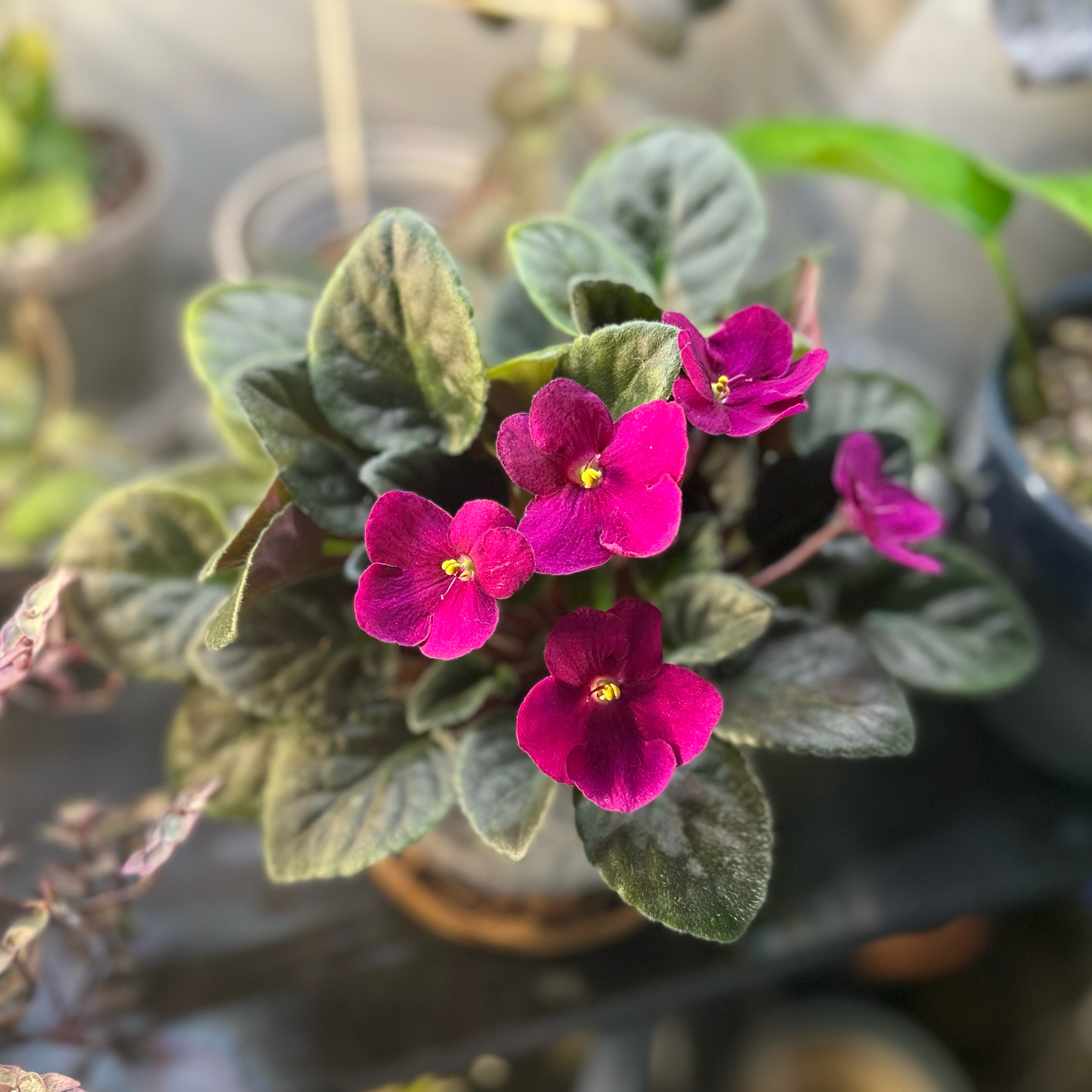
Best Pot for African Violet
What Size Pot Does an African Violet Need?
African Violets grow best when their roots are snug. A good rule of thumb is to use a pot roughly one-third the diameter of the plant's leaf spread. A plant with a 9" spread goes into a 3" pot. This tight fit encourages blooming and prevents excess soil from staying wet around the roots.
When roots start circling the bottom or poke out of the drainage holes, it is time to move up. Go just one pot size larger, typically 1 inch wider. Jumping to a much bigger pot is one of the most common African Violet mistakes, since all that extra damp soil invites rot before the plant can use it.
African Violets have shallow, fibrous roots and grow low and wide rather than deep. A pot that is wider than it is tall works well for them. Specialty African Violet pots, which are shallow with a water reservoir at the base, exist for exactly this reason.
What Material Pot Is Best for African Violet?
African violets have shallow, fibrous roots that stay close to the surface and prefer steady, even moisture without ever sitting wet. Their roots are sensitive to temperature swings, so a pot that holds warmth and regulates moisture slowly suits them well.
Because the rosette grows low and compact, the pot doesn't need to be deep -- just wide enough to let those surface roots spread. Good drainage is essential, but so is a wall that won't wick moisture away too fast and leave roots parched between waterings.
African Violets like their soil consistently moist but never waterlogged. That rules out fabric pots, which dry out so fast you'd be watering every day.
The sweet spot is anything from unglazed ceramic to metal. Glazed ceramic and plastic are the most popular picks because they hold moisture evenly and come in styles that show off those colorful blooms. Unglazed ceramic and wood work too, you'll just water a little more often.
Since African Violets live indoors full-time, metal is perfectly fine here. Just make sure whatever pot you choose has a drainage hole so water doesn't pool at the bottom.

Does My African Violet Need Drainage Holes?
Yes, drainage holes are essential for African Violets. These plants are prone to root rot when water pools at the bottom of the pot, and their small root systems can deteriorate quickly in waterlogged soil. Without a drainage hole, even one slightly heavy watering can cause lasting damage.
Many African Violet growers use bottom-watering, setting the pot in a shallow dish of water for 20 to 30 minutes so the soil draws moisture up from below. This keeps water off the leaves, which prevents unsightly white spots.
Always empty the dish after watering so the pot never sits in standing water for more than an hour.
When Should I Repot My African Violet?
Most African Violets need repotting every 12 to 18 months, though a plant in a very snug pot may need it sooner. Spring is the best time to repot since the plant is entering its active growing period and will recover quickly.
When repotting, move up only one pot size, about 1 inch wider than the current pot. Use a well-draining potting mix formulated for African Violets, or mix standard potting soil with perlite in roughly equal parts.
African Violets develop a bare stem (called the neck) below the lowest leaves as older leaves are removed over time. Burying the neck slightly when repotting keeps the plant looking tidy and gives the roots a fresh start.
Unlike many houseplants, African Violets actually bloom more reliably when slightly rootbound. If your plant is flowering well and roots are not visibly crowding the pot, there is no urgency to repot.
Can I Plant My African Violet in the Ground?
African Violets are hardy only in USDA zones 11a–12b, which covers only the warmest frost-free parts of the United States such as southern Florida, Hawaii, and Puerto Rico. In those areas they can grow outdoors year-round in a shaded, sheltered spot. Everywhere else, they are strictly indoor plants.
Even in eligible zones, most growers keep African Violets in containers permanently. They thrive on the consistent moisture and temperature control that indoor conditions provide, and they are very sensitive to temperature drops below about 60°F. If you bring a potted African Violet outside in summer, keep it in bright shade and bring it back indoors before nighttime temperatures dip.
Got More Questions?
About This Article
