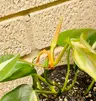
Polygonatum longistylum
Taxonomy

Polygonatum longistylum
Polygonatum
Asparagaceae
Asparagales

How to care for Polygonatum longistylum
How often to water your Polygonatum longistylum

every 9
Polygonatum longistylum needs 0.5 cups of water every 9 when it doesn’t get direct sunlight and is potted in a 5" pot.
Use our water calculator to personalize watering recommendations to your environment or download Greg for more advanced recommendations for all of your plants.
Water 0.5 cups every
9
Finding light for Polygonatum longistylum in your home

a window
Polygonatum longistylum may have difficulty thriving, and will drop leaves 🍃, without ample sunlight.
Place it less than 3 feet from a south-facing window to maximize the potential for growth.
Select your region to see how the current weather in your area affects the placement of Polygonatum longistylum in your home 🏡.
How to fertilize Polygonatum longistylum

Most potting soils come with ample nutrients which plants use to produce new growth.
By the time your plant has depleted the nutrients in its soil it’s likely grown enough to need a larger pot anyway.
To replenish this plant's nutrients, repot your Polygonatum longistylum after it doubles in size or once a year—whichever comes first.
-
#SolomonSeal Update! Finally got to cleaning out the pot (thank you @dreamlettuce) and look at this progress! I’ll see if I can get before pics! #SolomonSealClub #NewGrowth 1. Ss I found in woods 2. VSS @peter1 gave me #plantyplants
-
Soooo, I did something stupid 🥲 I was febreezing my room (which is something I RARELY do) and as a stupid thought I was like “LET ME FEBREEZE MY SOLOMON SEAL! 😄” and then I realized that MAYBE I shouldn’t have done that! I think my plant has gnats and I haven’t had time to treat it (even though I’ve been letting the soil get very dry) which was why I did it and now I’m worried! My plants had been declining and yellowing so I DONT think FEEBREZING IT HELPED! I took this guy from the woods. PLEASE HELP! I think it might not be getting enough light because I don’t know if this corner gets light and I think I took low shade to heart 😅 Any help will be greatly appreciated! 😭 #PlantAddict #WhatTheSuccWednesday #SolomonSealClub #NotSoHappyPlants #NotFreshLeafFriday
-
Oh no, Crispy Boy 🍂 @PlantyPlanter @sarah10orio update on Solomon Seal Rhizome Since I ordered a new one, I’m okay with looking at this one now! Can I save him? The dark part was mushy last night and the soil was between damp and somewhat dry. I believe it’s rotting but the rest of it is healthy! What do I do 🤞🏽✨ #SolomonSealClub #SolomonSeal #kscapedream
-
Goodnight from the besties, Crispy Boy 🍂 & Long Boy 🌱 @sarah10orio Thank you so much for my Crispy Boy. I know USPS shipping took a toll on him, but the name suits him and I already love him just as much as I love Long Boy 🥹💕 bf chose the name and he loves Crispy Boy 😊 #HappyPlants #PlantsMakePeopleHappy #PlantTherapy #PlantsAreFriends #GregGang #PlantMail #PlantShelfie #kscapedream
-
What species is this?
-
#SolomonSealClub ✨ Hi @PlantyPlanter
-
Solomon seals new spot! 🥳🎉 I’ll add the after pic once I get them here! I’m so excited! #SolomonSealClub #PlantCorner
-
OMG OMG OMG!!!! I FOUND THIS BOOK WITH A BUNCH OF INFO ABOUT SOLOMON SEAL!!!! #SolomonSealClub #SolomonSeal @sarah10orio @peter1
-
Ummm help Was gonna to make a normal post and add of picture of the #SolomonSeal @peter1 was so kind to give me and I saw THIS! What is going on??? Apart from that, yesterday I tried to convince my neighbor to “join” the #SolomonSealClub because she was talking to me about her yard and said that she couldn’t grow anything against her wall because it was shady and I was like “can I give you a plant recommendation?” 😂 she said that it would be too much work (even though I tried to tell her that it wouldn’t be) thankfully the neighbor next to her also has a wall! She was really nice though!
-
Is this the right species?? #Polygonatum I added my Variegated #SolomonSeal to my oasis and it’s says it’s Angular Solomon Seal? When I was trying to look through the photos a bunch of the plants definitely weren’t Solomon seal. The  description said “striped” but not variegated. So is this variegated Solomon seal?? #SolomonSealClub @peter1 @sarah10orio @RJG


Care Summary for Polygonatum longistylum
Polygonatum longistylum
 Greg recommends:
 Water
Water
0.5 cups every 9 days
 Placement
< 3ft from a window
 Nutrients
Repot after 2x growth
Based on the 4” pot your plant is in, and that it doesn’t get direct sunlight.
 Trending in your area








 Similar to Polygonatum longistylum
✨ Discover rare plants

Philodendron eximium

Aglaonema 'Green Bowl'

Tuber Fleeceflower

Starfish Snake Plant

Chinese Evergreen 'Go…

Crassula 'Purple Drag…

Hoya kalimantan

Aeonium 'Blushing Bea…

Bonsai Crassula

Rainbow Echeveria

Miss All-American Bea…

Electric Blue Gecko

Echeveria Esther

Milky Widow's Thrill

Ace of Spades
Rosularia platyphylla

Tillandsia caerulea A…