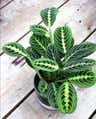
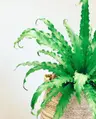
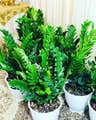
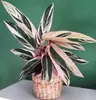
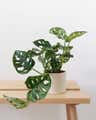
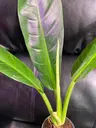
Philodendron mamei
About Philodendron mamei
Philodendrons grow aerial roots that grip the bark of trees, allowing them to grow over 20 feet tall! Their leaves change shape as they climb and can grow larger than a dinner plate. Fossils show Philodendrons growing as far back as 30 million years ago when South America was still connected to Antarctica! ❄️
Taxonomy
Philodendron mamei
Philodendron
Araceae
Alismatales
Also known as
mamei and Blotched Philodendron
How to care for Philodendron mamei
How often to water your Philodendron mamei

every 9
Philodendron mamei needs 0.5 cups of water every 9 when it doesn’t get direct sunlight and is potted in a 5" pot.
Use our water calculator to personalize watering recommendations to your environment or download Greg for more advanced recommendations for all of your plants.
Water 0.5 cups every
9
Finding light for Philodendron mamei in your home

a window
Philodendron mamei may have difficulty thriving, and will drop leaves 🍃, without ample sunlight.
Place it less than 3 feet from a south-facing window to maximize the potential for growth.
Select your region to see how the current weather in your area affects the placement of Philodendron mamei in your home 🏡.
How to fertilize Philodendron mamei

Most potting soils come with ample nutrients which plants use to produce new growth.
By the time your plant has depleted the nutrients in its soil it’s likely grown enough to need a larger pot anyway.
To replenish this plant's nutrients, repot your Philodendron mamei after it doubles in size or once a year—whichever comes first.
-
Philo checkup time! I bought this cutie from target months ago when they were all on sale. She’s been surviving, though not necessarily thriving. Not long after I got her, i was moving her and bumped the newest leaf nearly completely off! Somehow it’s still alive haha. I’m wondering if anyone knows if it’s able to be propagated? I attached a photo below. After that i forgot to water it for a while, and the leaf spike dried up and got all brown. I thought it was the end for growth, but today i noticed two new leaves pushing out of the dried shell of the old spike! I also noticed a little green nub growing from a spot where another leaf had been accidentally broken off prior. Does anyone know if this is also a new leaf? I’ll also attach pictures of the new leaves and third potential leaf. My final question is just if anyone knows what kind of philo she is? I’ve looked it up before but i honestly can’t figure it out. Thank you all so much, and have a wonderful day! 🌿🌿💕 #Philodendron
-
The leaves are leaning downwards now? #Philodendron
-
Absolutely losing my mind over my first leaf that’s larger than my hand! 🤯 I’m so excited to see how big the newest leaf turns out!
-
My tiny tiny baby #PhilodendronMamei arrived on #PlantMail Some humidity (probably) related issues but nothing bigger. It’s so cute! Any tips on care? #HappyPlants #PlantsMakePeopleHappy #PlantAddict #PlantTherapy
-
Leaves look a bit burnt Hi everyone! I got this plant as a gift some weeks ago, and it got its leaves almost immediately looking burnt. It's about 3m away from a big window, what could the problem be? Is it just adapting to the new home? Could it be low humidity? Thank you in advance :)) #philodendron #philodendronmamei #burntleaf
-
I got the PERFECT mug today 🤭💭🌿 That is all 😂 #brunchataudreys #TheWateringHole #happyplants #hoya #Greggers #greggang #newgrowth #prayerplant #hoyahangout #TradescantiaNanouk #CalatheaCorner #AlocasiaAddicts #SucculentSquad #CactusClique #BegoniaBunch #DreamMachine #MonsteraMonday #Philodendron #tipsandtricks #EcoTherapy #crazyplantlady #PlantingOnABudget #PlantsMakePeopleHappy #PlantTherapy #PlantAddict #plantfriendsarethebestfriends #adhdplantlovers #planty101
-
Planty 101 Light, Part 2! ☀️💡 Good evening all my planty friends. 🌿 I am back with science, and Light, Part 2. Light is so important it gets two parts, and I’m just scratching the surface here! ☀️ Let’s just refresh the basics, as I said last time that light is food for plants, I realized not everyone may know the process, which is called photosynthesis. In simple terms, plants need a certain amount of sunlight particles (photons), carbon dioxide and water molecules to be able to make their own food, an energy-rich planty sugar (glucose), and, luckily for us, the by-product of this process is oxygen, which we all need to breathe. So, if you deprive your plant of light, you deprive it of food. Okay! But now there are steps. You can’t just go blasting your plant with direct sunshine when it has had none before (it will burn, even a cactus!), and also the direction that your windows face is important, because there is a different level of intensity from each direction. There are also different levels of light (and intensity of such) throughout the day AND throughout the year. In the Northern Hemisphere, windows (unobstructed) facing: SOUTH: these will have the most and brightest light, with plenty of direct sun NORTH: these will have zero direct sun, and the least amount of light of all directions EAST: direct but gentle morning sun, indirect light the rest of the day WEST: have direct afternoon sun, which is more intense and hotter than morning sun, but has indirect light for the morning 📝 **If you’re in the Southern Hemisphere, south and north windows are switched, with south having the least amount of light, and north the most. East and west stay the same.** There are many more factors that influence the light coming through your window, such as window size, 🪟 window type (single pane? Double pane? Frosted?), and any obstructions like large trees 🌲 or buildings 🏢 nearby. Different plants like different amounts and intensity of light, so you must research your plant to figure out what window it might like best. Southern (or Northern in the southern hemisphere) windows are a blessing to have because while they are great for sun loving plants, you can also reduce the amount of light with sheer curtains to grow a wider variety of plants. 🌱🌵🪴 Selecting houseplants should be based on the light you have, and not the other way around. **Except if you have grow lights. If you only use grow lights, you will only have to figure out how far away from them your plant can be for optimal growth, and for how many hours per day, and you can measure this with your light meter and be happy in the knowledge that that amount will not change while the grow light is operational.** But if you’re using natural light only, you must figure out exactly what spot(s)in your house gives them the best amount of light throughout the day with the best level of intensity, and depending on the season. The sun’s path across the sky changes throughout the year in varying degrees. I find that in the fall/winter is when I risk too much light for certain plants because the sun is lower in the sky and blasting straight into my windows. But, as soon as my plants have acclimated to that sun, the majority of my collection gets all the winter sunshine they can. Why the distance from your windows 🪟 or grow lights 💡 matters. How far away is your plant from a window (or grow light)? In simple terms: The light intensity dramatically drops the farther you get away from a window. If you want to get nerdy, this is the inverse square law in regards to light: Light intensity decreases with the square of the distance from the source. The following is Rafelle di Lallo’s (Book-The Houseplant Warrior) light reading experiment (This is also true for those using the lux system because the percentages are the same): The light meter reading from a point almost touching his south facing window on a sunny day, indoors: 1500 Foot candles 1 foot away: 900 FC (40% reduction!) 2 feet away: 330 FC (78% reduction from initial reading) 3 feet away: 180 FC (88% reduction from initial reading) 4 feet away: 100 FC (93% reduction from initial reading) So a general rule of thumb, especially for beginners, is to place your plant within 1 or 2 feet from your window, depending on the plant and the window. And if you remember from my last post that 200 FC is “low light,” di Lallo’s experiment showed that 3 feet away from his southern facing window on a sunny day was LESS than the minimum for low light. The reason I use grow lights everywhere? When I put my light meter almost touching my south facing window, in the winter, in the pacific northwest, it reads 188 FC 🤦🏼♀️ . They don’t call it the long dark wet for nothing! 🌧️ Indoor vs Outdoor light intensity and acclimating plants to their spots I hope you can see now why it’s best to keep our plants within a few feet of our windows. That plant that is 12 feet away from the window is straight up not having a good time. So here’s a thing about the intensity of light, inside vs outside. Today, in the winter, the spot touching my south facing window measured 188 FC. But when I went outside, and measured the spot touching the outside of my south facing window my reading was 417 FC. PASSING THROUGH MY WINDOW the light decreased by 55%. Because as the light hits the window it gets reflected and refracted. Our homes are considerably darker than outside, and your concern should be mostly about giving your plants ENOUGH light. Indoors, it is really hard to overdo it on the light. But have you ever had a plant that got sunburned or bleached? It is totally possible, and I’ve seen loads of people read their data wrong and make statements like, “I guess this rubber plant/string of pearls/cactus/FILL IN THE BLANK doesn’t actually like full sun.” shrug. Well, buckle up baby, because we’re going to talk about acclimation. This is how gradually or abruptly you increase the light levels for your plant. You will also hear this referred to as “hardening off” in the outdoor gardening world. If you’ve had a plant shipped to you in a dark box 📦 , or a plant that has lived indoors for a while, you will need to SLOWLY introduce higher light levels to it. If you put a plant that has lived inside its whole life suddenly outside in the sunshine? It will burn, totally hate life, and might just give up on you. It has inside leaves. (Leaves that are sprouted and grown outside will be acclimated to outdoor light) If you’re moving it outside you must first move it into full shade outdoors, FOR DAYS, and then gradually creep it closer and closer to sunshine. Same for moving plants around inside. If you’ve realized you need to give your plant MUCH more light? Creep it closer to brighter light gradually! I really like how Rafelle di Lallo puts it, he says, “I have a pale complexion…often pasty white in the winter. What would happen if I were to suddenly go the beach without a base tan and without sunscreen? …You have to gradually increase the light… think of it as developing your plants’ base tan.” Years and years ago this is how I killed my fiddle leaf fig. I went “oh SH*T you need WAY more light!” and moved it right next to my window, and then it 🖕🏼 and died 🪦 on me. How to tell if your plant needs more light? -you won’t see much growth -the growth you do see may be a lot smaller -fading or dull leaf patterns, variegated plants losing variegation -stretching, leggy growth (etiolation) You can: move them closer to the window, change to a different window exposure, add mirrors, or add full spectrum grow lights. (Did you know that if the wall behind your plant is painted green, then it won’t reflect ANY useful light on your plant because plants cannot use green light?) How to tell if your plant is getting too much light? -sunburned, bleached out or white areas where the sunlight touches the leaves -leaves curling in on themselves, trying to conserve water (this could be other things though) You can add blinds, sheer curtains, holographic window film, or move your plant a little further from the window. The myth of “low light plants.” These poor plants are labeled as such because they want you to buy them. Snake plants? ZZ plants? Pothos? These plants LOVE higher light. But they are just better at slowly dying in a graceful way. It’s not that they “need” low light. It’s that they will TOLERATE it better than other plants. But please give them better light. ☀️ They will be so much happier. Join me next time and we will “dig” into Roots and Soil Structure. 🤭 Links 🔗: Planty 101 Light, part 1: https:// #brunchataudreys #TheWateringHole #happyplants #hoya #Greggers #greggang #newgrowth #prayerplant #hoyahangout #TradescantiaNanouk #CalatheaCorner #AlocasiaAddicts #SucculentSquad #CactusClique #BegoniaBunch #DreamMachine #MonsteraMonday #Philodendron #tipsandtricks #EcoTherapy #crazyplantlady #PlantingOnABudget #PlantsMakePeopleHappy #PlantTherapy #PlantAddict #plantfriendsarethebestfriends #adhdplantlovers #planty101.
-
Is this root system healthy? Any advice on repotting? #Philodendron
-
Can I wait to spring to propagate she had real long legs #Philodendron
-
Planty 101 LIGHT Part 1 💡 Helloooo planty friends. 🌿 I am back with Planty 101.1 While my first post was important, it was mostly an, "argh it's not overwatering!" brain explosion. So let me begin at the real beginning today. While these are planned as a basic starting block series, I’m hoping that I have information that will be interesting for all. 🌿To grow and care for healthy happy plants, you do not need to be blessed with a green thumb. You can acquire it; through observation and making small adjustments, over time, with your plant care. The one thing that I wish to bash you over the head with, in a loving way, is that PLANT CARE SHOULD BE ADAPTIVE, which means you should tailor your care to your own unique conditions and requirements. There is NOT one right way to do anything. There are so many variables when it comes to plant care. Your next-door neighbor might have different care requirements than you do, because, for example, their windows might be larger or smaller, or more or less obstructed or energy eficient than yours. They could keep their home at a different temperature, and they might have different humidity than you do. The soil I use in my drizzly wet, cold climate would be HORRIBLE for someone living in a hot, dry climate, and vice versa. Do not follow ANYONE’s recommendations or recipes blindly, including my own! I always try to make my advice adaptive too, but always test things out and experiment for yourself, first. You don’t need to dive into the deep end right away, I recommend starting with four basic principles. ☀️ Light is food. 🫚 Roots need structure. 💦Water with observation. ⚡️Fertilize when the first three basics are met, not instead of. This post will be about light. Light is the most important factor, as light is what a plant eats, by mixing it with carbon dioxide and water. (Fertilizer and products listed as “plant food” complicate things here because those things are NOT food. LIGHT is food.) However, there are many variables at play here, and you can’t just put any plant on your windowsill and expect the best. Outside; some plants like full sun, some like partial dappled light, some grow best in the shade. But this can change when you bring outside plants in. Our living places are considerably darker than outside, even though our eyes are telling us otherwise. (You know how when you’re outside in bright sunshine, and come inside and it looks really dark for a little bit? Then our eyes adjust and it seems “normal” again? Well, it’s still that dark to our plants, before our eyes adjusted for us.) Our eyes automatically adjust how we perceive inside lighting conditions, and tell us that since “this spot 10 feet from your window” has enough light for US to see, it should be fine for a plant. But to a plant? That spot means death. It may be a slow, graceful death, but it's still death. You will have to figure out the best kind of indoor light and conditions you can give your plants that will give them the best chance for happiness and growth. How do we do this? You can either guess: put your plant in a spot, watch it, and move it closer or farther away from the window based on your observations. OR, you can measure your light. I HIGHLY recommend getting a light meter, which will give you a numerical reading of light intensity wherever you chose to measure. (This is the one I recommend which is $30 and pretty comparable to the super fancy $600 ones! https:// ) That way, you can look up your individual plants’ light requirements, and pick a spot in your place that is a better starting point. There are phone apps and things too, I just haven’t been able to test these because my phone is too old to be useful here. How do you even measure light? What’s a foot candle? I am going to be using “foot candles” (FC) for my measurements of light intensity, which is defined as, “a unit measuring light intensity on a surface, defined as one lumen of light falling on one square foot of area.” You will also see “lux” which is another unit for illuminance “measuring how much light falls on a surface, essentially brightness at a specific spot, calculated as one lumen per square meter.” I use foot candles strictly because I giggle every time I say foot candles. Both kinds of measurements use lumens in their definitions which is a “unit measuring the total amount of visible light.” So, for example, you can put something like the following into a search engine: “aloe vera foot candles light requirements,” and you will turn up that aloe vera needs 2,000-4,000 FC, but that it can survive in 1,000 FC. For reference: Bright direct light (that is, OUTDOOR, midday sun) average: 10,000 - 12,000 FC Bright indirect light (outdoors, under a shade cloth) 2,000 - 5,000 FC Overcast (grey cloudy day): around 1,000 FC Full shade (under trees, etc): 200 - 300 FC Deepest of deep shade (outdoors): 50 – 100 FC Bright, Indirect LIES. I can’t STAND the phrase “bright, indirect light,” because it is so misleading to the average person with their houseplants. Many of my plants, that require “bright indirect light” outdoors, are in the sunshine inside my house. GASP. Because the very act of passing through my window makes that light indirect!! A little high school physics anyone? (However, not all windows are created equal. Measure sunshine spots in your place. Measure your light everywhere. My windows are a bit old, so they don’t cut down as much of the light. If you have newer, more energy efficient windows, they could cut down the light considerably.) Do you know where the phrase, “bright, indirect light” came from? These instructions are written by growers FOR growers, not for people in their humble abodes with their houseplants. When a Californian/Floridian/Hawaiian grower (whose plants are outside, under shade cloth getting 2,000-5,000 FC) recommends “bright, indirect light,” THAT is what they are recommending. The plant company does *not* translate this to what it means for the indoor plant enthusiast. So what that has turned into, is people being scared to give their plants any indoor sunshine, and plants slowly starving to death. Just measure your light. If your plant needs “bright indirect light” but your spot has some sunshine, measuring 1500 FC, it *could* love it, as long as you gradually acclimate it to its spot, and you’ve measured your light at that spot throughout the day. 5000 FC in sunshine indoors still equals “bright, indirect light!” What “low light” means. You got a plant. 🪴 It says it thrives in low light. So you put it in a dark corner and it dies. Why? Low light to a plant is a heck of a lot brighter than low light to our eyes. To survive, and maybe grow a bit, if slowly, means putting your plant in at least 200-250 FC of light. Does your average grocery store or supermarket seem pretty bright to you? An average grocery store, is 50 foot candles. That means low light, to a plant, is 4 to 5 times brighter than your average grocery store. Light is a big old topic, so that’s the end for part one. Please leave me a comment if this was helpful or interesting, and if the level of information was what you are looking for (or too much or too little). Stay tuned for Light Part 2: 🪟 Why window direction and distance from said windows matters, light intensity, acclimating plants to light, and figuring out if there’s too much or not enough. Links 🔗 to past posts: It’s not overwatering: https:// #brunchataudreys #TheWateringHole #happyplants #hoya #Greggers #greggang #newgrowth #prayerplant #hoyahangout #TradescantiaNanouk #CalatheaCorner #AlocasiaAddicts #SucculentSquad #CactusClique #BegoniaBunch #DreamMachine #MonsteraMonday #Philodendron #tipsandtricks #EcoTherapy #crazyplantlady #PlantingOnABudget #PlantsMakePeopleHappy #PlantTherapy #PlantAddict #plantfriendsarethebestfriends #adhdplantlovers #planty101
Care Summary for Philodendron mamei
Philodendron mamei
Greg recommends:
Water
0.5 cups every 9 days
Placement
< 3ft from a window
Nutrients
Repot after 2x growth
Based on the 4” pot your plant is in, and that it doesn’t get direct sunlight.