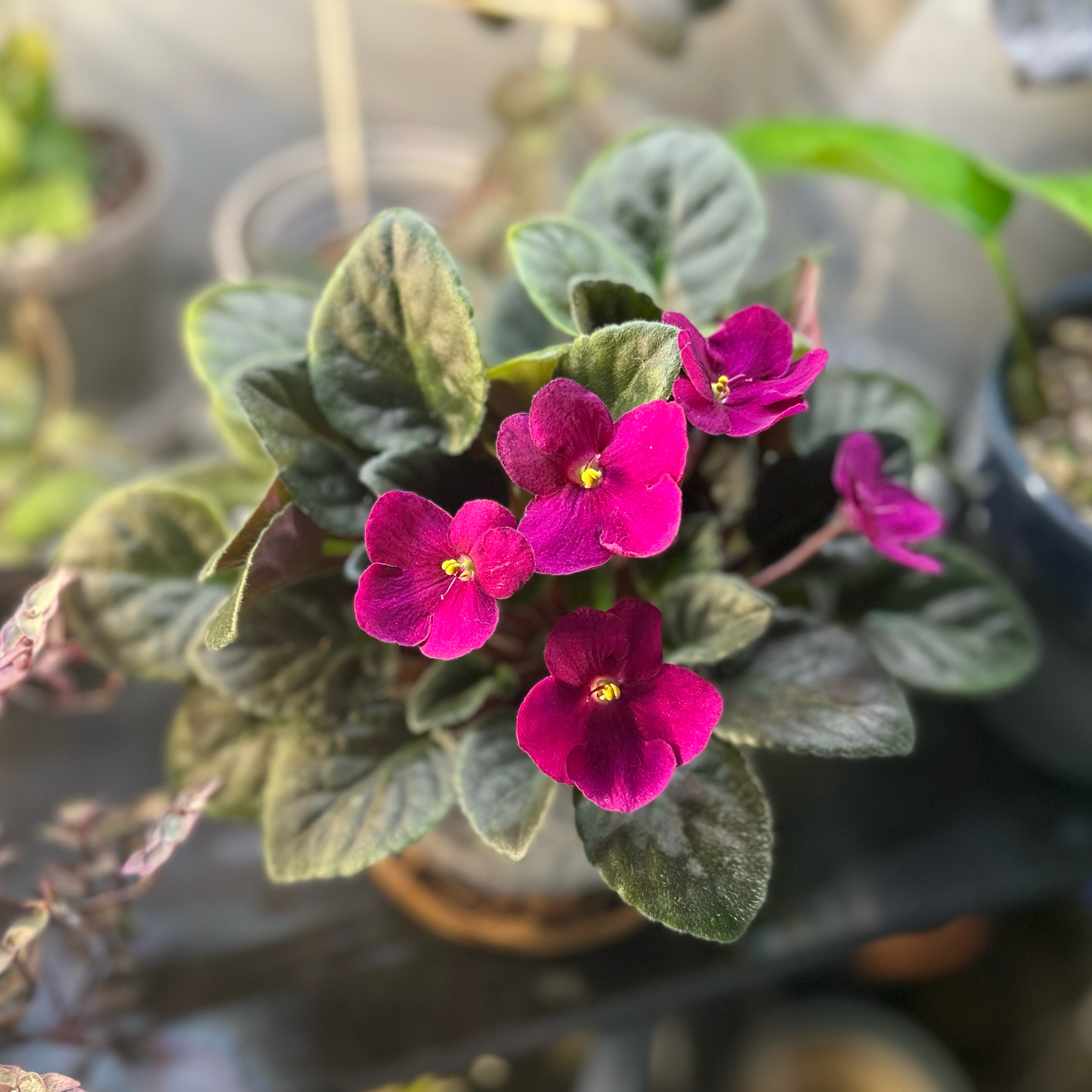
How to Repot an African Violet
Repot an African Violet every year into a shallow pot that's 1 to 2 inches wider than the current pot. Use a light, airy mix made for African Violets, or blend equal parts peat-based potting soil, perlite, and vermiculite. Late winter through spring is the best time, when light is picking up and new leaves start to push.

How to Know It's Time to Repot
African Violets need a fresh pot more often than most houseplants because the old soil compacts and turns acidic, which stalls blooming. The plant gives you four clear signals when it's time.
-
1A woody, bare neck has formed between the soil line and the lowest ring of leaves.
-
2The plant has roughly doubled in size since you last potted it up.
-
3Roots circle the bottom of the pot or push out through the drainage holes.
-
4Blooming has slowed or stopped even though light and watering haven't changed.
One sign on its own is worth watching, but two or more together means it's time. Most African Violets do best with a fresh pot every year, since the soil breaks down fast and a tired mix is the most common reason a healthy plant stops blooming.
The Best Time of Year to Repot
African Violets recover fastest when light is starting to lengthen and the plant is gearing up for active growth. Late winter through spring is the sweet spot, before the next round of flower buds forms.
Repotting outside this window still works, but flowering pauses while the plant rebuilds its root system. Use the map below to pin down your window.

How to Choose a Pot and Soil Mix
Pot Size
Move up to a pot that's 1 to 2 inches wider than the current pot. African Violets bloom best when their roots fill a small, snug container, so resist the urge to jump several sizes up. A shallow pot suits them better than a deep one, since the roots stay near the surface.
Pot Material
Plastic and glazed ceramic are both good fits for African Violets. They hold moisture evenly, which keeps the fuzzy leaves from wilting between waterings.
Self-watering African Violet pots work beautifully too, since wicking water from below keeps the leaves dry and stops crown rot. Whichever material you pick, make sure the pot has drainage holes.
Soil Mix
Use a pre-mixed African Violet soil, or blend equal parts peat-based potting soil, perlite, and vermiculite. The mix should feel light and fluffy in your hand, with plenty of air pockets for the fine roots.
Skip standard heavy potting soil and moisture-control formulas. Both stay too dense and wet for African Violet roots and lead to crown rot.
How to Repot an African Violet, Step by Step
-
1Water lightly the day before. Give the plant a light drink the day before repotting. Slightly moist soil holds the small root ball together when you slide it out and keeps the fine roots from tearing.
-
2Pick the new pot. Choose a shallow pot that's 1 to 2 inches wider than the current pot, with drainage holes. Layer half an inch of fresh airy mix in the bottom so the crown will sit at the same height it did before.
-
3Slide the plant out. Tip the pot onto its side and gently work the root ball loose, holding the plant by the base of the crown rather than the leaves. If the plant is stuck, run a butter knife around the inside edge of the pot to release it.
-
4Trim the bare neck if needed. If a woody neck has formed between the soil line and the lowest leaves, gently scrape it with a clean knife to expose green tissue, then plant deeper so the lowest leaves sit just above the soil. New roots will sprout from the buried neck.
-
5Set it in the new pot. Center the plant with the crown just above the soil line, never buried. Fill in around the sides with fresh mix, pressing gently as you go to remove air pockets.
-
6Water and place in bright indirect light. Water slowly from below or around the edges, keeping the fuzzy leaves dry. Set the plant somewhere with bright, indirect light, and hold off on fertilizer for 4 to 6 weeks so the roots can heal.
What to Expect After Repotting
Week 1
A little droop or a pause in new growth is normal as the small root system settles into the fresh mix.
Keep the soil lightly moist but not soggy, give the plant bright indirect light, and avoid splashing water on the leaves. Skip fertilizer for now.
Weeks 2 to 6
A fresh ring of leaves opening at the center of the crown is the clearest signal that the plant has rooted in and is ready for normal care.
Resume your regular watering rhythm and start half-strength African Violet fertilizer once you see clear new growth. Build up to full strength over the next two or three feedings.
Got More Questions?
About This Article
