
Hibiscus sakamaliensis
Taxonomy

Hibiscus sakamaliensis
Hibiscus
Malvaceae
Malvales

How to care for Hibiscus sakamaliensis
How often to water your Hibiscus sakamaliensis

every 9
Hibiscus sakamaliensis needs 0.5 cups of water every 9 when it doesn’t get direct sunlight and is potted in a 5" pot.
Use our water calculator to personalize watering recommendations to your environment or download Greg for more advanced recommendations for all of your plants.
Water 0.5 cups every
9
Finding light for Hibiscus sakamaliensis in your home

a window
Hibiscus sakamaliensis love being close to bright, sunny windows 😎.
Place it less than 1ft from a south-facing window to maximize the potential for growth.
Hibiscus sakamaliensis does not tolerate low-light 🚫.
Select your region to see how the current weather in your area affects the placement of Hibiscus sakamaliensis in your home 🏡.
How to fertilize Hibiscus sakamaliensis

Most potting soils come with ample nutrients which plants use to produce new growth.
By the time your plant has depleted the nutrients in its soil it’s likely grown enough to need a larger pot anyway.
To replenish this plant's nutrients, repot your Hibiscus sakamaliensis after it doubles in size or once a year—whichever comes first.
-
This is Abyt, my little mantis buddy. 😍😍🖤 He loves to "hang out" (see what I did, there? 😂) on Zenai, one of my two braided trees. I'm not sure if he actually lives ON her, but that is the only place I ever see him, so it's a fair enough assumption. 🤷🏻♀️🤷🏻♀️😂 And yes, I'm almost certain it's the same mantis. I believe he just went through a molt stage, thus, the colour change. @Alucen @DreamMachine @FunLentenrose37 @Idplantthat @IWantThatPlant @Malagueña @MariansOasis @princesspitstop @SillyPlantGirl @debbiedo @Kittylover1612 @Ms.Persnickety @planthoe40 @HolyLacealoe @Succulent_Soul #happyplants #plantsmakepeoplehappy #plantaddict #planttherapy
-
I have a Chinese Hibiscus that I just planted. They had beautiful flowers when I planted them. It’s been a month and I have had lots of buds but the flowers break off before they bloom. Any suggestions as what I can do? Mike #ChineseHibiscus
-
Leavs turning yellow #ChineseHibiscus
-
Ok,I just found a mulberry plant in a pot. It had large cotyledons,so I thought it was mangosteen until the new leaves came. The new leaves were serrated and there was a mulberry tree near me. Meaning it came from the mulberry tree from pigeon poop and rain.
-
Daily yellow leaves #ChineseHibiscus
-
Will this plant freeze if it drops below freezing tonight?
-
Seems like it dying I feel I’m losing my hibiscus, any ideas or help
-
I have a hibiscus tree, brought it in for winter. Loosing all its leaves. Turning yellow. Why?
-
I have 3 flowers!
-
Does anyone know what’s this brown yellow spot on my hibiscus? I just got the plant about 2 weeks ago.


Care Summary for Hibiscus sakamaliensis
Hibiscus sakamaliensis
 Greg recommends:
 Water
Water
0.5 cups every 9 days
 Placement
< 1ft from a window
 Nutrients
Repot after 2x growth
Based on the 4” pot your plant is in, and that it doesn’t get direct sunlight.
 Trending in your area
Split Leaf Philodendr…

Cathedral Windows

Coleus
Triostar Stromanthe

Elephant Bush
Gold Dust Croton

Peace Lily
Green Prayer Plant

White Bird of Paradise
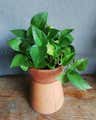
Jade Pothos

Pincushion Peperomia

English Ivy
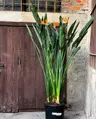
Bird of Paradise

Tradescantia Zebrina

Golden Barrel Cactus
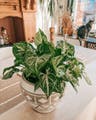
Arrowhead Plant
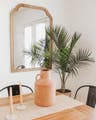
Majesty Palm

Hens and Chicks
 Similar to Hibiscus sakamaliensis
✨ Discover rare plants

Dinteranthus microspe…
Graptopetalum 'Marqui…

Eden Climbing Rose

Hoya fitchii

Ruby Ball

Philodendron 'Glorius'

Starfish Snake Plant

Aglaonema 'Green Bowl'
Hoya crassipetiolata

Kilimanjaro Plant

Munstead Lavender

Anthurium 'Fantasy Lo…

Maroon Pitcher Plant

Peperomia 'Harmony's …

Scindapsus pictus 'Si…

Vatricania guentheri

Rhipsalis clavata
