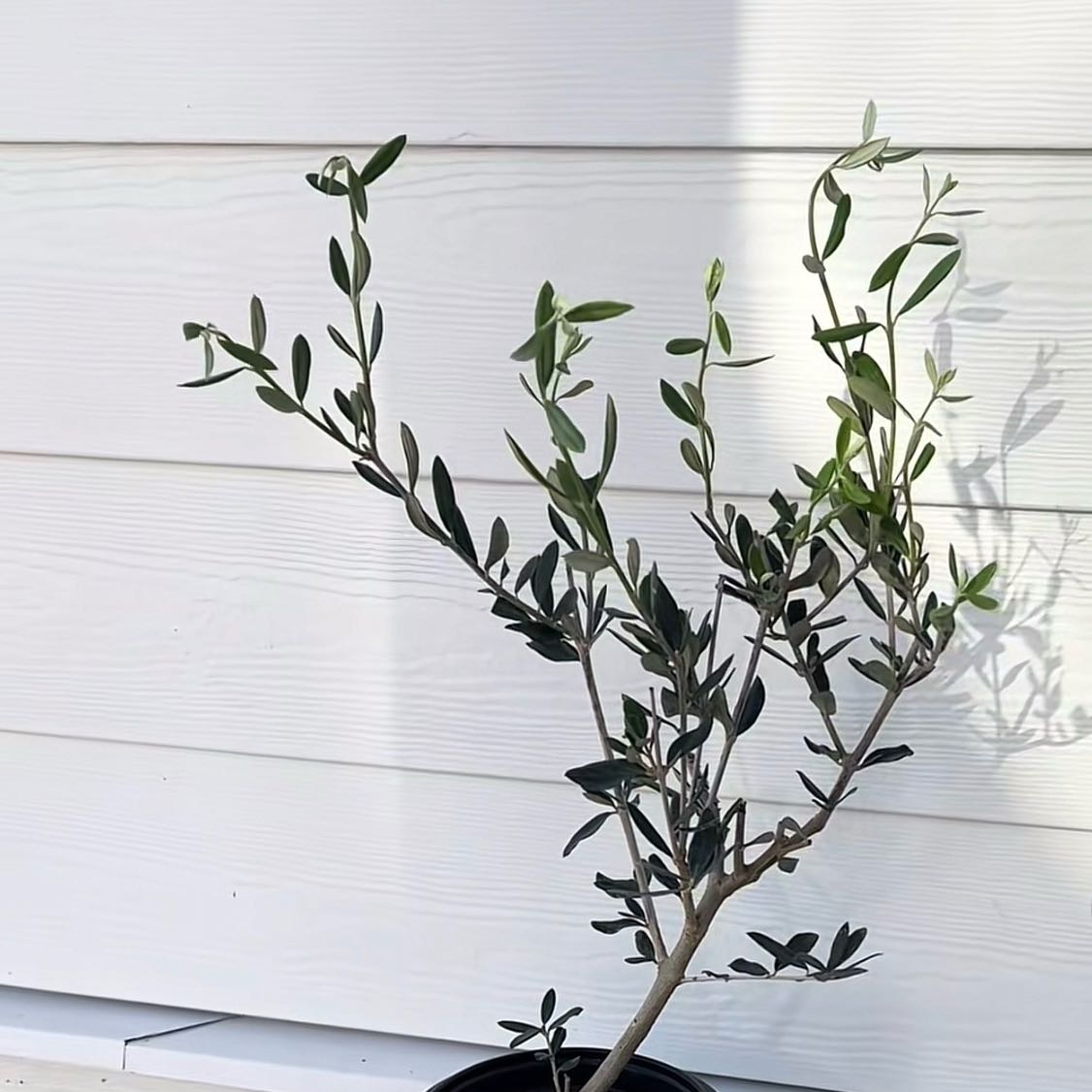
Olive Tree

How to Fertilize Olive Tree

Olea europaea
Reviewed by Kiersten Rankel M.S.
Quick Answer
Feed your Olive Tree with a balanced granular fertilizer (10-10-10 or 16-16-16) two to three times during the growing season, from spring through midsummer. Olive Trees are Mediterranean natives adapted to lean soils, so moderate feeding is better than heavy fertilizing.

When Should I Start Feeding My Olive Tree?

Olive Trees are hardy in zones 8a-11b and begin active growth when spring temperatures consistently reach the mid-50s F, so your feeding start date depends on your region's spring warmth.

US feeding regions map
Pacific Feb–Jul
Mountain May–Jul
Midwest Apr–Jul
Northeast Apr–Jul
Southeast Mar–Jul
Stay on top of plant care
Get seasonal reminders for watering and fertilizing — personalized for your plants.
Try Greg Free

How Often Should I Fertilize My Olive Tree?

Feed two to three times during the growing season: once in early spring as new growth begins, once in late spring or early summer, and optionally a third time in midsummer for fruiting trees. That is enough for healthy growth and fruit production.

Do not fertilize after midsummer. Late-season nitrogen encourages soft new growth that is vulnerable to cold damage in fall. Olive Trees are tough once established, and winter is their natural rest period.

Feeding Calendar
Spring
First full application of balanced granular fertilizer
Summer
Second application in early summer, optional third in midsummer for fruiting trees
Early Fall
No feeding, allow growth to harden off
Late Fall & Winter
No feeding during dormancy

What Is the Best Fertilizer for Olive Tree?

Olive Trees grow naturally in poor, rocky Mediterranean soils, so they do not need heavy feeding. A balanced granular fertilizer with an NPK around 10-10-10 or 16-16-16 is a good starting point. For trees you want to fruit, a formula with slightly higher nitrogen helps support both foliage and flower development.

For potted Olive Trees, a slow-release granular applied in spring works well. For in-ground trees, scatter granular fertilizer in a ring around the drip line where feeder roots are most active. Avoid piling fertilizer against the trunk.

Synthetic
Pre-measured spikes that feed slowly over 8 weeks. Push into the soil at the drip line in spring and again in early summer.
Slow-release granules that feed for up to 4 months. One spring application may be all a potted Olive Tree needs.
Organic
Organic granular with added calcium and magnesium, both important for Olive Trees. Apply in spring and early summer.
Slow-release organic blend with mycorrhizae. Scatter around the drip line and water in.

How Do I Fertilize My Olive Tree?

1
Water the root zone first
Soak the soil around your Olive Tree before applying granular fertilizer. Moist soil helps the granules dissolve evenly and prevents root burn from concentrated salts.
2
Measure the right amount
Follow the label rate for your tree's size. For a potted Olive Tree, one to two tablespoons of 10-10-10 granular is usually sufficient. In-ground trees need more, scaled to trunk diameter.
3
Spread at the drip line
Scatter the granular fertilizer in a ring at the outer edge of the canopy, not against the trunk. Feeder roots are concentrated in this zone. For potted trees, spread evenly over the soil surface.
4
Water in after applying
Water the area lightly after spreading fertilizer to start dissolving the granules into the root zone. This also washes any granules off the trunk or foliage.
5
Stop feeding by midsummer
Do not apply fertilizer after July. Late nitrogen pushes tender new growth that will not harden in time for cooler fall temperatures, leaving the tree vulnerable to frost damage.

Got More Questions?

Can I use citrus fertilizer for my Olive Tree?
Yes, citrus fertilizer works well for Olive Trees. Both are Mediterranean-climate fruit trees with similar nutrient needs. Citrus formulas often include calcium and magnesium, which olives appreciate.
What happens if I over-fertilize my Olive Tree?
Too much nitrogen causes excessive leafy growth at the expense of fruit production. The new growth is also softer and more susceptible to cold and pest damage. If you notice the tree is all leaves and no fruit, reduce feeding.
Can I use coffee grounds around my Olive Tree?
Small amounts are fine as a soil amendment, but coffee grounds alone do not provide balanced nutrition. Olive Trees prefer slightly alkaline soil, and coffee grounds are mildly acidic, so do not overdo it.
Why isn't my Olive Tree producing fruit?
Most olive varieties need a second variety nearby for cross-pollination. Even self-fertile cultivars produce more with a partner. Also make sure the tree gets at least 6 hours of direct sun and that you are not over-fertilizing with nitrogen, which favors leaves over fruit.
Should I fertilize a newly planted Olive Tree?
Wait until the tree has been in the ground for at least 2-3 months and shows signs of new growth. Newly planted trees need to establish roots first, and fertilizer in disturbed soil can burn the transplant.
Stay on top of plant care
Get seasonal reminders for watering and fertilizing — personalized for your plants.
Try Greg Free

About This Article

Kiersten Rankel M.S.
Botanical Data Lead at Greg · Plant Scientist
About the Author
Kiersten Rankel holds an M.S. in Ecology & Evolutionary Biology from Tulane University. A certified Louisiana Master Naturalist, she has over a decade of experience in science communication, with research spanning corals, cypress trees, marsh grasses, and more. At Greg, she curates species data and verifies care recommendations against botanical research.
See Kiersten Rankel's full background on LinkedIn.
Editorial Process
Fertilizer recommendations verified against Olea europaea growth data from Greg's botanical database, cross-referenced with USDA hardiness zone data and published horticultural research.
6,524+ Greg users growing this plant
USDA hardiness zones 8a–11b