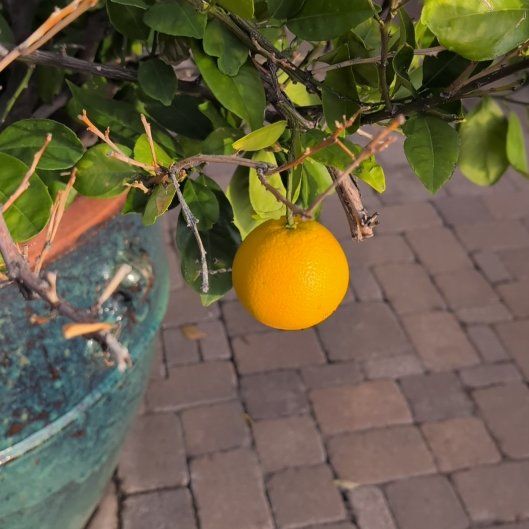
Meyer Lemon Tree

How to Fertilize Meyer Lemon Tree

Citrus x limon 'Meyer'
Reviewed by Kiersten Rankel M.S.
Quick Answer
Use a citrus-specific fertilizer with a 2-1-1 NPK ratio and added iron. Feed every 4 to 6 weeks spring through fall. Reduce to every 8 weeks in winter for indoor trees.

When Should I Start Feeding My Meyer Lemon Tree?

Meyer Lemon Trees are evergreen and can produce fruit year-round in warm climates, so their feeding season is longer than most plants, typically starting in late winter when new growth appears.

US feeding regions map
Pacific Feb–Nov
Mountain Apr–Sep
Midwest Apr–Oct
Northeast Apr–Oct
Southeast Feb–Nov
Stay on top of plant care
Get seasonal reminders for watering and fertilizing — personalized for your plants.
Try Greg Free

How Often Should I Fertilize My Meyer Lemon Tree?

During the growing season (spring through early fall), feed every 4 to 6 weeks. Meyer Lemons are evergreen and can flower and fruit year-round in warm climates, so they have higher nutrient demands than most houseplants.

Indoor trees still grow slowly in winter due to lower light. Reduce feeding to every 8 weeks from November through February rather than stopping completely.

Watch for pale yellow leaves with green veins, which signals iron deficiency rather than overwatering. If you see this, add a chelated iron supplement between regular feedings.

Feeding Calendar
Spring & Summer
Full-strength citrus fertilizer every 4-6 weeks
Early Fall
One final full-strength feeding, then begin tapering
Late Fall & Winter
Half-strength every 8 weeks for indoor trees; no feeding for outdoor dormant trees

What Is the Best Fertilizer for a Meyer Lemon Tree?

Meyer Lemon Trees are heavy feeders that need more than a generic balanced formula. Look for a citrus-specific fertilizer with a 2-1-1 NPK ratio (such as 6-3-3 or 8-4-4) and added micronutrients, especially iron and manganese. Citrus trees are prone to iron chlorosis, which shows up as yellow leaves with green veins.

Slow-release granular formulas work well for outdoor trees because they feed steadily over several weeks. For indoor container trees, a liquid citrus fertilizer gives you more control over dosing.

Always follow the label rate. Unlike many houseplants, Meyer Lemons actually benefit from full-strength feeding during active growth because they are producing fruit, flowers, and foliage simultaneously.

Synthetic
Pre-measured slow-release spikes formulated for citrus. Push into the soil at the drip line every 8 weeks.
Slow-release granular with added iron and sulfur for acid-loving citrus. One application feeds for up to 3 months.
Organic
Organic granular with added calcium, sulfur, and iron specifically for citrus trees. Apply every 1 to 2 months during the growing season.
Gentle organic liquid with trace minerals. Good as a supplemental feeding between granular applications.
Organic granular designed for citrus and avocado. Contains beneficial microbes that help with nutrient uptake in containers.

How Do I Fertilize My Meyer Lemon Tree?

1
Water your tree thoroughly first
Soak the soil with plain water before applying fertilizer. Citrus roots are sensitive to salt burn, especially in containers where minerals concentrate.
2
Measure your citrus fertilizer
Use the full label rate for your citrus-specific fertilizer during the growing season. For granular types, sprinkle evenly under the canopy but keep it a few inches from the trunk.
3
Apply to moist soil
For liquid fertilizer, pour the diluted solution slowly around the root zone. For granular, scratch it lightly into the top inch of soil and water in well.
4
Supplement with iron if needed
If leaves turn yellow between the veins while the veins stay green, your tree needs iron. Apply a chelated iron supplement as a soil drench between regular feedings.
5
Flush the soil every few months
Container citrus can accumulate fertilizer salts over time. Every 2 to 3 months, water deeply until liquid runs freely from the drainage holes to wash out excess minerals.

Got More Questions?

Can I use banana peels to fertilize my Meyer Lemon Tree?
Banana peels break down very slowly in soil and do not deliver meaningful potassium to a potted tree. You are better off using a proper citrus fertilizer that includes the full range of nutrients your tree needs.
What happens if I over-fertilize my Meyer Lemon Tree?
You will see brown, crispy leaf edges and possibly leaf drop. The fruit may also split or drop prematurely. Flush the soil thoroughly with plain water and skip the next scheduled feeding.
Why are my Meyer Lemon leaves turning yellow with green veins?
This is almost always iron chlorosis, which is common in citrus. It means your tree cannot absorb enough iron, often because the soil pH is too high. Apply a chelated iron supplement and consider using an acidifying fertilizer.
Should I fertilize my Meyer Lemon while it has fruit?
Yes. Meyer Lemon Trees can flower and fruit at the same time as producing new leaves, so they need consistent nutrition throughout the growing season. Do not stop feeding just because fruit is present.
Do indoor Meyer Lemon Trees need fertilizer in winter?
Yes, but less. Indoor trees still grow slowly under winter light conditions. Feed at half strength every 8 weeks through winter to keep the tree healthy without pushing weak, leggy growth.
Stay on top of plant care
Get seasonal reminders for watering and fertilizing — personalized for your plants.
Try Greg Free

About This Article

Kiersten Rankel M.S.
Botanical Data Lead at Greg · Plant Scientist
About the Author
Kiersten Rankel holds an M.S. in Ecology & Evolutionary Biology from Tulane University. A certified Louisiana Master Naturalist, she has over a decade of experience in science communication, with research spanning corals, cypress trees, marsh grasses, and more. At Greg, she curates species data and verifies care recommendations against botanical research.
See Kiersten Rankel's full background on LinkedIn.
Editorial Process
Fertilizer recommendations verified against Citrus x limon 'Meyer' growth data from Greg's botanical database, cross-referenced with USDA hardiness zone data and published horticultural research.
5,117+ Greg users growing this plant
USDA hardiness zones 9a–11b