





Japanese Laurel

4.5 out of 5 (4 experiences)
 Large, lush leaves
 Survivor
About Japanese Laurel
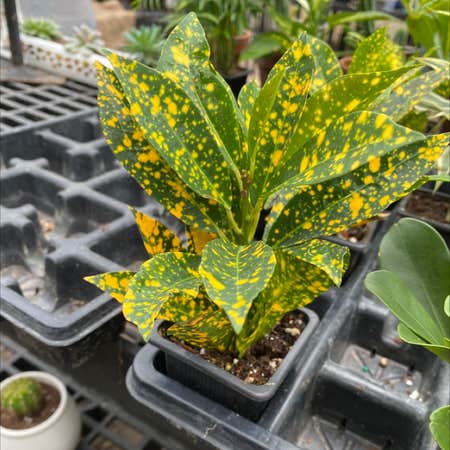
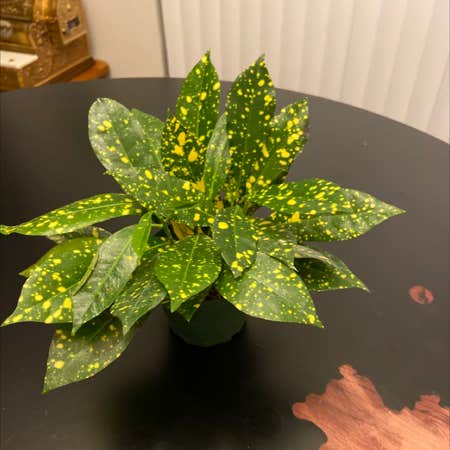
Spotted laurel is a woody, broadleaf, evergreen shrub with variegated leaves. It is native to East Asia and Japan, but has become well adapted to the Southeastern United States. It grows 6 to 10 feet tall, unless pruned shorter. It can be propagated by seed or stem cutting.
Taxonomy

Aucuba japonica
Aucuba
Garryaceae
Garryales
Also known as
Spotted laurel, Japanese aucuba and Gold dust plant

How to care for Japanese Laurel
How often to water your Japanese Laurel

every 9
Japanese Laurel needs 0.5 cups of water every 9 when it doesn’t get direct sunlight and is potted in a 5" pot.
Use our water calculator to personalize watering recommendations to your environment or download Greg for more advanced recommendations for all of your plants.

Water 0.5 cups every
9
Finding light for Japanese Laurel in your home

a window
Japanese Laurel love being close to bright, sunny windows 😎.
Place it less than 1ft from a south-facing window to maximize the potential for growth.
Japanese Laurel does not tolerate low-light 🚫.
Select your region to see how the current weather in your area affects the placement of Japanese Laurel in your home 🏡.
How to fertilize Japanese Laurel

Most potting soils come with ample nutrients which plants use to produce new growth.
By the time your plant has depleted the nutrients in its soil it’s likely grown enough to need a larger pot anyway.
To replenish this plant's nutrients, repot your Japanese Laurel after it doubles in size or once a year—whichever comes first.
-
Black decay? Hello! I recently received this plant from a neighbor and put it on my balcony. I noticed the stem had been turning black and now it’s rising to the leaves. Just wondering if it’s a lost cause or if I can somehow save it 😅
-
Some leaves are folllong off? #JapaneseLaurel
-
Embarrassed to post this. Wife and I are noobies. Probably lack of water? #JapaneseLaurel
-
Please suggestion for plant
-
She is super droopy and I can’t figure out why she is getting enough light! #JapaneseLaurel
-
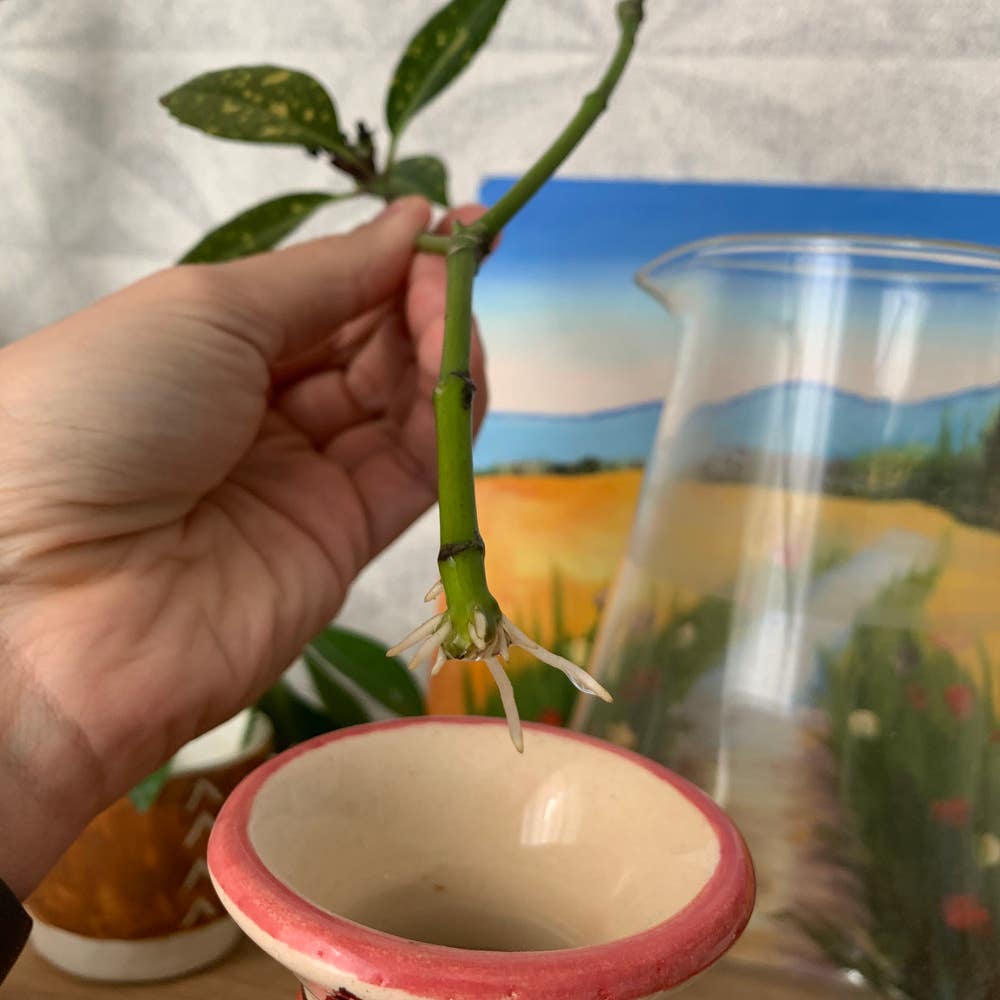
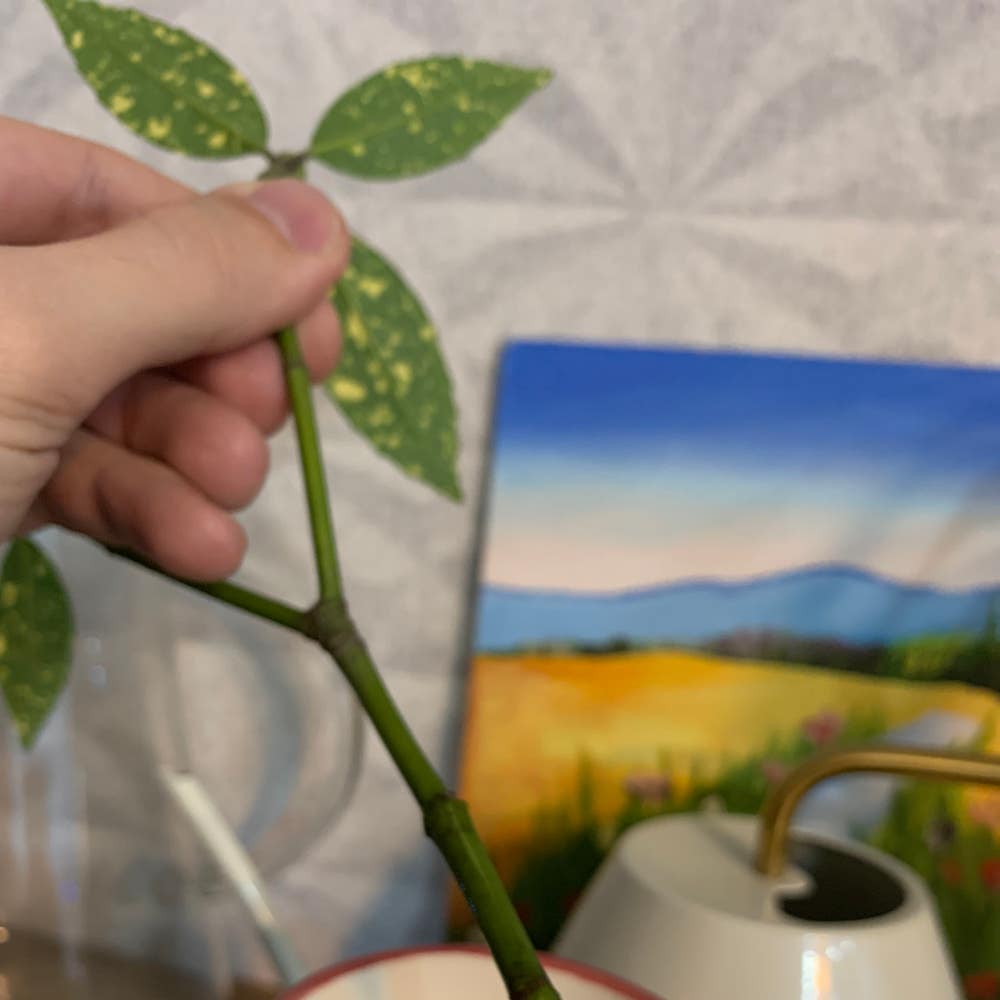
Recommended length for water prop? The length of my Aucubas cuttings are over a foot each with multiple nodes - is this too much? Should I cut them smaller? (Also please don’t mind the water color, I have a little plant food in there. Only day 2 water.) #JapaneseLaurel #waterpropagation
-
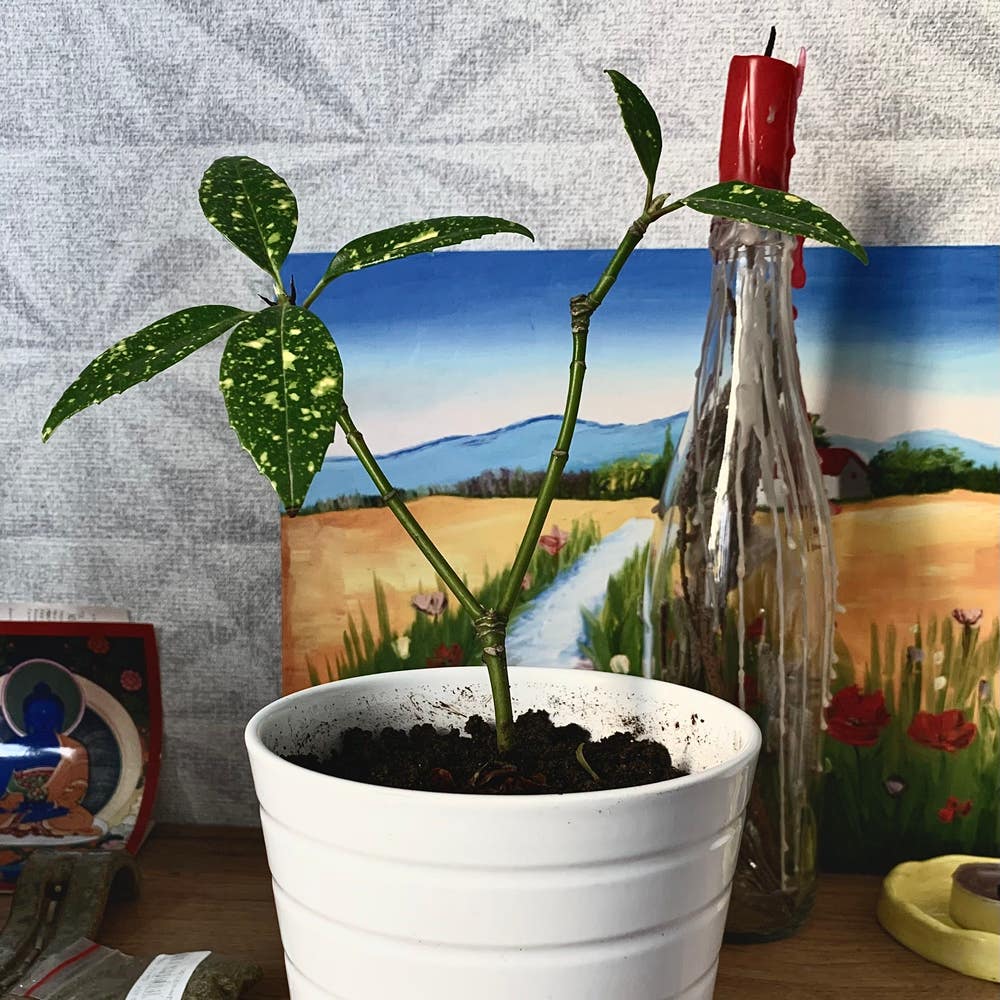
The new leaves Finally! I put it in the soil, and now I don’t know, should I cut upper leaves for forcing growth of new leaves or just wait for new leaves and do nothing?😅
-
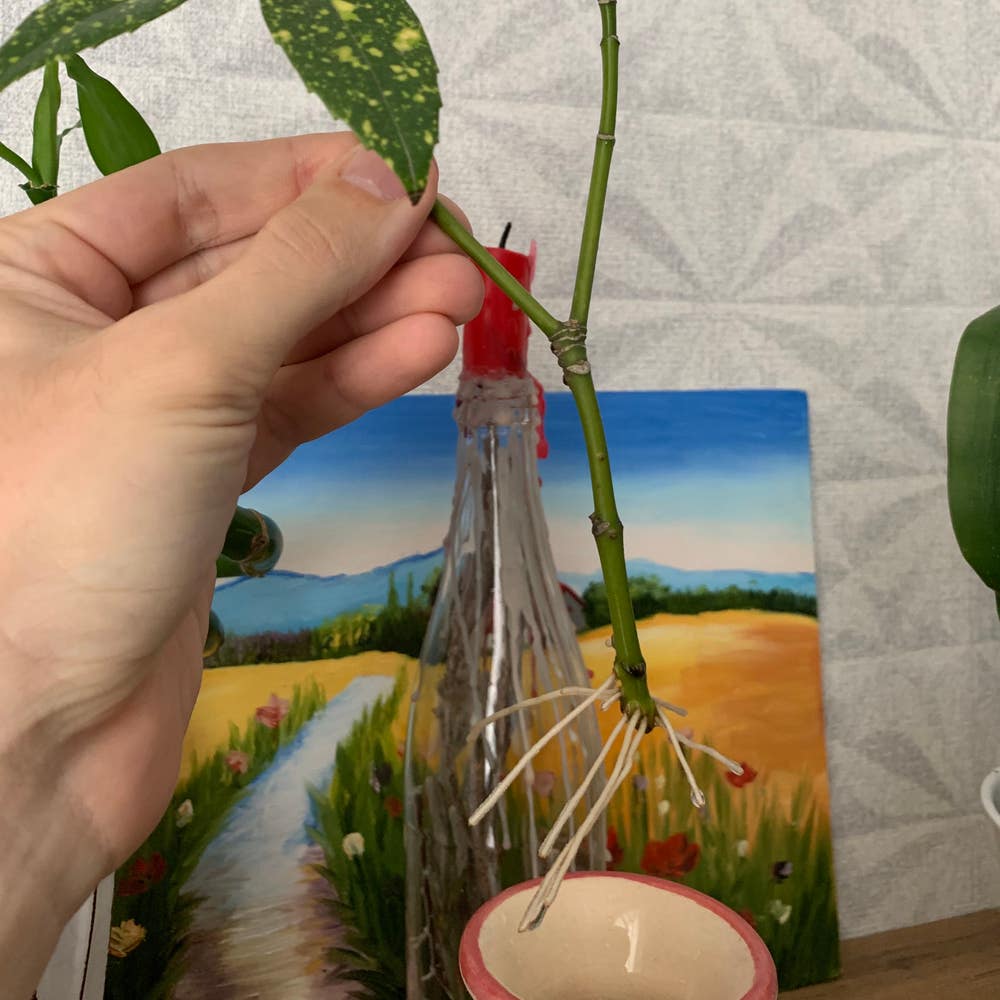
It’s enough for put it in the soil? Roots are really long now, and I think that I can put it in the soil, but what should I do with top of the plant for new leaves growth? Maybe I should cut it? But I don’t know in what part of the trunk. Can you help me?
-
Roots Tell me please, Can I already put it in the soil? Or wait for the roots to get bigger?
-
Roots Will it be able to make roots in the water?


Care Summary for Japanese Laurel

Japanese Laurel
 Greg recommends:
 Water
Water
0.5 cups every 9 days
 Placement
< 1ft from a window
 Nutrients
Repot after 2x growth
Based on the 4” pot your plant is in, and that it doesn’t get direct sunlight.
What other plant parents say
Large, lush leaves 3
Survivor 3
 Fast grower 1


 08/11/2021
❤️
Large, lush leaves
Fast grower
Survivor
 Trending in your area








 Similar to Japanese Laurel
✨ Discover rare plants

Fagraea ceilanica

Fernleaf Lavendar

Peperomia 'Harmony's …

Anthurium Fingers

Aeonium 'Blushing Bea…
White Apple Moth Orch…

Burro's Tail

Stomatium acutifolium

Parrot Pitcher Plant

Anthurium 'Fantasy Lo…

Philodendron 'Glorius'

Echeveria Esther

Rhipsalis clavata

Caladium

Dinteranthus microspe…

Pseudorphipsalis 'Blu…
Anthurium papillilami…
