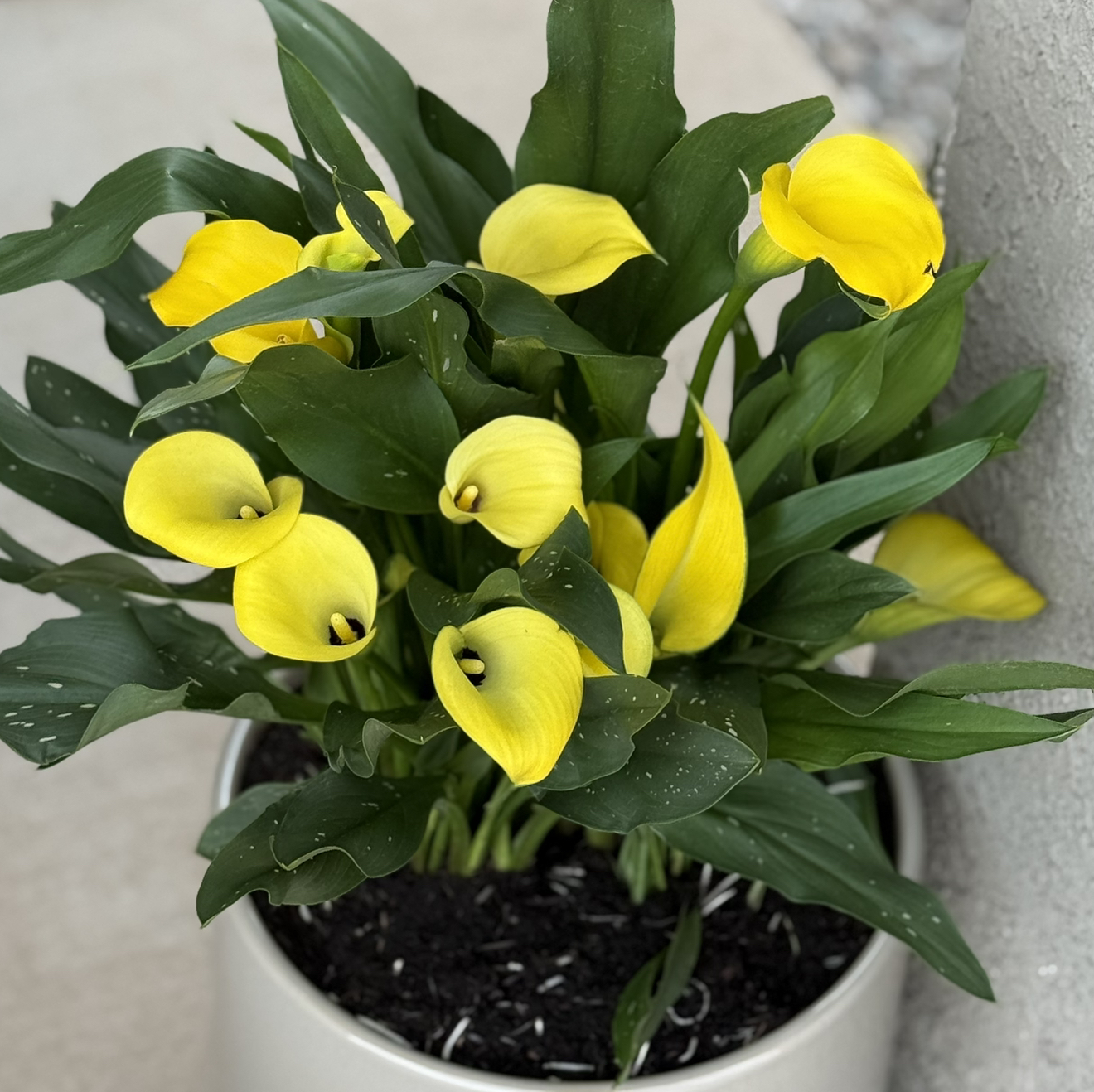
Calla Lily

How to Prune Calla Lily

Zantedeschia aethiopica
Reviewed by Kiersten Rankel M.S.
Quick Answer
Prune Calla Lily after flowers fade, typically in late spring or early summer. Remove spent blooms and stems down to the base, and cut back yellowing leaves as the plant enters dormancy. Avoid removing green foliage while it's still actively photosynthesizing, as those leaves are feeding the rhizome for next year.

When is the best time to prune?

Calla Lily's pruning window follows its bloom cycle, which means timing varies somewhat by region and whether the plant is grown indoors or outdoors.

US pruning regions map
Pacific
May–Jun
Mountain
Jun–Aug
Midwest
Jun–Jul
Northeast
Jun–Aug
Southeast
Apr–Jun
Stay on top of plant care
Get seasonal reminders for watering and fertilizing — personalized for your plants.
Try Greg Free

Why Should I Prune My Calla Lily?

Calla Lily pruning is mostly about deadheading spent flowers and removing foliage as the plant goes dormant. The goal is to keep the plant tidy and direct energy back into the rhizome rather than seed production.

Once a flower fades, cut the stem off at the base. The stem won't rebloom, and leaving it attached can invite rot. Use clean, sharp scissors and cut close to where the stem meets the soil.

Leaves should stay on the plant while they're still green. They're actively feeding the underground rhizome, which stores energy for next year's blooms. Once leaves yellow and go limp, cut them back to the base as well.

In colder climates (zones below 8), the plant typically goes fully dormant in fall. Cut back all foliage at that point and mulch or dig up the rhizome for winter storage. In warmer climates, it may only partially die back before putting out new growth.

Know Before You Cut

Difficulty Easy
Max removal All spent stems and yellowed leaves
Growth pattern Clumping perennial
Tools Sharp scissors or hand pruners

What Should I Remove?

Remove spent flower stems at the base after blooming
Cut back yellowed leaves once they collapse
Trim all foliage to the ground before winter in cold zones
Don't cut green leaves while the plant is still active
Don't leave rotting stems attached near the rhizome
Don't prune during active bloom — wait for flowers to fade

How Do I Prune Step by Step?

1
Wait for flowers to fully fade
Once a bloom has wilted and the spathe (the funnel-shaped part) collapses, the flower is done. Don't cut prematurely if there's any color left.
2
Remove spent flower stems
Cut each flower stem as close to the base as possible, just above the soil line. A clean cut at the base is better than leaving a stub.
3
Let green leaves stay
Leave all green, upright leaves alone even after blooming ends. They are feeding the rhizome for next season's growth. Only remove them once they turn yellow and flop over.
4
Cut back yellowed foliage
Once leaves yellow and go limp, cut them back to the base. In zones 8 and above, the plant may re-sprout; in colder areas, this step signals the start of dormancy.
5
Clean up and store if needed
Remove any debris from around the base. In zones below 8, dig up the rhizome after foliage dies back and store it dry and cool until spring.

Frequently Asked Questions

Can I prune my Calla Lily in summer?
Yes, if your plant finishes blooming in late spring, summer is exactly when you'd be removing spent flowers and watching for yellowing leaves. Follow the bloom, not the calendar.
What happens if I cut the leaves back too early?
Cutting green leaves early robs the rhizome of the food it needs to produce strong blooms next year. You may get fewer or smaller flowers the following season. Let the leaves die back naturally.
My Calla Lily didn't bloom this year — should I still prune it?
If it didn't bloom, there's not much to deadhead. You can still remove any damaged or yellowing foliage. Focus on giving it more light or dividing the rhizome if it's crowded, which is often why blooming stops.
Do indoor Calla Lilies need the same pruning as outdoor ones?
The same principles apply: remove spent blooms, let green leaves stay, cut back yellowed foliage. Indoor plants may not go fully dormant, so just follow the plant's cues rather than a strict seasonal schedule.
Stay on top of plant care
Get seasonal reminders for watering and fertilizing — personalized for your plants.
Try Greg Free

About This Article

Kiersten Rankel M.S.
Botanical Data Lead at Greg · Plant Scientist
About the Author
Kiersten Rankel holds an M.S. in Ecology & Evolutionary Biology from Tulane University. A certified Louisiana Master Naturalist, she has over a decade of experience in science communication, with research spanning corals, cypress trees, marsh grasses, and more. At Greg, she curates species data and verifies care recommendations against botanical research.
See Kiersten Rankel's full background on LinkedIn.
Editorial Process
Pruning guidance verified against Zantedeschia aethiopica growth data from Greg's botanical database, cross-referenced with USDA hardiness zone data and published horticultural research.
8,587+ Greg users growing this plant
USDA hardiness zones 8a–11b
Grow plants with confidence