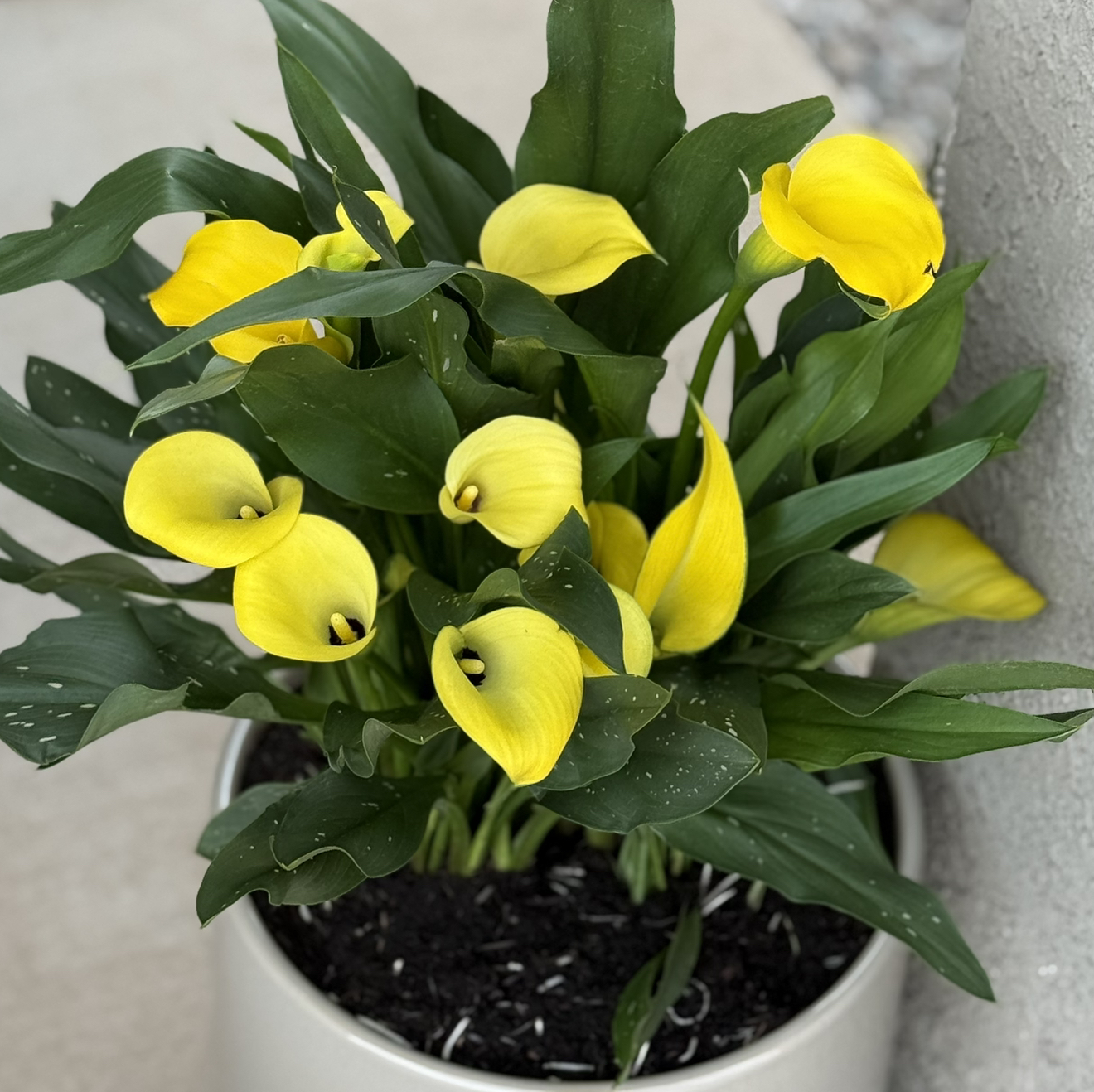
Best Soil for Calla Lily
What Kind of Soil Does a Calla Lily Need?
Calla Lilies are native to marshy areas and streambanks in South Africa, where they grow in rich, humus-laden soil that stays consistently moist. They tolerate more moisture than most garden plants, but standing water around the rhizomes for extended periods still causes rot. The ideal mix is moisture-retentive but not waterlogged.
Calla Lilies grow from fleshy rhizomes that store nutrients and water, making them more forgiving of brief dry spells than their moisture-loving reputation suggests. However, the roots and rhizomes are prone to rot if soil stays saturated, especially when the plant is not actively growing. Rich, organic soil that holds moisture while still draining through is the goal.
Compost is the most important amendment for Calla Lilies. It improves moisture retention, provides slow-release nutrition, and creates the soft, loose texture the rhizomes expand through most easily. Plain garden soil is usually too compacted and may not drain freely enough. Adding perlite prevents the mix from becoming waterlogged during the rainy season or heavy watering periods.
For container growing, the same balance applies. A compost-rich potting mix with moderate perlite gives the rhizomes room to spread while keeping moisture available without saturation. Calla Lilies in containers often need more frequent watering than those in the ground, so the mix should hold enough moisture to bridge between waterings.
What Soil Mix Should I Use for My Calla Lily?

What pH Does My Calla Lily Need?
Calla Lilies prefer slightly acidic soil in the range of 5.5 to 6.5. Within this range, the mix of nutrients they need for lush foliage and strong blooms stays soluble and accessible to the roots. A simple pH test before planting tells you whether your mix or garden bed needs adjustment. Both soil pH meters and garden center test strips work reliably.
Soil that turns alkaline above pH 7.0 causes Calla Lilies to show iron and manganese deficiency: the leaves yellow while the veins stay green, and flowering declines noticeably. Soil that drops below 5.0 can make aluminum and manganese toxic to the roots. Either problem shows up within a few weeks of planting, so testing ahead of time saves the trouble of diagnosing later.
When Should I Refresh My Calla Lily's Soil?
For container Calla Lilies, refresh the potting mix every year or every other year. The rhizomes expand quickly and can fill a pot within a season, compressing the surrounding mix and reducing drainage. After the plant goes dormant in late summer or fall, dig out the rhizomes, discard the old mix, and replant in fresh compost-rich soil.
In garden beds, topdress with 2 to 3 inches of compost each spring before growth resumes. This replenishes organic matter that microbes break down over the growing season and keeps the soil texture soft enough for rhizome expansion. In-ground Calla Lilies rarely need full soil replacement unless drainage has deteriorated significantly.
What Soil Amendments Does a Calla Lily Need in the Ground?
Calla Lilies are one of the few ornamentals that actually tolerate damp soil, since they naturally grow along stream banks and marshy areas. Their rhizomes spread through rich, moist ground and appreciate steady moisture more than sharp drainage.
For clay soil, you still want to loosen the structure a bit. Work in compost and leaf mold to prevent the clay from becoming a solid, airless mass, but don't go overboard with sand or grit. In sandy soil, add generous amounts of compost and organic matter to boost water retention, since Calla Lilies don't like drying out between waterings. A spot with morning sun and afternoon shade, or near a rain garden or low spot, suits them well.
Got More Questions?
About This Article
