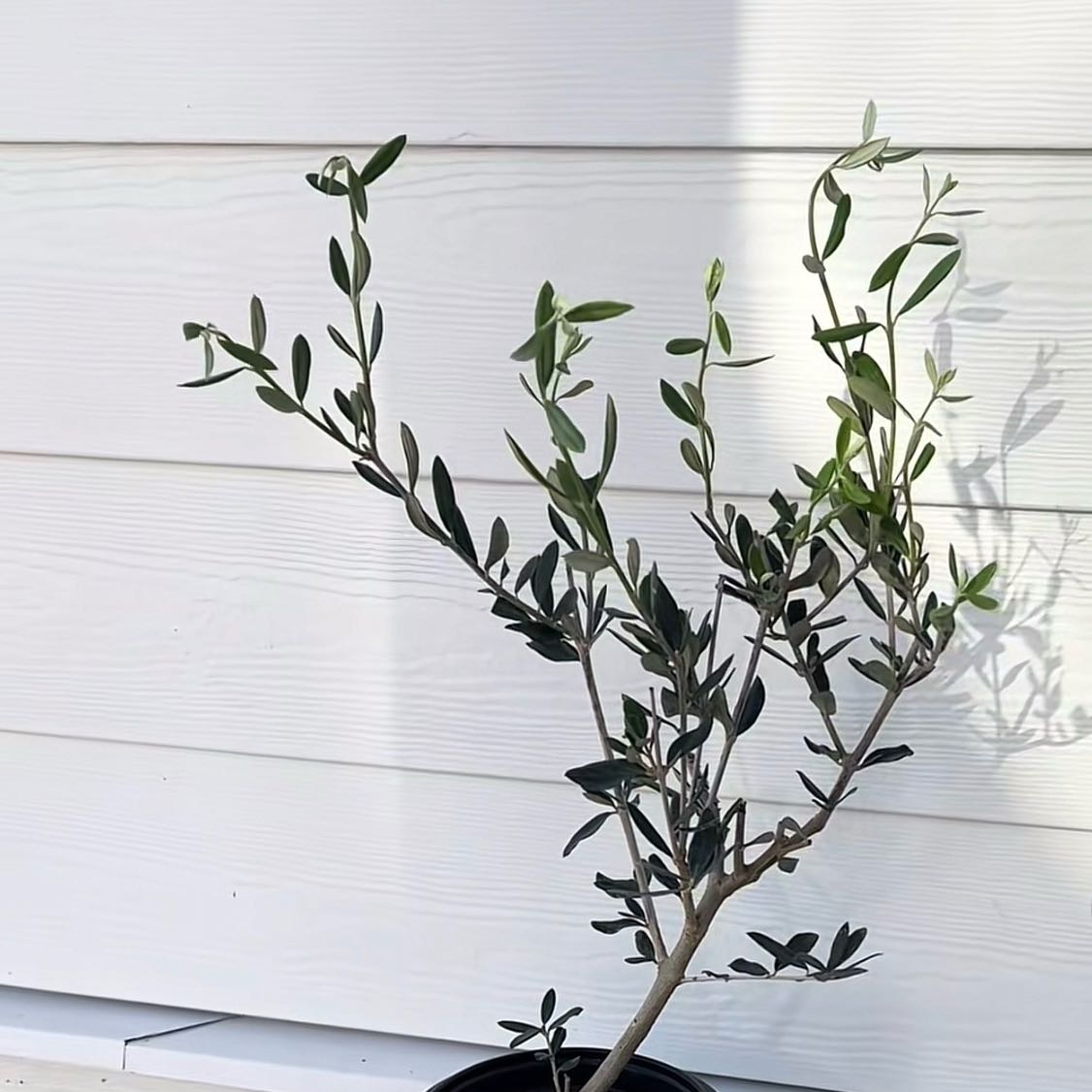
Olive trees need lean, fast-draining soil that mimics their rocky Mediterranean homeland. A mix of potting soil, perlite, and coarse sand keeps roots dry and aerated. They prefer a pH between 6.0 and 8.0, tolerating more alkaline conditions than most plants.
What Type of Soil Does an Olive Tree Need?
Olive trees are adapted to the thin, rocky soils of the Mediterranean, where water drains away fast and roots stay dry between rains. Your soil should prioritize sharp drainage and airflow over moisture retention.
Stays wet
Damp
Waterloggedwet & suffocating
Damp & Airymoisture + oxygen
Compacteddense & dry
Gritty & Fastdrains in seconds
Olive Tree
Regular Potting Soil
Airy
Dries quickly
Olive trees have woody, spreading roots that evolved in poor, gravelly ground. They don't need rich soil, and too much organic matter actually holds moisture that can rot their roots. A lean, mineral-heavy mix is the goal.
Standard potting soil on its own stays too wet and too dense for olives. Adding perlite and coarse sand opens up air pockets and speeds drainage, which is exactly what these trees are built for.
Think of the rocky hillsides where olives grow wild. Your mix should feel gritty when you squeeze it, and water should flow through in seconds, not sit on the surface.
What Soil Mix Should I Use for My Olive Tree?
Recommended Mix
Potting soil40%
Perlite30%
Coarse sand20%
Horticultural charcoal10%
Stay on top of plant care
Get seasonal reminders for watering and fertilizing — personalized for your plants.
Olive trees prefer a soil pH between 6.0 and 8.0, which is broader and more alkaline-tolerant than most houseplants. You can check your soil with an inexpensive pH meter or test strips from any garden center.
If the pH drops below 6.0, you may see yellowing leaves and poor growth because certain nutrients become less available in acidic conditions. Olives rarely struggle with soil that's too alkaline, so this is mainly a concern if you're using peat-heavy mixes that tend to run acidic.
Ideal pH Range
Ideal range6.0–8.0
Tolerable minimum5.5
To lower pHMix in peat moss or sulfur
To raise pHAdd a pinch of garden lime or dolomite
When Should I Replace My Olive Tree's Soil?
Olive trees are slow growers, so their soil lasts longer than most plants. Plan to refresh the mix every 2 to 3 years, or when you notice drainage slowing down. Late winter or early spring, before new growth starts, is the best time.
Because this mix is mostly mineral (perlite and sand), it won't break down as fast as bark-heavy mixes. The main thing to watch for is the potting soil component compacting over time, which reduces the airflow olive roots depend on.
Signs Your Soil Needs Replacing
Water pools on the surface instead of draining through
The soil feels dense and compacted when you press it
Roots are circling tightly at the bottom of the pot
New growth has stalled despite good light and watering
What Soil Amendments Does an Olive Tree Need in the Ground?
Olive trees are Mediterranean natives that evolved in rocky, mineral-rich soil with sharp drainage. They are one of the few trees that actually perform worse in rich, heavy ground. Wet feet will kill an olive faster than poor soil will.
In clay, the key amendment is drainage material: dig wide and mix in coarse sand, gravel, and a moderate amount of compost. Mounding the planting area slightly above grade helps water drain away from the root crown. Sandy soil is naturally close to what olives prefer. A small amount of compost worked in at planting time is all you need. Choose the sunniest, most exposed spot in your garden.
Got More Questions?
Can I use regular potting soil for my olive tree?
Regular potting soil holds too much moisture for olives. Mix it with perlite and coarse sand so at least half the volume is inorganic material that speeds up drainage.
Do I need to sterilize my soil before potting an olive tree?
It's not necessary if you're using fresh, bagged potting soil and clean amendments. If you're reusing old soil, baking it at 180°F for 30 minutes can kill lingering pathogens.
Why are my olive tree's leaves turning yellow?
Yellowing leaves on olives usually point to overwatering or soil that stays too wet. Check that your mix drains quickly and that the pot has drainage holes.
Can I add compost to my olive tree's soil?
Keep compost to a minimum or skip it entirely. Olive trees are adapted to nutrient-poor soil, and too much organic matter retains moisture that can lead to root rot.
Should I use a terracotta or plastic pot for my olive tree?
Terracotta is ideal because it's porous and wicks away extra moisture. Plastic pots trap more water, which works against the fast drainage olives need.
Stay on top of plant care
Get seasonal reminders for watering and fertilizing — personalized for your plants.
Kiersten Rankel holds an M.S. in Ecology & Evolutionary Biology from Tulane University. A certified Louisiana Master Naturalist, she has over a decade of experience in science communication, with research spanning corals, cypress trees, marsh grasses, and more. At Greg, she curates species data and verifies care recommendations against botanical research.
See Kiersten Rankel's full background on LinkedIn.
Editorial Process
Soil recommendations verified against Olea europaea growth data from Greg's botanical database, cross-referenced with USDA hardiness zone data and published horticultural research.