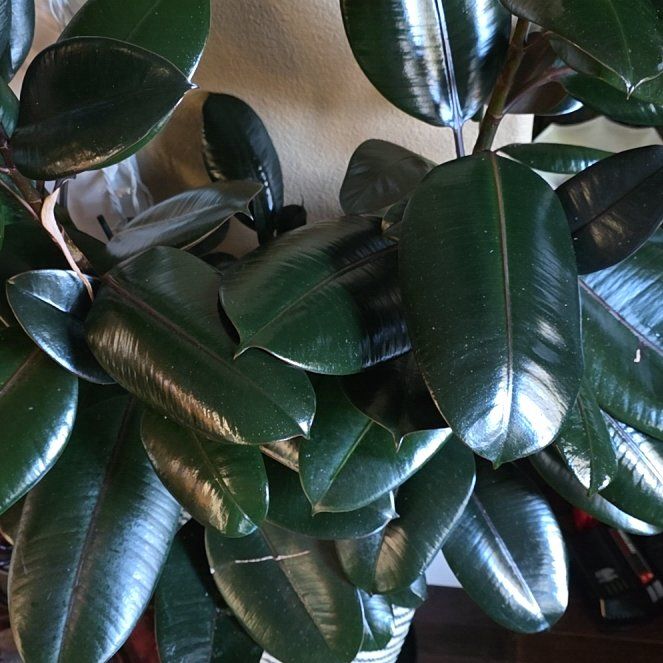
A glazed ceramic or plastic pot with drainage holes is ideal for a Rubber Plant. Choose a pot about 2 inches wider than the root ball. These plants like consistent moisture but will rot if water pools at the bottom.
What Size Pot Does a Rubber Plant Need?
Rubber Plants have a strong, branching root system that fills a pot steadily over time. Start with a container about 2 inches wider than the nursery pot. A snug fit actually encourages upward growth rather than the plant spending all its energy on roots.
When the roots start circling the bottom or lifting the plant, it's time to go up one size. Jumping too many sizes at once leaves wet soil around the edges that the roots can't reach.
A mature indoor Rubber Plant usually tops out in a 12 to 16 inch pot. That's enough to support a 6 to 8 foot tree without holding too much unused soil.
Young plant (under 1 ft)4–6" pot
Growing plant (1–3 ft)8–10" pot
Established plant (3–5 ft)10–12" pot
Mature tree (5–8 ft)14–16" pot
What Material Pot Is Best for Rubber Plant?
Rubber Plants have thick, fleshy roots that store some water on their own, so they don't need a pot that dries out quickly. What matters most is steady moisture without waterlogging. The roots also grow with enough force to crack thin or brittle containers over time.
A sturdy pot with good weight is a practical choice too, since mature Rubber Plants get top-heavy. Heavier materials help prevent tipping.
Dries fastest → Slowest
Best for Rubber Plant
Fabric
Dries faster than most options, so you'll water a bit more often. Works well in humid rooms.
Unglazed Ceramic
Breathable and sturdy. A solid choice if you tend to overwater.
Wood
Good insulation and moderate moisture retention. Use a liner to extend the pot's life.
Glazed Ceramic
Holds moisture evenly and adds weight to keep a tall plant stable. A top pick.
Plastic
Lightweight and retains moisture well. May need a heavy saucer to prevent tipping with larger plants.
Metal
Fine indoors where temperatures are stable. Avoid placing in direct sun near a window.
Rubber Plants are easygoing about pot materials. Nearly anything works, from breathable fabric and unglazed ceramic to moisture-retaining plastic and metal. If you tend to overwater, lean toward a porous option like unglazed ceramic that helps the soil dry out between waterings.
For larger Rubber Plants, weight matters. A glazed ceramic or metal pot adds stability and keeps a tall, top-heavy plant from tipping over. If you go with lightweight plastic, consider setting it inside a heavier decorative sleeve.
Stay on top of plant care
Get seasonal reminders for watering and fertilizing — personalized for your plants.
Yes. Rubber Plants can handle brief dry spells, but they absolutely cannot sit in water. Soggy soil leads to root rot quickly, and the first sign is usually yellowing lower leaves.
Always use a pot with at least one drainage hole. If your favorite planter doesn't have one, nest a nursery pot inside it and empty the outer pot after watering.
When Should I Repot My Rubber Plant?
Young Rubber Plants grow fast enough to need repotting every 1 to 2 years. Once they're in a 12 inch or larger pot, you can slow down to every 2 to 3 years and refresh the top few inches of soil annually instead.
Spring is the best time to repot, right when new leaves start pushing out. The plant recovers fastest during its active growing season.
Be gentle with the roots. They're thick but can snap if bent sharply. Shake off old soil, trim any mushy or circling roots, and settle the plant into fresh, well-draining mix.
Signs It's Time to Repot
Roots visible through drainage holes
Water runs straight through without soaking in
Plant has become top-heavy and unstable
New leaves are smaller than older ones
Soil pulls away from the pot edges when dry
When Can I Plant My Rubber Plant in the Ground?
Rubber Plants are only hardy outdoors in USDA zones 10a through 11b. If you live in a tropical or subtropical climate, you can plant directly in the ground in a sheltered spot with bright, indirect light and well-drained soil.
In cooler climates, keep your Rubber Plant in a container and bring it indoors when nighttime temperatures drop below 50 degrees F. Even a brief frost will damage the leaves and can kill the plant.
Got More Questions?
Can I use a pot without drainage holes for my Rubber Plant?
It's risky. Rubber Plants are prone to root rot if water sits at the bottom. If you must use a decorative pot without holes, place a nursery pot inside and empty any collected water promptly.
How do I know if my pot is too big?
If the soil stays damp for more than a week after watering, the pot is too large. Excess wet soil around the roots invites rot and fungal problems.
Should I use a heavy or lightweight pot?
Heavier is better for mature Rubber Plants. They grow tall and top-heavy, so a glazed ceramic or stone pot helps keep things stable. If you prefer plastic, set it inside a heavier cachepot.
Can I keep my Rubber Plant in its nursery pot?
For a while, yes. But nursery pots are designed for short-term use. Once roots start circling the bottom, move to a pot 2 inches wider with fresh soil.
What soil mix works best in the pot?
A well-draining mix with perlite or bark chips keeps roots healthy. Standard indoor potting soil amended with about 25% perlite is a good starting point.
Stay on top of plant care
Get seasonal reminders for watering and fertilizing — personalized for your plants.
Kiersten Rankel holds an M.S. in Ecology & Evolutionary Biology from Tulane University. A certified Louisiana Master Naturalist, she has over a decade of experience in science communication, with research spanning corals, cypress trees, marsh grasses, and more. At Greg, she curates species data and verifies care recommendations against botanical research.
See Kiersten Rankel's full background on LinkedIn.
Editorial Process
Container guidance verified against Ficus elastica growth data from Greg's botanical database, cross-referenced with USDA hardiness zone data and published horticultural research.