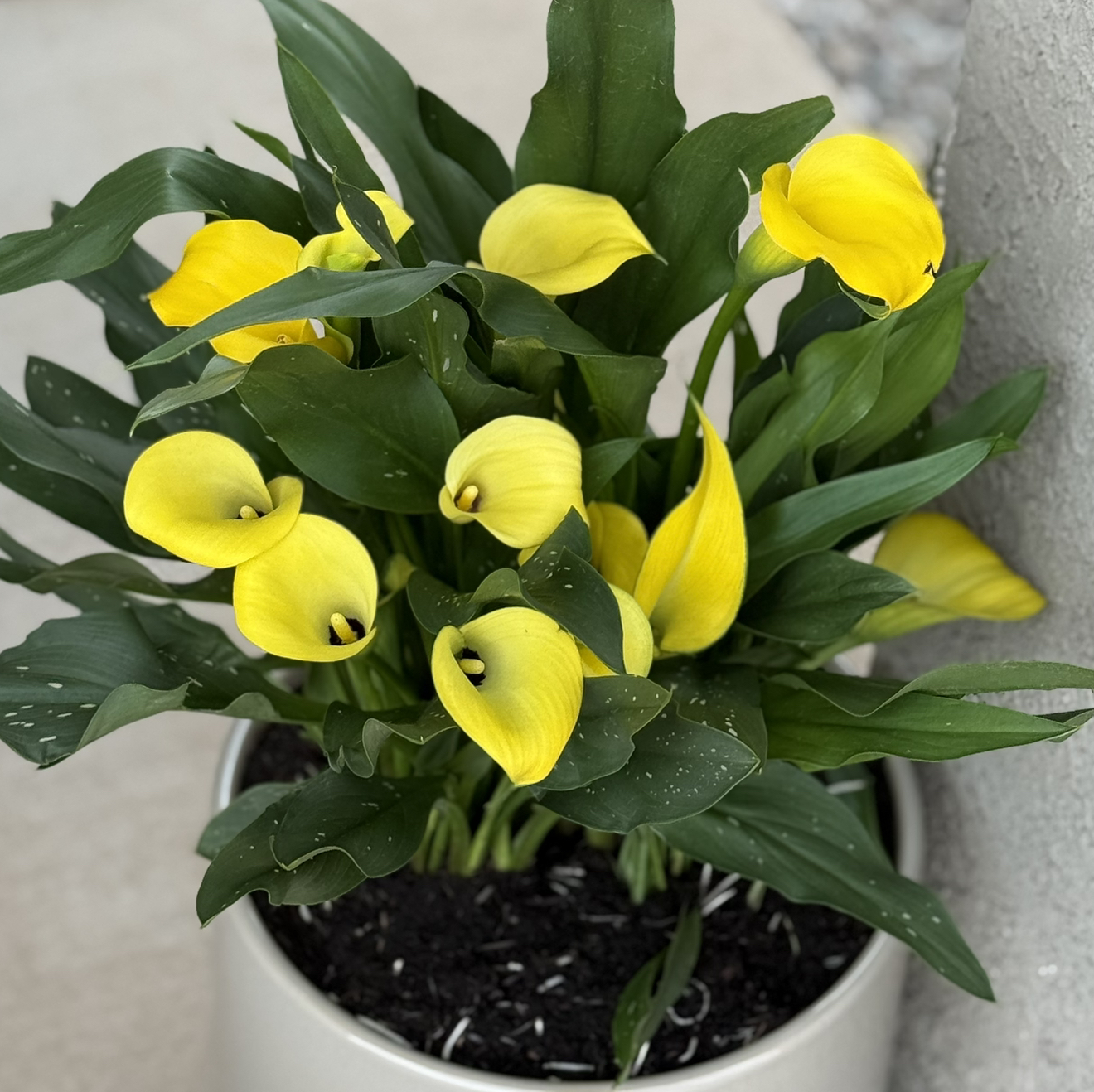
Calla Lilies do best in glazed ceramic or plastic pots with drainage holes. Choose a pot 1-2 inches wider than the rhizome cluster. These moisture-loving plants need consistent soil moisture, so a material that retains water is your best bet.
What Size Pot Does a Calla Lily Need?
Calla Lilies grow from thick rhizomes that spread horizontally, so a wider pot works better than a deep, narrow one. Start with a pot about 1-2 inches wider than the rhizome cluster, giving roots room to spread without drowning in excess soil.
When a single rhizome has multiplied into a tight clump, it's time to divide and repot. Going too large encourages waterlogging around the outer edges where roots haven't reached yet.
Single rhizome or small division6–8" pot
Established clump (2-3 rhizomes)8–10" pot
Mature clump (4+ rhizomes)10–14" pot
What Material Pot Is Best for Calla Lily?
Calla Lilies naturally grow in marshy, wet habitats, so their rhizomatous roots tolerate consistent moisture better than most plants. They have low drought tolerance and will wilt quickly if the soil dries out completely.
A pot that holds soil moisture a bit longer reduces the risk of underwatering. That said, even a bog-loving plant will rot in standing water, so good drainage still matters more than the pot material.
Dries fastest → Slowest
FabricTOO FAST
Fabric pots dry out rapidly, forcing you to water almost daily to keep a Calla Lily happy.
Unglazed Ceramic
Usable with more frequent watering, but the porous walls pull moisture away faster than Calla Lilies prefer.
Best for Calla Lily
Wood
A good option. The moderate moisture retention suits Calla Lily roots well.
Glazed Ceramic
One of the best choices. Holds moisture evenly and provides a stable, weighty base for tall flower stems.
Plastic
Lightweight and great at retaining moisture. An easy everyday pick for Calla Lilies.
Metal
Works well indoors or in shade. Use a liner and ensure drainage holes are present.
Calla Lilies grow from bulb-like rhizomes that need steady moisture to bloom well. Glazed ceramic is one of the best options because it holds water evenly and provides a sturdy base for tall flower stems. Plastic works great too and is much lighter if you like to rearrange.
Fabric pots dry out too fast for this moisture-loving plant, so skip those. Unglazed ceramic is usable but will have you reaching for the watering can more often than you might like.
Stay on top of plant care
Get seasonal reminders for watering and fertilizing — personalized for your plants.
Absolutely. Even though Calla Lilies love moisture, their rhizomes will rot in standing water. Drainage holes let excess water escape after each watering, keeping the soil damp but not waterlogged.
If you're using a decorative pot without holes, drop the plant in a nursery pot inside it. Empty any collected water from the outer pot within 30 minutes of watering.
When Should I Repot My Calla Lily?
Repot your Calla Lily every 1-2 years in early spring, just as new growth appears. This is also a good time to divide overcrowded rhizome clumps and give each division its own pot.
Lift the rhizomes gently and shake off old soil. Check for soft or mushy spots, which signal rot, and trim those away with a clean blade. Plant rhizomes about 2 inches deep in fresh, well-draining potting mix.
Calla Lilies are clumping growers, so the rhizomes will fill the pot steadily. When they're packed tight, it's time to divide or size up.
Signs It's Time to Repot
Rhizomes visible at the soil surface
Fewer or smaller blooms than last season
Roots circling the bottom of the pot
Water runs straight through without being absorbed
Plant produces many leaves but no flowers
When Can I Plant My Calla Lily in the Ground?
Calla Lilies are hardy in USDA zones 8a through 11b. In these zones, plant rhizomes 3-4 inches deep in a spot with rich, moist soil and morning sun. They make excellent border plants near ponds or in rain gardens.
In colder climates, grow them in pots and bring them indoors before the first frost. You can also dig up the rhizomes in fall, let them dry for a few days, and store them in a cool, dry spot over winter.
Got More Questions?
Can I use a pot without drainage holes for my Calla Lily?
Not directly. Calla Lilies like moisture but will rot in standing water. Use a nursery pot with drainage inside a decorative cachepot, and empty any excess water after 30 minutes.
How do I know if my Calla Lily pot is too big?
If the soil stays soggy for more than a week after watering or the plant produces lots of leaves but no flowers, the pot may be too large. Calla Lilies bloom better when slightly snug.
Should I use a deep or shallow pot for Calla Lily?
A moderately deep pot is best. Rhizomes need to be planted about 2 inches deep, and roots grow downward from there. A pot that's 6-8 inches deep gives plenty of room.
Can I grow Calla Lily in a water garden pot?
Calla Lilies can grow in boggy conditions with their roots in shallow water. If you try this, use an aquatic basket with heavy soil and keep the water level at or just below the soil surface.
Do Calla Lilies need bigger pots as they multiply?
Yes, but dividing is often better than upsizing. When rhizomes crowd the pot, split them into groups and repot each in a fresh pot. This encourages better blooming.
Stay on top of plant care
Get seasonal reminders for watering and fertilizing — personalized for your plants.
Kiersten Rankel holds an M.S. in Ecology & Evolutionary Biology from Tulane University. A certified Louisiana Master Naturalist, she has over a decade of experience in science communication, with research spanning corals, cypress trees, marsh grasses, and more. At Greg, she curates species data and verifies care recommendations against botanical research.
See Kiersten Rankel's full background on LinkedIn.
Editorial Process
Container guidance verified against Zantedeschia aethiopica growth data from Greg's botanical database, cross-referenced with USDA hardiness zone data and published horticultural research.