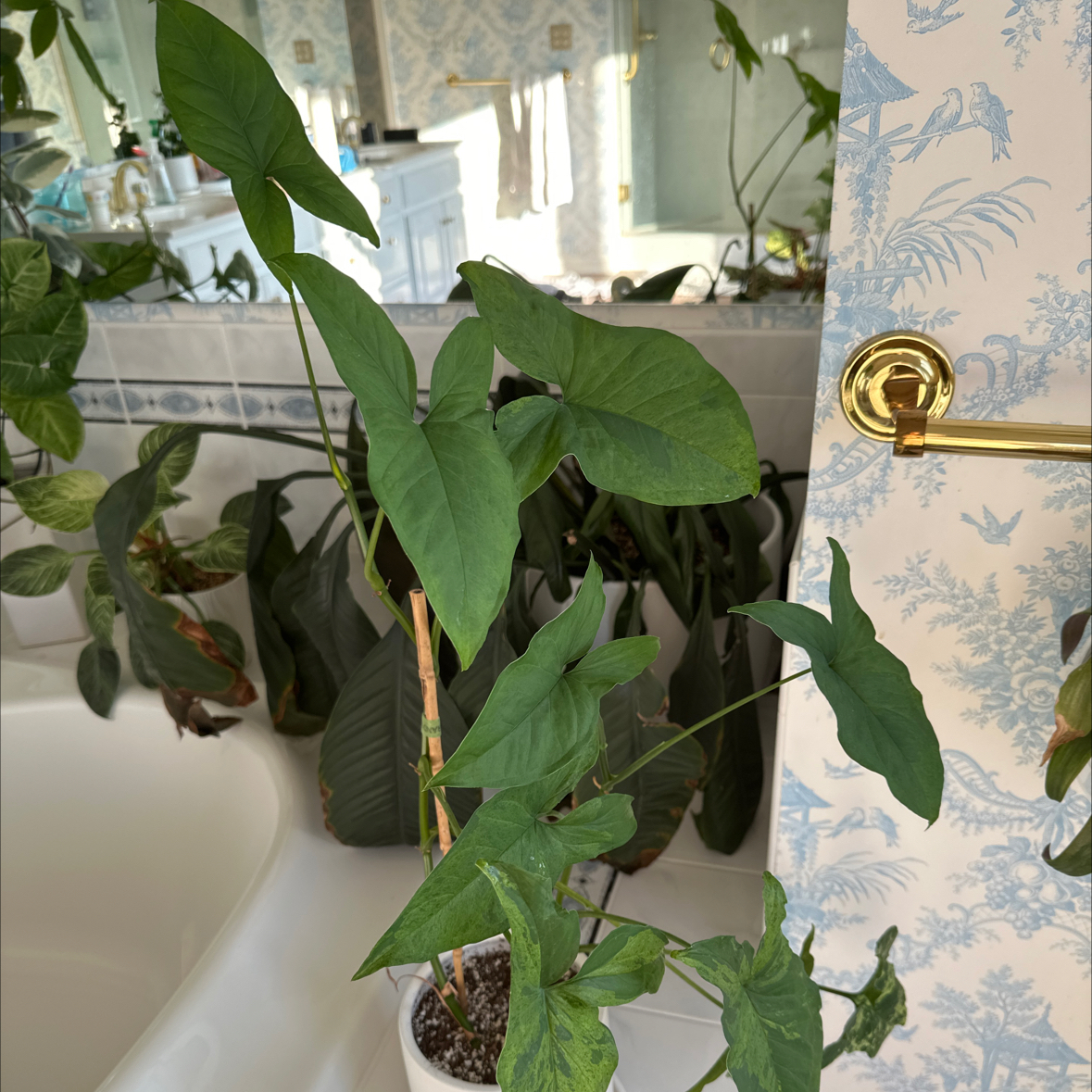
Common Arrowhead Plant Problems
Syngonium podophyllum
By the Greg Editorial Team
Jun 08, 2024•7 min read
This article was created with the help of AI so we can cover more plants for you. May contain errors. See one? Report it here.
Revive your Arrowhead Plant πΏ from common woes with this essential troubleshooting guide!
- Yellowing, wilting leaves signal health issues; adjust water and light accordingly.
- Prevent root rot and pests with well-draining soil and vigilant maintenance.
- Boost growth with repotting, proper humidity, and balanced fertilization.
Identifying Unhealthy Arrowhead Plant
When your Arrowhead Plant starts looking more like a sad umbrella than a vibrant arrow, it's time to play plant detective. Wilting, yellowing leaves, and stunted growth are the plant's SOS signals.
π© Visual Red Flags
Spotting an unhappy Arrowhead is straightforward if you know what to look for. Yellow leaves that fall faster than autumn in Vermont? Check. Leaves that droop like they've just heard bad news? Double-check. And if your plant's growth is more stunted than a bonsai tree, you've got some issues to address.
π΅οΈββοΈ Behavioral Tells
Leaves curling tighter than a rolled-up yoga mat suggest your green buddy is thirsty or craving more humidity. If they're reaching for the sky, it's likely a cry for less water or a plea for a break from that scorching afternoon sun.
π‘ Quick Tip:
Prune the drama queens β the dried-out or damaged leaves β to encourage new growth. And remember, gloves are your friends; Arrowhead sap is as irritating as a mosquito at a campfire.
π΅οΈββοΈ Unseen Culprits
Don't forget to play Sherlock with the roots. If they're more tangled than headphones in a pocket, it's time to consider repotting. Rootbound plants are like teens in a growth spurt β they need room to stretch.
π΅οΈββοΈ The Root of the Problem
If the leaves look like they've been through a paper shredder, it's worth a peek under the hood. Mushy, brown roots are a telltale sign of root rot, and you'll want to act faster than a cat on a hot tin roof to fix that.
π Pests: The Uninvited Guests
Lastly, keep an eye out for party crashers like spider mites and aphids. These pests love a good plant buffet and can turn your Arrowhead into a sad salad in no time. Spot them? Isolate, prune, and show them the door with some pest control swagger.
Remember, the key to a thriving Arrowhead Plant is knowing what a cry for help looks like. Keep these tips in your back pocket, and you'll be the plant whisperer your green friends need.
Preventive Care for Arrowhead Plant
π§ Proper Watering Techniques
Overwatering and underwatering can send your Arrowhead plant to an early grave. To avoid this, stick to a watering schedule that allows the top inch of soil to dry out before giving it another drink. Think of it as the plant's version of a thirst quencher after a good run.
πΏ Ideal Light and Humidity Conditions
Arrowhead plants are like Goldilocks; they prefer conditions that are just right. Bright, indirect light and humidity levels akin to a tropical paradise (think 60% or higher) will keep them from throwing a fit. Too much direct sun, and they'll throw a shade of yellow you didn't ask for.
π Regular Maintenance and Observation
Keep an eye on your leafy friend like it's the quiet kid in class who might surprise you. Regular check-ups can prevent a whole host of issues. Prune away any dead or dying foliage to prevent rot and disease, and don't let dust collect on the leaves - it's not a trophy shelf.
π± Soil and Repotting
Choose a well-draining soil mix and a pot with drainage holes to avoid waterlogging. Like a good relationship, it needs space to grow; repot every couple of years to prevent it from becoming root-bound.
πΏ Fertilization
Feed your Arrowhead plant with a balanced fertilizer during the growing season, but don't overdo it. Too much, and you'll have a leggy mess on your hands, with more growth than a teenager in a growth spurt.
π Pest Control
Keep an eye out for freeloaders like spider mites and aphids. If you spot these party crashers, isolate your plant faster than a hermit during flu season. Wipe down the leaves with soapy water or neem oil to send those pests packing.
Remember, the best offense is a good defense. Regular maintenance is the key to a thriving Arrowhead plant.
Common Arrowhead Plant Problems
1. π Root Rot
Symptoms: Yellowing leaves, wilting, and stems that feel mushy to the touch. Causes: Too much love in the form of water, a pot that holds onto moisture like a grudge, or soil that's more compact than a clown car. Solutions: Evict the plant from its soggy abode, give the roots a haircut, and replant in soil that drains like a dream. Water with a lighter hand.
2. π‘ Leaf Yellowing
Symptoms: Leaves turning the color of butter, often waving goodbye as they drop off. Causes: A watering schedule that's either forgetful or overeager, or the plant's silent scream for nutrients. Solutions: Find the Goldilocks zone for watering and consider a spa treatment with fertilizer to address any dietary deficiencies.
3. π Pests (Spider Mites, Aphids)
Symptoms: Uninvited guests making themselves at home, with webbing as evidence or leaves that look like they've been used for target practice. Causes: Stale air that's about as refreshing as a stagnant pond, a watering can that just won't quit, or new plants bringing in plus-ones. Solutions: Quarantine the party crashers, snip off their favorite hangouts, and bring out the organic pest bouncers.
4. π Brown Leaf Tips
Symptoms: Leaf tips turning as brown and crispy as overcooked bacon. Causes: An atmosphere drier than a stand-up comedian, a forgetful watering routine, or a heavy-handed approach to plant food. Solutions: Boost the humidity to rainforest levels, get on a regular watering schedule, and ease up on the fertilizer.
5. π± Stunted Growth
Symptoms: The plant's growth is as lackluster as a flat soda, with leaves so small they could be mistaken for confetti. Causes: Light as dim as a candle in the wind, roots that are packed tighter than a rush-hour subway, or a diet missing key nutrients. Solutions: Shine some light on the situation, give the roots room to groove, and consider a balanced diet with fertilizer.
Reviving and Maintaining the Arrowhead Plant
Reviving an Arrowhead Plant isn't rocket science, but it does require a bit of patience and a steady hand. Here's how to nurse your green buddy back to health and keep it thriving.
π§ Adjusting Watering Habits
Overwatering and underwatering can send your plant to an early grave. Stick your finger in the soil up to the first knuckle; if it's dry, it's time to water. Remember, your plant's thirst varies with the seasonsβless in winter, more in summer.
βοΈ The Right Light
Your Arrowhead Plant craves bright, indirect sunlight. Direct rays can scorch its leaves, so play it cool and keep it near a window with a sheer curtain for a bit of shade.
π¦ Humidity and Temperature
These tropical natives love a steamy environment. If your home is drier than a stand-up comedian, consider misting the leaves or using a humidifier. Aim for room temperatures between 60Β°F (15Β°C) and 85Β°F (29Β°C) to avoid turning your plant into a popsicle or a wilted salad.
π± Repotting and Soil
When your Arrowhead starts bursting out of its pot, it's time to give it a new home. Choose a pot with drainage holes and a well-draining potting mix. Spring is the best time for this little housewarming.
βοΈ Pruning and Propagation
Get snippy to keep your plant bushy and full. Prune during the growing season to encourage new growth. You can also propagate those cuttings to spread the Arrowhead love.
πΏ Fertilization
Feed your plant a balanced liquid fertilizer every two to four weeks during the growing season. Cut back in winter when it's snoozing. Over-fertilizing can lead to more drama than a reality TV show, so don't overdo it.
π Pest Control
Keep an eye out for freeloaders like spider mites and aphids. Good air circulation and a monthly neem oil spa can keep these pests at bay. Remember, a clean plant is a happy plant.
β³ Patience is Key
Like a fine wine, reviving an Arrowhead Plant doesn't happen overnight. Give it consistent care, and watch as it bounces back, ready to add that touch of green elegance to your space.
β οΈ Safety First
This content is for general information and may contain errors, omissions, or outdated details. It is not medical, veterinary advice, or an endorsement of therapeutic claims.
Always consult a qualified healthcare professional before using any plant as food, medicine, or supplement.
Never eat any plant (or feed one to pets) without confirming its identity with at least two trusted sources.
If you suspect poisoning, call Poison Control (800) 222-1222, the Pet Poison Helpline (800) 213-6680, or your local emergency service immediately.
Spotted an error? Please report it here.