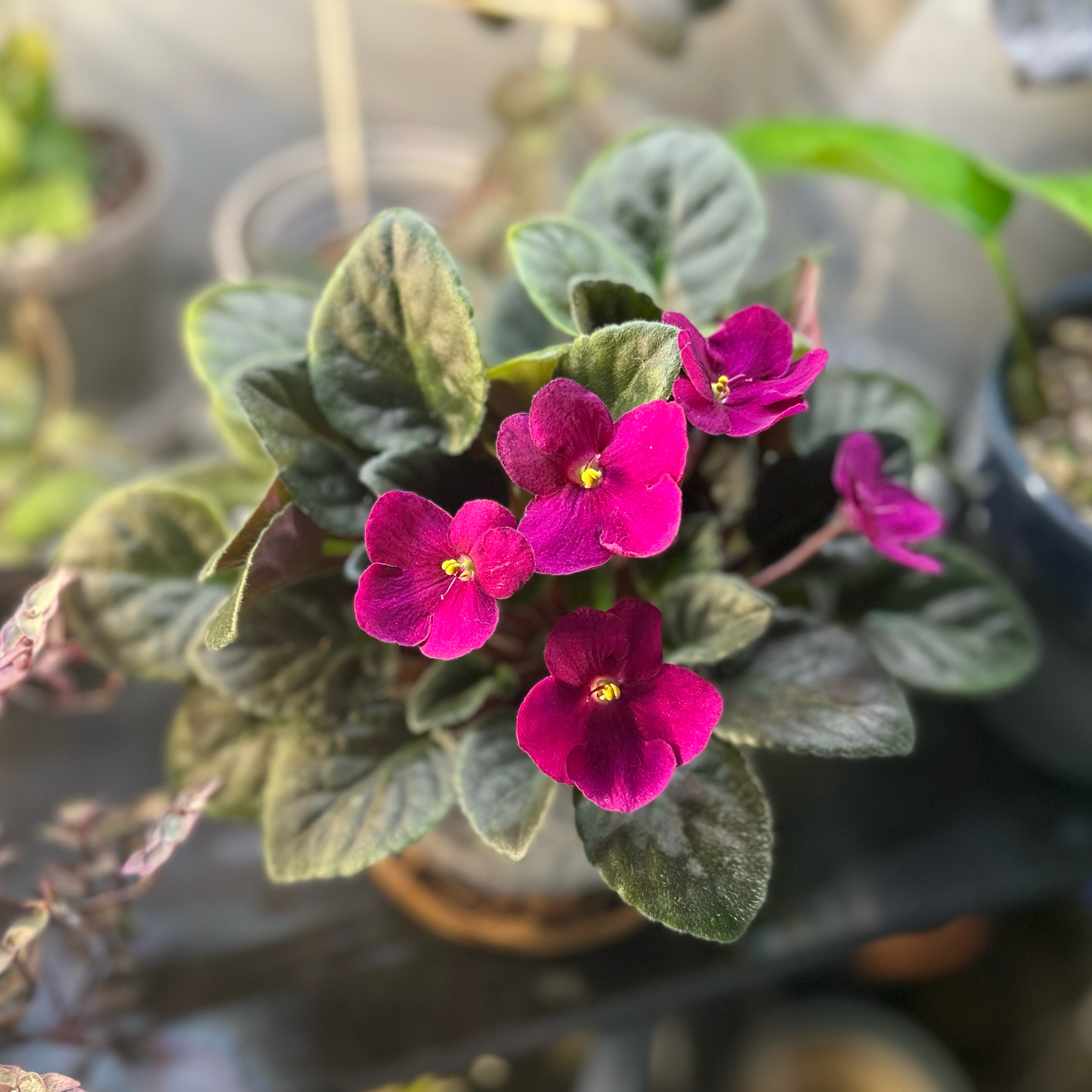
African Violet

Best Soil for African Violet

Streptocarpus ionathus
Reviewed by Kiersten Rankel M.S.
Quick Answer
African Violets thrive in a light, well-aerated mix that holds just enough moisture without staying wet. A blend of peat moss, perlite, and a small amount of potting soil gives their fine, delicate roots room to breathe. Aim for a slightly acidic pH of 6.0 to 6.5.

What Kind of Soil Does an African Violet Need?

African Violets are native to the rocky, humus-rich slopes of Tanzania, where their fine roots expect good drainage alongside consistent moisture. They need a mix that holds dampness without turning waterlogged, with enough air pockets to keep those delicate roots healthy.

Stays wet
Damp
Waterlogged wet & suffocating
Damp & Airy moisture + oxygen
Compacted dense & dry
Gritty & Fast drains in seconds
African Violet
Regular Potting Soil
Airy
Dries quickly

Standard potting soil is usually too dense and heavy for African Violets on its own. Their fibrous, hair-like roots are sensitive to compaction and will rot quickly in a mix that holds water for too long. You want something that feels light and fluffy when you squeeze it.

Peat moss is the backbone of a good African Violet mix because it retains moisture evenly and provides the slight acidity these plants prefer. Adding perlite opens up the mix and keeps air moving around the roots. A little extra peat compared to perlite shifts the balance toward moisture retention, which suits their consistent-watering preference.

If you bottom-water your African Violet (which most growers recommend to avoid crown rot), the mix needs to wick water upward efficiently. A peat-heavy blend does this well, pulling water from the saucer up through the pot without drowning the roots.

What Soil Mix Should I Use for My African Violet?

Recommended Mix
Peat moss 50%
Perlite 30%
Potting soil 20%
Stay on top of plant care
Get seasonal reminders for watering and fertilizing โ€” personalized for your plants.
Try Greg Free

What pH Does My African Violet Need?

African Violets prefer a mildly acidic soil, ideally between 6.0 and 6.5. This range keeps nutrients like iron and phosphorus available in forms the plant can absorb. Check your mix with an inexpensive soil pH meter or test strips from any garden center before potting up.

When pH creeps above 7.0, African Violets often develop yellowing leaves and stop blooming, even when fertilized regularly. Soil that turns too acidic below 5.5 can cause leaf edges to look scorched and growth to stall. Both symptoms are often mistaken for watering or light problems, so testing the soil is worth the effort.

Ideal pH Range
Ideal range 6.0โ€“6.5
Tolerable range 5.8โ€“7.0
To lower pH Add peat moss or use sulfur granules
To raise pH Mix in a small amount of garden lime

When Should I Replace My African Violet's Soil?

Refresh an African Violet's soil every 12 to 18 months. Peat-based mixes compact over time and lose their light, airy texture, which is exactly what makes them work well for these plants. When the mix breaks down, water either sits on top or rushes straight through without absorbing properly.

Spring is a good time to repot because the plant is moving into its active growing season and will bounce back from root disturbance quickly. Take the opportunity to move up one pot size if the roots are circling the bottom.

Signs Your Soil Needs Replacing
Water pools on the surface instead of absorbing evenly
Soil feels hard and compacted when you press it
Plant leans or tips over despite normal watering
Roots visible at drainage holes or on the soil surface
Flowering slows even with consistent light and fertilizer

How Do I Prepare Garden Soil for African Violets?

If you're planting African Violets outdoors in a warm climate, their fine, delicate root systems need soil that is extremely light and well-aerated. These plants are native to the forest floor in Tanzania, where they grow in mossy, loose ground that barely holds together.

In clay soil, the transformation needs to be dramatic: work in generous amounts of peat or coco coir, perlite, and fine compost until the texture feels fluffy and crumbly. African Violets will not survive compacted soil. Sandy ground needs less structural work but benefits from peat and compost to retain light moisture. Plant in a fully shaded spot protected from direct sun and heavy rain, since both damage the soft foliage.

Got More Questions?

Can I use regular potting soil for my African Violet?
Standard potting mix is too heavy on its own and tends to compact, which stresses the fine roots. Blend it with peat moss and perlite, or just buy a pre-made African Violet mix, which is formulated specifically for their drainage needs.
Do I need to sterilize my soil before potting my African Violet?
Commercial potting mixes and African Violet blends are already pasteurized, so extra sterilization is not necessary. If you are reusing old potting mix, it is not worth the risk of carrying over pathogens or fungus gnats โ€” start fresh.
Why does my African Violet need its own special soil mix?
Their roots are fine, fibrous, and rot-prone. A standard heavy mix cuts off the air circulation those roots need. The peat-perlite blend mimics the fast-draining but moisture-retentive humus they grow in naturally on rocky hillsides.
How deep should I pot my African Violet?
Plant at the same depth it was in before, keeping the crown (center of the rosette) just at or slightly above soil level. Burying the crown causes crown rot, which is the most common reason African Violets die.
Can I add sand to my African Violet mix?
Coarse horticultural sand can improve drainage, but fine builder's sand actually compacts the mix and makes drainage worse. Perlite is a better choice than either type of sand for opening up the texture.
Stay on top of plant care
Get seasonal reminders for watering and fertilizing โ€” personalized for your plants.
Try Greg Free

About This Article

Kiersten Rankel M.S.
Botanical Data Lead at Greg ยท Plant Scientist
About the Author
Kiersten Rankel holds an M.S. in Ecology & Evolutionary Biology from Tulane University. A certified Louisiana Master Naturalist, she has over a decade of experience in science communication, with research spanning corals, cypress trees, marsh grasses, and more. At Greg, she curates species data and verifies care recommendations against botanical research.
See Kiersten Rankel's full background on LinkedIn.
Editorial Process
Soil recommendations verified against Streptocarpus ionathus growth data from Greg's botanical database, cross-referenced with USDA hardiness zone data and published horticultural research.
2,515+ Greg users growing this plant
USDA hardiness zones 11aโ€“12b