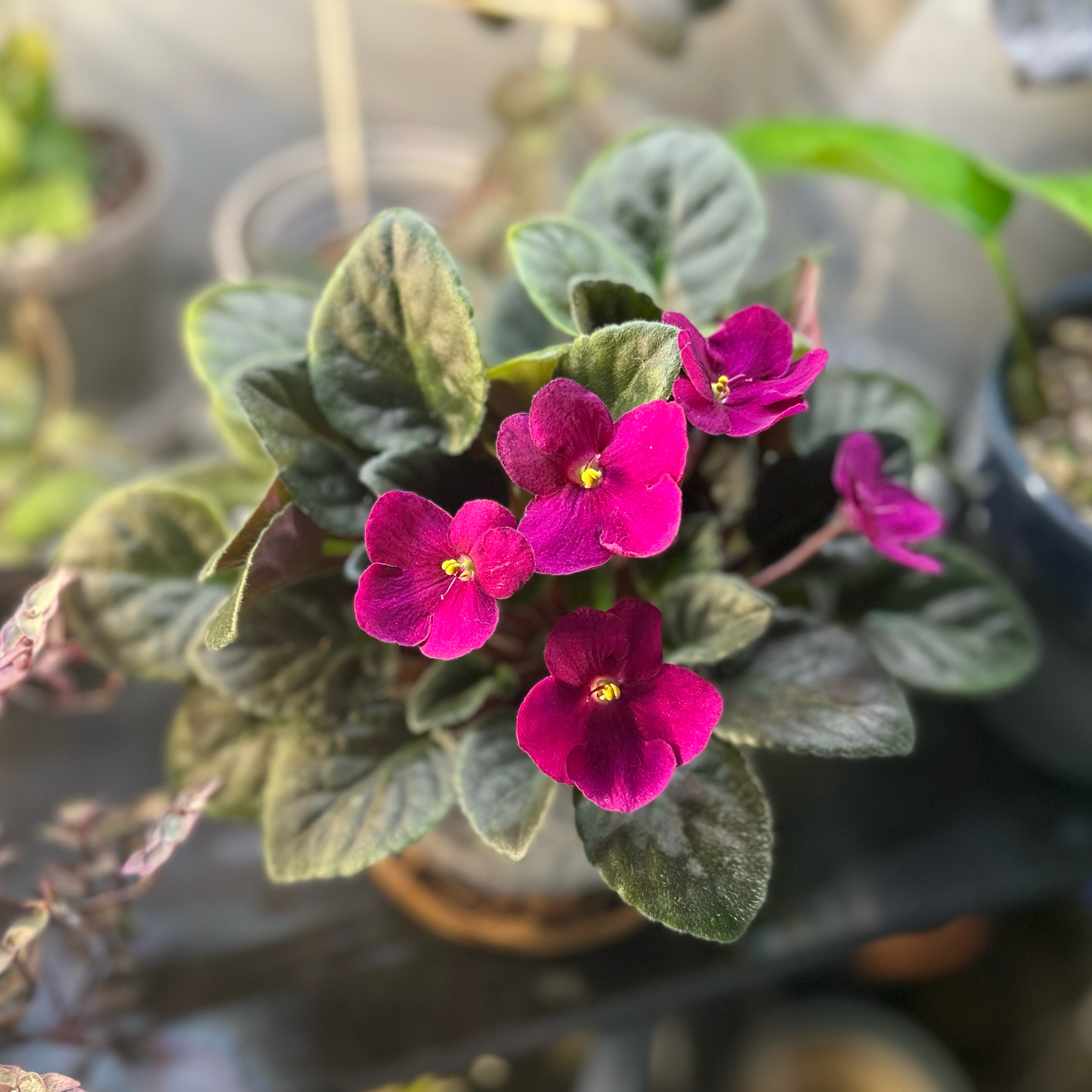
African Violet

How to Fertilize African Violet

Streptocarpus ionathus
Reviewed by Kiersten Rankel M.S.
Quick Answer
Use a balanced fertilizer with a ratio close to 14-12-14, formulated for African Violets. Feed every two weeks during spring and summer. Cut back to monthly in fall and stop entirely in the darkest winter months.

When Should I Start Feeding My African Violet?

Because African Violets are almost always grown indoors, feeding timing follows seasonal light levels rather than outdoor temperatures.

US feeding regions map
Pacific Feb–Oct
Mountain Mar–Sep
Midwest Mar–Sep
Northeast Mar–Sep
Southeast Feb–Oct
Stay on top of plant care
Get seasonal reminders for watering and fertilizing — personalized for your plants.
Try Greg Free

How Often Should I Fertilize My African Violet?

During spring and summer, feed your African Violet every two weeks with a half-strength liquid fertilizer. This matches the plant's active growth period when it's putting out new leaves and flowers.

In early fall, taper to once a month. Once winter arrives and daylight drops, stop feeding altogether. The plant's growth slows significantly and extra nutrients just accumulate as harmful salts in the soil.

If you notice white crust forming on the soil surface or pot rim, that's salt buildup from fertilizer. Flush the soil with plain water a few times to wash it out before resuming feeding.

Feeding Calendar
Spring
Half-strength liquid every 2 weeks
Summer
Half-strength liquid every 2 weeks
Early Fall
Half-strength liquid once a month
Late Fall & Winter
No feeding

What Is the Best Fertilizer for African Violet?

African Violets do best with a balanced fertilizer that has roughly equal parts nitrogen, phosphorus, and potassium. A ratio like 14-12-14 supports both healthy leaves and steady blooms. Look for a formula labeled specifically for African Violets, since these are designed with the right nutrient balance.

Liquid fertilizers are the easiest option because you can control the strength precisely. Dilute to half the label rate to avoid salt buildup in the small pots these plants typically grow in.

Avoid fertilizers with urea as the nitrogen source. Urea can burn African Violet roots, especially in cooler conditions. Look for nitrate-based nitrogen on the label instead.

Synthetic
Liquid concentrate designed specifically for African Violets. Use 7 drops per quart of water for regular feeding.
Water-soluble powder with high phosphorus for bloom production. Mix 1/4 teaspoon per gallon at half strength.
Organic
Gentle liquid organic formula made for African Violets. Feed every 2 weeks during the growing season.
A mild, slow-release amendment. Sprinkle a thin layer on the soil surface every few months for a gentle nutrient boost.

How Do I Fertilize My African Violet?

1
Water your plant first
Always water your African Violet with room-temperature water before fertilizing. This protects the delicate roots from fertilizer burn.
2
Dilute to half strength
Mix your African Violet fertilizer at half the label rate. For most liquid concentrates, that's about 1/4 teaspoon per gallon of water.
3
Apply to the soil only
Pour the fertilizer solution directly onto the soil, keeping it off the leaves. Water droplets on African Violet leaves cause brown spots, and fertilizer solution makes this worse.
4
Let excess drain away
Allow the solution to flow through the drainage holes. Never let your African Violet sit in a saucer of fertilizer water for more than 30 minutes.
5
Flush the soil monthly
Once a month, water thoroughly with plain water to rinse out accumulated salts. This prevents the white crust that can damage roots over time.

Got More Questions?

Can I use coffee grounds on my African Violet?
It's not recommended. Coffee grounds are acidic and can throw off the soil pH that African Violets prefer (around 6.0-6.5). They also encourage fungus gnats. Stick with a balanced liquid fertilizer instead.
What happens if I over-fertilize my African Violet?
You'll see brown, crispy leaf edges and a white crust on the soil or pot. The roots can burn, which causes wilting even when the soil is moist. If this happens, flush the soil with plain water several times and skip feeding for a month.
Should I fertilize my African Violet while it's blooming?
Yes, blooming plants benefit from continued feeding since flower production takes a lot of energy. Keep up your regular half-strength schedule while flowers are present.
Can I use regular houseplant fertilizer on African Violets?
You can in a pinch, but it's not ideal. Regular houseplant fertilizers often contain urea-based nitrogen, which can burn African Violet roots. A formula specifically made for African Violets uses gentler nitrogen sources.
Why are my African Violet leaves turning yellow?
Yellow lower leaves can signal either too much or too little fertilizer. If you've been feeding regularly, flush the soil and cut back. If you haven't fed in months, a nutrient deficiency is likely the cause.
Stay on top of plant care
Get seasonal reminders for watering and fertilizing — personalized for your plants.
Try Greg Free

About This Article

Kiersten Rankel M.S.
Botanical Data Lead at Greg · Plant Scientist
About the Author
Kiersten Rankel holds an M.S. in Ecology & Evolutionary Biology from Tulane University. A certified Louisiana Master Naturalist, she has over a decade of experience in science communication, with research spanning corals, cypress trees, marsh grasses, and more. At Greg, she curates species data and verifies care recommendations against botanical research.
See Kiersten Rankel's full background on LinkedIn.
Editorial Process
Fertilizer recommendations verified against Streptocarpus ionathus growth data from Greg's botanical database, cross-referenced with USDA hardiness zone data and published horticultural research.
2,518+ Greg users growing this plant
USDA hardiness zones 11a–12b