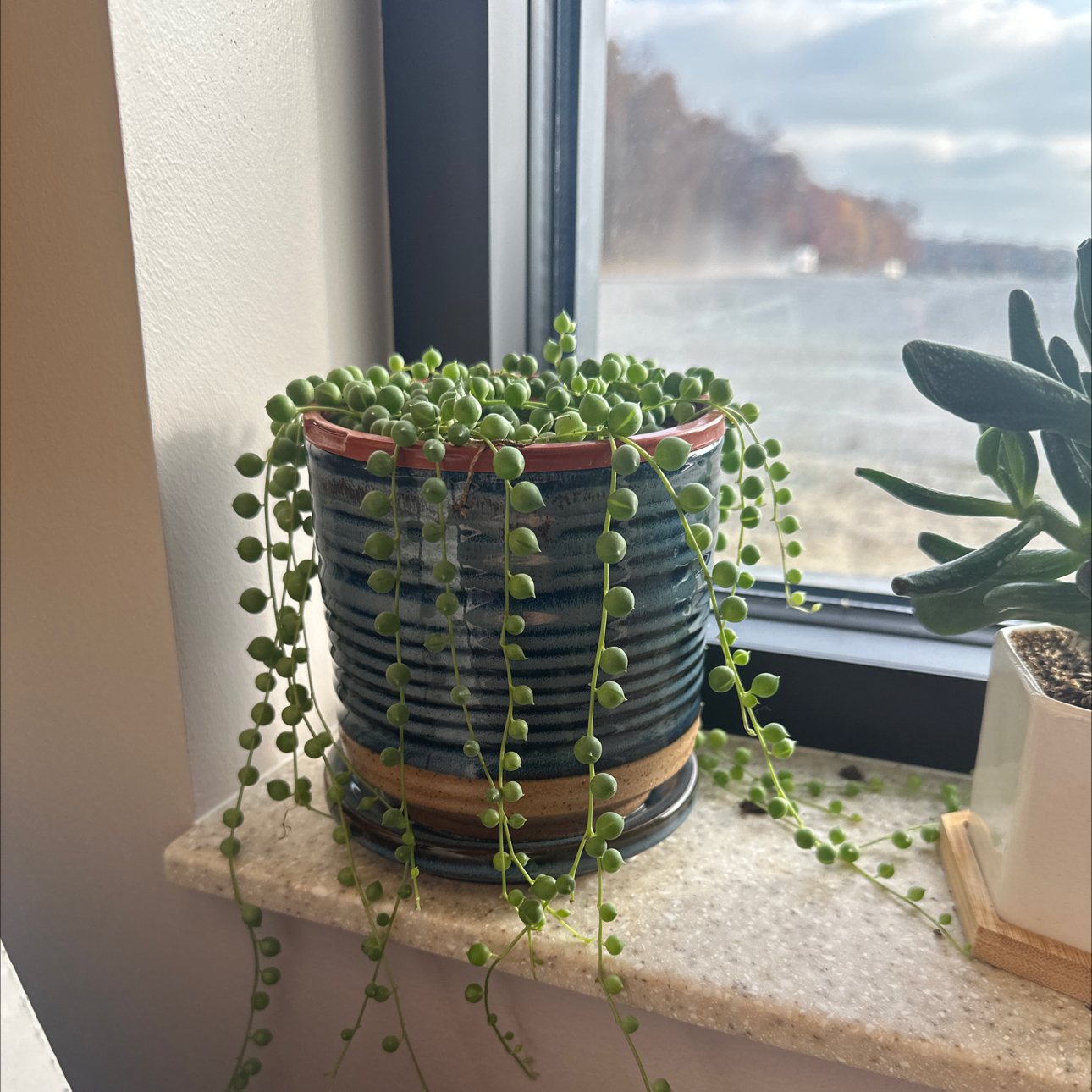
String of Pearls

What's Wrong with My String of Pearls?

Curio rowleyanus
Reviewed by Kiersten Rankel M.S.
Quick Answer
1.
Most problems trace back to overwatering.
The pearls store water so efficiently that the plant looks healthy long after the roots have rotted. Check the soil and the pearl texture before anything else.
2.
Check light if watering looks fine.
Strings that thin out, lose pearls, or die back without rot usually trace to too little light. String of Pearls is a bright-light plant from open South African drylands.
3.
New pearls at string tips mean it's still fighting.
Fresh pearls forming at the ends of the strings, or tiny new strings emerging from the crown, are the clearest sign the plant is healthy enough to recover.
Stay on top of plant care
Get seasonal reminders for watering and fertilizing โ€” personalized for your plants.
Try Greg Free

Common String of Pearls Problems

Mushy pearls

Overwatering rot

Each pearl is a swollen water-storage organ, and those cells burst when the soil stays wet for too long. The shallow, fine root system of String of Pearls rots fast in moist soil, and by the time pearls turn translucent and mushy the roots are usually already gone.

1. Remove the plant from its pot and inspect the roots. Cut away any brown, slimy tissue until you reach firm, white roots.
2. Let the roots air-dry for a day before repotting in fresh, very gritty cactus mix.
3. Hold off watering for at least two weeks to let the root system stabilize.
4. Discard any strings with fully mushy pearls since they will not recover.

Shriveled pearls

Underwatering

String of Pearls can go weeks without water because each pearl holds a large reserve relative to its size. Shriveling means that reserve is finally exhausted. Recovery is quick once the plant gets a good drink.

1. Water thoroughly until it drains from the bottom of the pot.
2. Pearls should plump back up within one to two days.
3. If they stay shriveled after watering, check whether the roots are still intact and not rotted.

Pearls dropping off

Sudden environmental change

String of Pearls sheds pearls quickly when stressed by a sudden shift in light, temperature, or humidity. Moving the plant, a cold draft, or a dramatic change in watering frequency can trigger a wave of drops within days.

1. Move the plant to a stable spot away from vents, drafts, and cold windows.
2. Keep conditions consistent for a few weeks. Pearl drop from a single environmental shock usually stops on its own once things stabilize.
Advanced root rot

When rot has destroyed most of the shallow root system, the plant can no longer support the strings. Pearls fall off in clusters, often while still partially plump. If the crown at the soil surface feels soft, rot is the cause.

1. Press the crown at the soil surface. If it feels soft or wet, unpot the plant immediately.
2. Cut away all rotted root and crown tissue until you reach firm material.
3. Take healthy stem cuttings from the surviving strings, let them callus for a day, and root them in dry, gritty mix.
4. Discard the original root mass.

Strings dying back

Root rot from overwatering

As rot spreads from the shallow root zone upward into the crown, individual strings lose their supply line and die from the base outward. The pearls on a dying string go flat and pale before the stem shrivels.

1. Cut dead strings back to the crown.
2. Unpot and inspect the roots. Remove all soft, brown tissue.
3. Repot in fresh, dry cactus mix and withhold water for two weeks.
4. Take cuttings from any still-firm strings to propagate as insurance.
Not enough light

String of Pearls evolved in open, sun-drenched South African drylands. In dim indoor spots, strings weaken and produce fewer, smaller pearls. Eventually the plant concentrates energy on its closest strings to the light source and the shadier ones die back.

1. Move to the brightest spot available, ideally a south or east window with direct sun for several hours a day.
2. Dead strings will not revive, but new growth from the crown should fill in once light improves.

Pests

Mealybugs

White cottony clusters at the base of the crown or tucked between pearls along the strings. Mealybugs are the most common pest on String of Pearls because the closely spaced pearls give them sheltered spots to hide and feed along every string.

1. Dab each cluster with a cotton swab dipped in 70% isopropyl alcohol.
2. Follow up with an isopropyl spray over all the strings, working into the pearl joints.
3. Repeat every five to seven days for three weeks to catch newly hatched eggs.
Aphids

Soft-bodied green or tan insects clustered at the tips of actively growing strings, where the plant tissue is youngest and most tender. String of Pearls is periodically targeted because the string tips are exactly the kind of soft new growth aphids seek out.

1. Knock aphids off with a firm water spray, aiming at the string tips.
2. Follow up with an insecticidal soap spray, coating the tips and the undersides of any pearls.
3. Repeat every four to five days until no new colonies appear.

Preventing String of Pearls Problems

A few consistent habits prevent most of what goes wrong with String of Pearls.
Weekly Check
1
Water only when the soil is completely dry.
The pearls store water for weeks. In most indoor conditions that means watering every ten to fourteen days in summer and less in winter. Keeping the soil even slightly moist between waterings is how root rot starts on this species.
2
Use a very gritty, fast-draining mix in a pot with a drainage hole.
A blend of cactus mix and coarse perlite gives the shallow root system the air gaps it needs. Standing water in the pot or saucer is the fastest route to mushy pearls.
3
Give it the brightest spot you have.
A south or east-facing window with several hours of direct sun keeps strings dense and pearls plump. Low light leads to weak strings that thin out and die back.
4
Keep conditions stable year-round.
Sudden moves, cold drafts, or dramatic watering changes trigger pearl drop. Place the plant in a consistent spot away from air vents and cold glass.
5
Check the crown and string bases whenever you water.
Mealybugs hide at the base of the crown and in the pearl joints. Catching them early means a cotton swab rather than weeks of treatment.
Stay on top of plant care
Get seasonal reminders for watering and fertilizing โ€” personalized for your plants.
Try Greg Free

About This Article

Kiersten Rankel M.S.
Botanical Data Lead at Greg ยท Plant Scientist
About the Author
Kiersten Rankel holds an M.S. in Ecology & Evolutionary Biology from Tulane University. A certified Louisiana Master Naturalist, she has over a decade of experience in science communication, with research spanning corals, cypress trees, marsh grasses, and more. At Greg, she curates species data and verifies care recommendations against botanical research.
See Kiersten Rankel's full background on LinkedIn.
Editorial Process
Every problem and fix in this article was verified against Greg's botanical database, cross-referenced with USDA hardiness zone data and published horticultural research from the Missouri Botanical Garden, university extension programs, and species-specific literature. The Curio rowleyanus care profile reflects documented species behavior combined with years of community grower feedback in Greg.
27,371+ Greg users growing this plant
USDA hardiness zones 9aโ€“12b