
My aloe is falling over
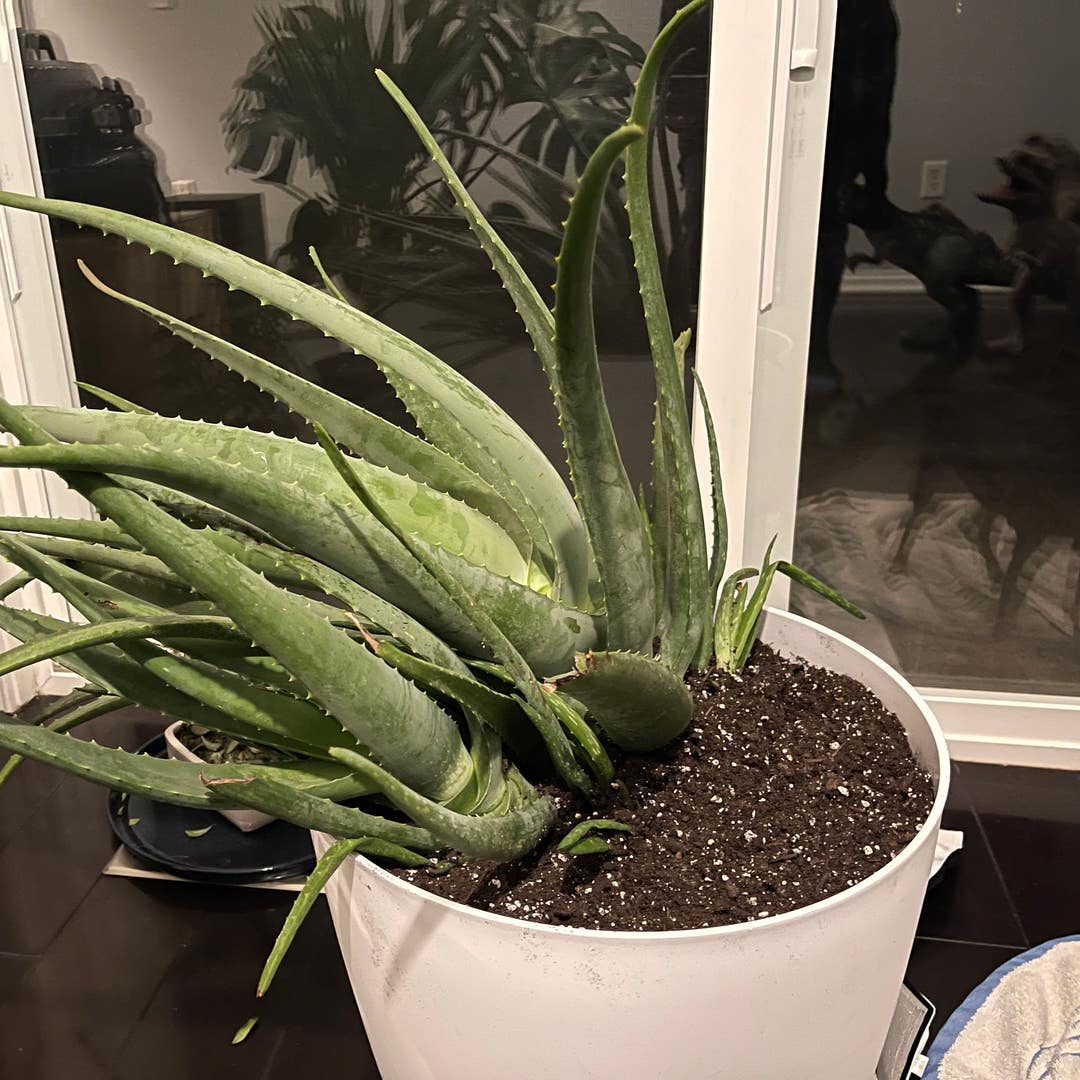
#AloeVera I posted last night but I don’t see my question today so I’m not sure it actually posted, ignore if this is a duplicate. I had to repot my aloe a week ago because the plant had outgrown so much it was starting to cut into the plant in some places and the thin plastic pot was breaking. I couldn’t separate the pups, they are just so tangled in the mother plant and it already seemed traumatic to be repotting in the winter. But, the plant is so heavy and the roots so shallow that it can’t hold itself up properly. I’m going to stake it today with ribbon or something for support but is there anything else I can do?


 7
7


@ValidArugula Hello 👋 Linzie!
Give your plant extra support as it grows to help straighten out the leaves. If all of the leaves are droopy, insert 3 or 4 thin bamboo rods into the soil around the base of your plant. Then, tie a string around all of the rods so they're connected. Wrap a few more circles of string around the rods to create a kind of support cage around the aloe.
Repotting An Overgrown Aloe Vera Plant
If you want to enjoy the vitality of your massive Aloe Vera, consider moving it to a larger pot with a fresh growing medium, which will allow it to continue growing to even greater sizes.
You will need the following:
* New Pot
* Potting Soil
* Small shovel or trowel
* Garden shears
* Gardening gloves
* Clean water
Choose a New Pot for Overgrown Aloe Vera
Select a pot no more than two inches wider than the current one. This will keep stale water from accumulating beyond the root mass’s boundaries.
Terra-cotta or unsealed ceramic is the best material. These materials wick water away from the pot’s most remote corners, protecting the Aloe from over-watering.
Whatever material you choose, make sure the new pot has adequate drainage. The more drainage holes there are in the pot, the better.
Best Soil to Repot an Overgrown Aloe Vera
Aloe Vera plants are succulents native to arid regions of Africa and require dry, sandy soil. Therefore, it must be free draining and not prone to retaining excessive moisture.
I make my own by combining one good-quality potting mix with one part of coarse sand and a good handful of gravel for texture.
This improves drainage and helps to prevent root rot. If you prefer to avoid the hassle, a commercial succulent and cactus will suffice.
Step One: Add 1-2 inches of potting mix at the bottom
Add an inch or two of potting mix to the bottom of your new pot, with a small amount in the center to receive the Aloe.
Step Two: Lossen the Root System
Allow the Aloe Vera to breathe and examine the roots. Overgrown Aloes are likely to be root bound, so gently loosen any too tightly packed roots.
Remove any old potting soil as well. You’ll want as much of the new medium as possible to reach the root system.
Step Three: Place Aloe Vera in New Pot
Fill around the roots of the Aloe in the new pot so that they are well covered and the plant is stable. Tap the pot on the ground to help the soil fill in around the roots.
Step Four: Water the Aloe Thoroughly
When the pot is full, water the Aloe thoroughly and allow it to drain. Water will carry the mix deeper into the root mass, so you may need to top up the soil level.
Return the pot to its original location once all the water drains.
Give your plant extra support as it grows to help straighten out the leaves. If all of the leaves are droopy, insert 3 or 4 thin bamboo rods into the soil around the base of your plant. Then, tie a string around all of the rods so they're connected. Wrap a few more circles of string around the rods to create a kind of support cage around the aloe.
Repotting An Overgrown Aloe Vera Plant
If you want to enjoy the vitality of your massive Aloe Vera, consider moving it to a larger pot with a fresh growing medium, which will allow it to continue growing to even greater sizes.
You will need the following:
* New Pot
* Potting Soil
* Small shovel or trowel
* Garden shears
* Gardening gloves
* Clean water
Choose a New Pot for Overgrown Aloe Vera
Select a pot no more than two inches wider than the current one. This will keep stale water from accumulating beyond the root mass’s boundaries.
Terra-cotta or unsealed ceramic is the best material. These materials wick water away from the pot’s most remote corners, protecting the Aloe from over-watering.
Whatever material you choose, make sure the new pot has adequate drainage. The more drainage holes there are in the pot, the better.
Best Soil to Repot an Overgrown Aloe Vera
Aloe Vera plants are succulents native to arid regions of Africa and require dry, sandy soil. Therefore, it must be free draining and not prone to retaining excessive moisture.
I make my own by combining one good-quality potting mix with one part of coarse sand and a good handful of gravel for texture.
This improves drainage and helps to prevent root rot. If you prefer to avoid the hassle, a commercial succulent and cactus will suffice.
Step One: Add 1-2 inches of potting mix at the bottom
Add an inch or two of potting mix to the bottom of your new pot, with a small amount in the center to receive the Aloe.
Step Two: Lossen the Root System
Allow the Aloe Vera to breathe and examine the roots. Overgrown Aloes are likely to be root bound, so gently loosen any too tightly packed roots.
Remove any old potting soil as well. You’ll want as much of the new medium as possible to reach the root system.
Step Three: Place Aloe Vera in New Pot
Fill around the roots of the Aloe in the new pot so that they are well covered and the plant is stable. Tap the pot on the ground to help the soil fill in around the roots.
Step Four: Water the Aloe Thoroughly
When the pot is full, water the Aloe thoroughly and allow it to drain. Water will carry the mix deeper into the root mass, so you may need to top up the soil level.
Return the pot to its original location once all the water drains.

My guess is that the roots are some combination of weak / rotted. How did the roots look wheh you repotted? An aloe with strong roots should stand more upright. I’m sure you know not to over-water—but also after repotting you should wait several days to a week before watering. Repotting can damage roots, and damage is susceptible to infection, which leads to rot. So damaged roots need dry soil to heal before they can take up water.

@TwistedThreads This is very thorough! 👏🏻👏🏻 However, I recommend strongly against watering just after repotting to avoid the risk of root rot to danaged roots.

@TwistedThreads I just repotted last weekend, it was not falling over prior to that. I know it’s not the best time of year but the pot situation was becoming super sketchy and it was no longer optional.
@juropel The roots looked healthy but were pretty tangled up between the mother plant and the pups. To reduce stress (a working theory, not sure if it helps at all honestly) I didn’t try to keep messing with separating them and repotted everyone together. The roots were pretty shallow though, maybe 5-6 inches into the soil. I’m staking today and trying to find something to tie with that won’t cut into the aloe itself. I did water right after replanting but only a little, and mostly because I didn’t read to not do so until 2 days after the repot. 🤦🏻♀️
Follow up: my stake skills are suspect but it wasn’t staying upright when I did it the way I see everyone else doing it and it was putting a lot of pressure on the fleshy parts of the plant. My way looks terrible but there’s not stress on the plant itself and it is more upright than it had been previously… and that’s Velcro tape so I can adjust it as it changes.


I have aloes native to Texas and have learned the hard way. Lols. I would advise against repotting IF you do not want your aloe to grow larger. The bigger the pot and or more room you give it the more it’s gonna grow and or spring more pups like crazy! And they get heavy! I ended up putting them in one of those fake clay pots that are recycled plastic. I believe I had read somewhere that this plant prefers to be a bit more crowded with its living conditions too.
I’m just a 4th year green thumb tho but always an active learner! ;). I too also think your aloe plant is looking great!
I’m just a 4th year green thumb tho but always an active learner! ;). I too also think your aloe plant is looking great!