
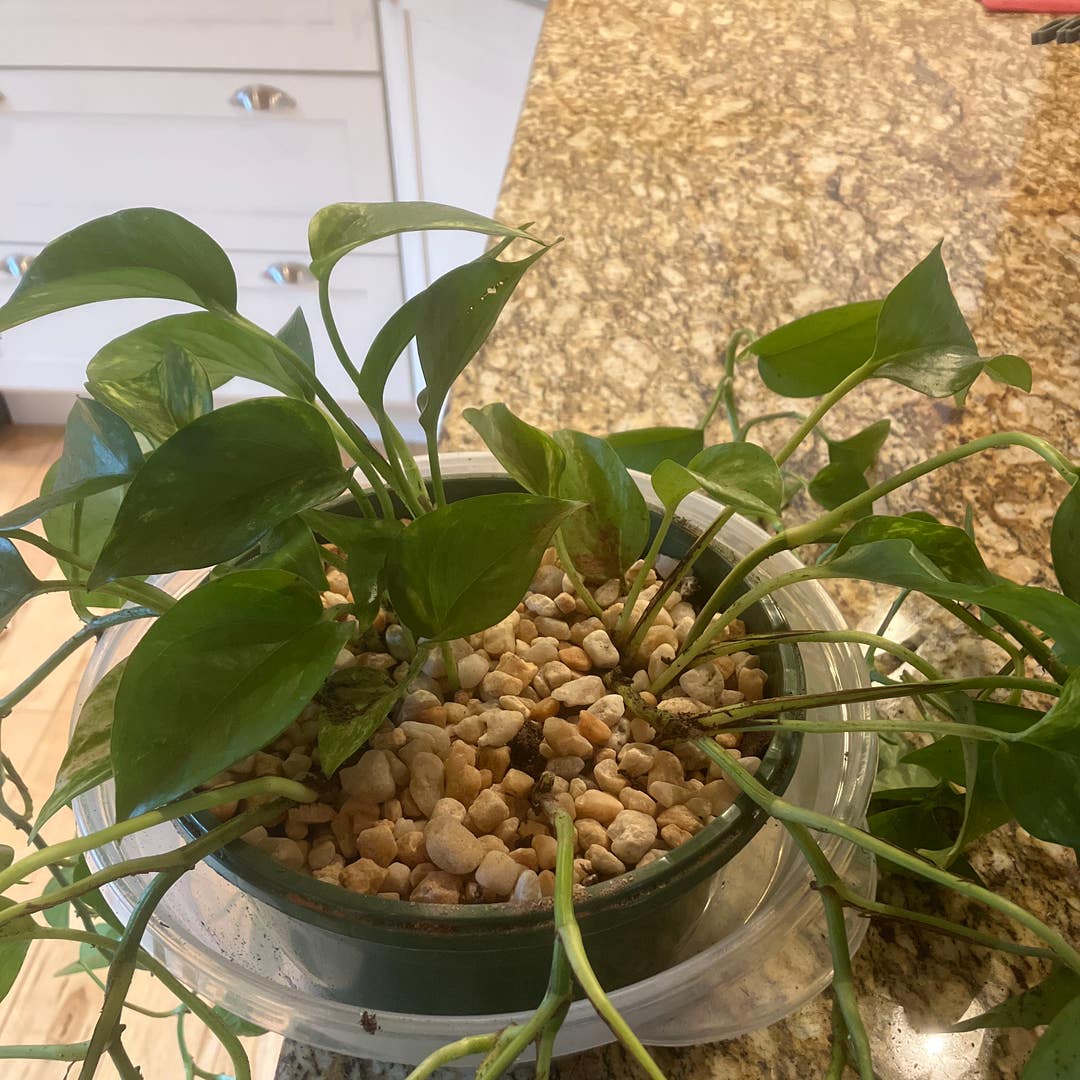
Does topping off the soil with rocks cause any harm?
Should I do this to more plants? I don’t want to ruin them all if its just going to cause rot or something #HappyPlants #PlantsMakePeopleHappy #PlantAddict #PothosPack


 6
6

 Best Answer

@Megongreg
What are the benefits of putting rocks on top of potted plants?
1. Improve aesthetics of the potted plant
The first reason home gardeners choose to put rocks on top of their potted plants is the aesthetic looks. Some prefer the look of rocks instead of the bare soil.
If your main goal is to improve the look of the plant, choose a rock color that compliments the color of the plant. In general, white, gray, or light orange rocks look good in potted plants.
White rocks especially create a more sophisticated look, taking your potted plant from a common house plant to a decorative piece.
2. Helps with water retention in the potting soil
The first way that rocks help your potted plant thrive is with water retention. When you pot your new plants, you likely looked through different soil types and found a “well-draining” mix.
Well-draining soil ensures that the water does not evaporate before the plant can absorb it. You can increase the water retention of your potted plant by placing rocks on top of the soil. The rocks shade the soil from sunlight, reduce its temperature, and help with slow evaporation.
3. Protects potting soil from erosion
Topdressing your potted plants with rocks can reduce water erosion as well. How often have you watered your plant and watched its precious soil splash out of the container?
If this happens at all, it has happened too many times. The water will run over the rocks after placing rocks on top of your potted plants’ soil, preventing soil loss.
If your potted plants are outside, top dressing with rocks can also protect the plants from wind erosion. This will keep your plants healthier and reduce your trips to the garden store for more soil.
4. Keeps pets away from the potting soil
We love our potted plants, and we love our pets. Unfortunately, they rarely love each
What are the problems of putting rocks on top of potted plants?
As mentioned earlier, not every plant benefits from a rock top dressing.
Some gardeners agree that the climate the plant lives in affects whether rocks should be placed on top of its plant or not. Plants growing in warmer temperatures and exposed to direct sunlight should not have rocks on top of the soil.
While the rocks will shade the soil from the drying sunlight, they could retain the heat themselves. If they get too warm, it could “cook” the plant’s roots. It is best to only top dress potted plants with rocks when they are not directly exposed sunlight.
You should also be cautious when adding rocks to slow-draining soil. The rocks might impair the potting soil’s limited ability to absorb water. Always pair a top dressing of rocks with well-draining soil.
How to put rocks on top of potted plants
There is more to top dressing a potted plant with rocks than just grabbing a handful of gravel and tossing it in the plant’s container.
First and foremost, make sure you are using a pot that has drainage holes in the bottom. This will prevent water build up in the bottom of the pot that could later lead to rot. If your pot does not have drainage holes already, you could drill a few on your own.
In addition to using a specific type of pot, you should use certain kinds of rocks. If you use any random rock, it could affect the pH of the soil and potentially kill the plant. For example, limestone raises the pH levels of the soil.
Acceptable rock types are glazed rocks (primarily for aesthetic appeal, brick chips, river rocks, and crushed gravel. You could also use sand as a top dressing material. Sand will prevent bugs from laying their eggs in the soil while still allowing moisture to reach the plant’s roots.
Before topdressing your potted plants, research their preferred soil acidity. After adding the top dressing, take the soil’s pH level frequently to ensure it does not harm the plant.
I recommend using a geotextile fabric to lay on top of the soil beforeplacing rocks. This fabric prevents the rocks from getting buried inthe soil. Once you’ve added the fabric, lay the rocks on top about aninch in thickness, not more. – Zachary Smith, Founder, Touch Trees
Lay a thin layer of the selected rocks on top of the soil. Be careful not to overfill the pot with rocks. The soil should still have some access to oxygen. Additionally, too many rocks could compress the soil. Compressed soil does not drain well and decreases its oxygen levels.
Want to increase the water retention of your potted plants without placing the rocks on top of the soil? Put the rocks at the bottom of the pot instead. Once again, be careful with the type and amount of rocks used. Too many rocks could clog the drainage system.
What are the benefits of putting rocks on top of potted plants?
1. Improve aesthetics of the potted plant
The first reason home gardeners choose to put rocks on top of their potted plants is the aesthetic looks. Some prefer the look of rocks instead of the bare soil.
If your main goal is to improve the look of the plant, choose a rock color that compliments the color of the plant. In general, white, gray, or light orange rocks look good in potted plants.
White rocks especially create a more sophisticated look, taking your potted plant from a common house plant to a decorative piece.
2. Helps with water retention in the potting soil
The first way that rocks help your potted plant thrive is with water retention. When you pot your new plants, you likely looked through different soil types and found a “well-draining” mix.
Well-draining soil ensures that the water does not evaporate before the plant can absorb it. You can increase the water retention of your potted plant by placing rocks on top of the soil. The rocks shade the soil from sunlight, reduce its temperature, and help with slow evaporation.
3. Protects potting soil from erosion
Topdressing your potted plants with rocks can reduce water erosion as well. How often have you watered your plant and watched its precious soil splash out of the container?
If this happens at all, it has happened too many times. The water will run over the rocks after placing rocks on top of your potted plants’ soil, preventing soil loss.
If your potted plants are outside, top dressing with rocks can also protect the plants from wind erosion. This will keep your plants healthier and reduce your trips to the garden store for more soil.
4. Keeps pets away from the potting soil
We love our potted plants, and we love our pets. Unfortunately, they rarely love each
What are the problems of putting rocks on top of potted plants?
As mentioned earlier, not every plant benefits from a rock top dressing.
Some gardeners agree that the climate the plant lives in affects whether rocks should be placed on top of its plant or not. Plants growing in warmer temperatures and exposed to direct sunlight should not have rocks on top of the soil.
While the rocks will shade the soil from the drying sunlight, they could retain the heat themselves. If they get too warm, it could “cook” the plant’s roots. It is best to only top dress potted plants with rocks when they are not directly exposed sunlight.
You should also be cautious when adding rocks to slow-draining soil. The rocks might impair the potting soil’s limited ability to absorb water. Always pair a top dressing of rocks with well-draining soil.
How to put rocks on top of potted plants
There is more to top dressing a potted plant with rocks than just grabbing a handful of gravel and tossing it in the plant’s container.
First and foremost, make sure you are using a pot that has drainage holes in the bottom. This will prevent water build up in the bottom of the pot that could later lead to rot. If your pot does not have drainage holes already, you could drill a few on your own.
In addition to using a specific type of pot, you should use certain kinds of rocks. If you use any random rock, it could affect the pH of the soil and potentially kill the plant. For example, limestone raises the pH levels of the soil.
Acceptable rock types are glazed rocks (primarily for aesthetic appeal, brick chips, river rocks, and crushed gravel. You could also use sand as a top dressing material. Sand will prevent bugs from laying their eggs in the soil while still allowing moisture to reach the plant’s roots.
Before topdressing your potted plants, research their preferred soil acidity. After adding the top dressing, take the soil’s pH level frequently to ensure it does not harm the plant.
I recommend using a geotextile fabric to lay on top of the soil beforeplacing rocks. This fabric prevents the rocks from getting buried inthe soil. Once you’ve added the fabric, lay the rocks on top about aninch in thickness, not more. – Zachary Smith, Founder, Touch Trees
Lay a thin layer of the selected rocks on top of the soil. Be careful not to overfill the pot with rocks. The soil should still have some access to oxygen. Additionally, too many rocks could compress the soil. Compressed soil does not drain well and decreases its oxygen levels.
Want to increase the water retention of your potted plants without placing the rocks on top of the soil? Put the rocks at the bottom of the pot instead. Once again, be careful with the type and amount of rocks used. Too many rocks could clog the drainage system.


In my opinion the short answer to this is : it can cause some plants to rot if it’s creating too much water retention. Also be cautious of compacting the soil, which can retard growth. If you love the look, wait and observe how the plant is doing for a while before you go hog wild on all the plants.




I have found that the rocks are ok for some but they need to be smaller/lighter. I'm not 1000000% sure but those look a little heavy imo but I could very well be wrong. Sometimes using something different like larger granule sands, I've never really used bc so personally idk how it would work but have heard good things, or the silica coarse sand chips stones, oh and lava rocks are actually really good bc they looks nice, you can get them in variety or sizes (you grab a hammer and make them your desired size). Plus they are very light and porous so the will help by not holding water on top or in the soil for periods of time. I use black lava rocks especially for bigger plants bc it takes too many smalls one to do the pot.