
Leaves
2 different leaves same plant. I see this alot across all my plants at one time or another. Thoughts?
@DreamMachine #happyplants #pothospack
@DreamMachine #happyplants #pothospack


 15
15

 Best Answer


Edema see how the spots are in lines following the veins. Her cells got too full and burst. In time they will scab over.
Pothos hate to be overwatered! Chunky soil, root rot treatment etc.
I use
1/3 peat moss
1/3 perlite
1/3 bark
1. Remove from your pot, to check the roots. If there is anything brown black or mushy you have rot and will need to cut it all off. Keep only the healthy roots they will be whitish in color
Now root rot comes from a bacteria that forms in your soil and then attacks your plant. So treatment is absolutely necessary.
2. Cut off all affected roots soak what is left in:
1 part peroxide + 3 parts water and leave in the peroxide mix to soak for 5 minutes this will kill off the remaining bacteria. It will bubble pot and fizz this is good it’s killing the bacteria.
3. Next is soil, the best
choice is to throw it away. It’s safest. Or bake it for 1 hour in a 200
Degree oven, not the greatest because it REALLY stinks. But it’s effective. Or the most risky way is to thoroughly flush your soil out with your peroxide mix twice! You need to be very careful and do it thoroughly because if even a teeny bit of bacteria is left your rot will come back.
4. Now the pot, it also has that pesky bacteria you must scrub it out with soapy water very well and then also scrub it down with the peroxide mix.
Now you can plant her again. Be sure to add some perlite to your soil for aeration. This will help oxygen reach those roots and I avoid bacteria growth in the future.
Sorry for the late response. I put in a long garden day! @DreamMachine Thanks for the tag Nadia.
Pothos hate to be overwatered! Chunky soil, root rot treatment etc.
I use
1/3 peat moss
1/3 perlite
1/3 bark
1. Remove from your pot, to check the roots. If there is anything brown black or mushy you have rot and will need to cut it all off. Keep only the healthy roots they will be whitish in color
Now root rot comes from a bacteria that forms in your soil and then attacks your plant. So treatment is absolutely necessary.
2. Cut off all affected roots soak what is left in:
1 part peroxide + 3 parts water and leave in the peroxide mix to soak for 5 minutes this will kill off the remaining bacteria. It will bubble pot and fizz this is good it’s killing the bacteria.
3. Next is soil, the best
choice is to throw it away. It’s safest. Or bake it for 1 hour in a 200
Degree oven, not the greatest because it REALLY stinks. But it’s effective. Or the most risky way is to thoroughly flush your soil out with your peroxide mix twice! You need to be very careful and do it thoroughly because if even a teeny bit of bacteria is left your rot will come back.
4. Now the pot, it also has that pesky bacteria you must scrub it out with soapy water very well and then also scrub it down with the peroxide mix.
Now you can plant her again. Be sure to add some perlite to your soil for aeration. This will help oxygen reach those roots and I avoid bacteria growth in the future.
Sorry for the late response. I put in a long garden day! @DreamMachine Thanks for the tag Nadia.

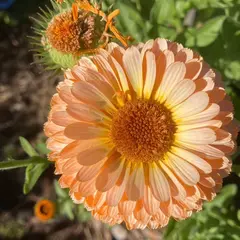
@planthoe40 hmm! I’ve never come across this before. My first thought was a pest like @Slyvie mentioned, but let’s ask @SuperbRaspfern to be sure?
@SuperbRaspfern ohhhh! Follows the veins 👍 👍 📝 📝 So, can edema happen anywhere on a leaf for any plant, or does it usually happen in certain areas for certain plants or types of plant?
Yep, edema happens anywhere even on the stems!
Usually on pothos these leaves will sort of hang down due to being waterlogged. They usually drop before they even get a chance to scar. @DreamMachine
Usually on pothos these leaves will sort of hang down due to being waterlogged. They usually drop before they even get a chance to scar. @DreamMachine
@SuperbRaspfern just to clarify, on vining like pothos, can edema happen at any point along the vine as well? Or is it more likely to affect oldest or newest growth first?

So, plants have a xylem, it's their vascular system that carries water and nutrients from their roots up.
Oedema will affect the lower leaves first. This is often missed and people think it's old leaves dying off. But, it's the first sign of overwatering.
It's important to note, that overwatering is not the only cause. Too high of humidity affects transpiration and evaporation can't happen. Like us not being able to sweat in high humidity.
The leaves have what is called a boundry. It's a layer of air around the leaves that affect transpiration.
With too high of humidity or no air flow the boundary layer thickens, water accumulates outside the stomata, and transpiration drops.
This leads to a plant holding on to too much water. Upping the chance of oedema damage. With air flow the boundry layer thins allowing for transpiration. A critical process for healthy happy plants.
With no transpiration the water and nutrients can't pass through. Like our vascular system when someone gets clogged arteries. It's bad news. It's also bad news for plants. The water needs to move through or damage happens.
That's why I keep fans running continually in my plant rooms. It's necessary to keep healthy plants. Plants need help indoors to mimic what they have in nature to stay healthy for decades. Outdoor they have wind for plenty of airflow.
Hope this makes sense. Have a good day I'm off to can some of my veggies I spent hours picking yesterday!!! 🩷 I'll check back in tonight if you have any more question or need further explanations.
Haven't shared my plant family for a while! 🩷
@DreamMachine That was a great question my friend!!!
Oedema will affect the lower leaves first. This is often missed and people think it's old leaves dying off. But, it's the first sign of overwatering.
It's important to note, that overwatering is not the only cause. Too high of humidity affects transpiration and evaporation can't happen. Like us not being able to sweat in high humidity.
The leaves have what is called a boundry. It's a layer of air around the leaves that affect transpiration.
With too high of humidity or no air flow the boundary layer thickens, water accumulates outside the stomata, and transpiration drops.
This leads to a plant holding on to too much water. Upping the chance of oedema damage. With air flow the boundry layer thins allowing for transpiration. A critical process for healthy happy plants.
With no transpiration the water and nutrients can't pass through. Like our vascular system when someone gets clogged arteries. It's bad news. It's also bad news for plants. The water needs to move through or damage happens.
That's why I keep fans running continually in my plant rooms. It's necessary to keep healthy plants. Plants need help indoors to mimic what they have in nature to stay healthy for decades. Outdoor they have wind for plenty of airflow.
Hope this makes sense. Have a good day I'm off to can some of my veggies I spent hours picking yesterday!!! 🩷 I'll check back in tonight if you have any more question or need further explanations.
Haven't shared my plant family for a while! 🩷
@DreamMachine That was a great question my friend!!!


@SuperbRaspfern ooh everyone looks like they’ve settled in nicely after the move! 😍
And yes, thank you! That does make total sense ☺️ I was just learning about xylem and phloem in my botany textbook. Earlier this year, I heard someone say, “Xy-hi, phlo-low” as a memory-aid and it stuck.
And you’ve sure got a full day ahead of you 💪 🫙 🫙 but ohhh it feels so good at the end! What did you can today?
Unsurprisingly, I DO have one more question, for later, for you.
So, oedema (I was wondering about that spelling 😄) affects the lower leaves first. I have also noticed, through experiments of my own, that when a plant is completely bone dry (conclusion came to via seeing and feeling dryness at top and bottom of the pot, light as heck) and thirsty, the lower leaves appear to turn yellow and be the first to go as well. Is it just appearance cues that help you differentiate between yellow leaves with oedema and yellow leaves that are dry as all get up? Or am I reading them wrong? Are oldest yellow leaves always overwatering (barring lack of transpiration issues) and I wasn’t letting them dry out enough? Or perhaps the experimental plant was showing a yellow leaf from overwatering weeks prior?
I appreciate you so much, and adore you utterly. You are a treasure ❤️🧡💛
Also, I have found a lot more of what looks to be slime mold. This one is in my Thai con!
And yes, thank you! That does make total sense ☺️ I was just learning about xylem and phloem in my botany textbook. Earlier this year, I heard someone say, “Xy-hi, phlo-low” as a memory-aid and it stuck.
And you’ve sure got a full day ahead of you 💪 🫙 🫙 but ohhh it feels so good at the end! What did you can today?
Unsurprisingly, I DO have one more question, for later, for you.
So, oedema (I was wondering about that spelling 😄) affects the lower leaves first. I have also noticed, through experiments of my own, that when a plant is completely bone dry (conclusion came to via seeing and feeling dryness at top and bottom of the pot, light as heck) and thirsty, the lower leaves appear to turn yellow and be the first to go as well. Is it just appearance cues that help you differentiate between yellow leaves with oedema and yellow leaves that are dry as all get up? Or am I reading them wrong? Are oldest yellow leaves always overwatering (barring lack of transpiration issues) and I wasn’t letting them dry out enough? Or perhaps the experimental plant was showing a yellow leaf from overwatering weeks prior?
I appreciate you so much, and adore you utterly. You are a treasure ❤️🧡💛
Also, I have found a lot more of what looks to be slime mold. This one is in my Thai con!


@DreamMachine Nadia that's a great question!
For me I can tell by looking at the plant but I've had a lot of practice. For others who are not sure it's best to feel them.
Overwatered- Will feel heavy from being waterlogged. They will feel soft and mushy. They will start to yellow and eventually brown.
For normal die off they just yellow and sometimes lose some color and fade to a dry crispy brown. But they will feel like a normal healthy leaf and be lightweight.
Now oedema can happen even with a completely dry pot.
There are a couple reasons that this can happen.
1. You waited way too long to water. And when she got water she was watered heavily. When this happens a plant can drink too much. Causing her leaves to swell as she rapidly drinks that water. And the cells can rupture because of this causing damage to the leaves.
2. Too much humidity or not enough airflow. Remember that boundry layer and how it gets too thick. Then she can transpire so she will get oedema because she's lost the function of transpiration which is important for a plants health.
With my canning I made:
9 jars of BBQ sauce
6 jars of pickle relish
4 jars of corn & cherry tomato salsa
1 jar of bell peppers
1 jar of combo cayenne & bell peppers
For me I can tell by looking at the plant but I've had a lot of practice. For others who are not sure it's best to feel them.
Overwatered- Will feel heavy from being waterlogged. They will feel soft and mushy. They will start to yellow and eventually brown.
For normal die off they just yellow and sometimes lose some color and fade to a dry crispy brown. But they will feel like a normal healthy leaf and be lightweight.
Now oedema can happen even with a completely dry pot.
There are a couple reasons that this can happen.
1. You waited way too long to water. And when she got water she was watered heavily. When this happens a plant can drink too much. Causing her leaves to swell as she rapidly drinks that water. And the cells can rupture because of this causing damage to the leaves.
2. Too much humidity or not enough airflow. Remember that boundry layer and how it gets too thick. Then she can transpire so she will get oedema because she's lost the function of transpiration which is important for a plants health.
With my canning I made:
9 jars of BBQ sauce
6 jars of pickle relish
4 jars of corn & cherry tomato salsa
1 jar of bell peppers
1 jar of combo cayenne & bell peppers


@planthoe40 Awe, thank you! It's a great house but even better is we are on 10 acres. Far away from people, no traffic, just silence and the sounds of nature! My happy place!!! 🩷
@SuperbRaspfern ah, thank you so much! Phew, that is how I’ve been looking at it, I’m glad I wasn’t way off 😅. I used to be an overwaterer, but throughout the last year I over corrected by drifting a little too far into the underwaterer realm, so the few yellow leaves I get now are because I waited way too long. 😬
I also think this might have answered a question I’ve been pondering about regarding my Tradescantia nanouk! If I may run it by you. 🙏 The brown spots they can get, then, are oedema marks, yeah? Either from overwatering or waiting too long and then drenching them (or too high humidity/not enough air flow)? Practically everyone says it’s because you got water on their leaves, but I always thought that didn’t make much sense. 🤔 I bottom watered anyway, and mine was quite beautiful, and I patted myself on the back. But he’s been getting so big, and thirsty, and suddenly he got so many spots! And, looking back now, it was totally after I forgot to water him, and then panicked and drenched him. 😖
Also: WOW! Look at all that canned yumminess!! 😱 🙌 I’ll bet it’s going to taste sooo good in the fall/winter when it’s cold out 🤤 🥰
I also think this might have answered a question I’ve been pondering about regarding my Tradescantia nanouk! If I may run it by you. 🙏 The brown spots they can get, then, are oedema marks, yeah? Either from overwatering or waiting too long and then drenching them (or too high humidity/not enough air flow)? Practically everyone says it’s because you got water on their leaves, but I always thought that didn’t make much sense. 🤔 I bottom watered anyway, and mine was quite beautiful, and I patted myself on the back. But he’s been getting so big, and thirsty, and suddenly he got so many spots! And, looking back now, it was totally after I forgot to water him, and then panicked and drenched him. 😖
Also: WOW! Look at all that canned yumminess!! 😱 🙌 I’ll bet it’s going to taste sooo good in the fall/winter when it’s cold out 🤤 🥰


Yep, that's exactly what happened. Keep the pot small and water once a week in summer and it will be gorgeous again! 🩷