
Kalanchoe leaf yellowing
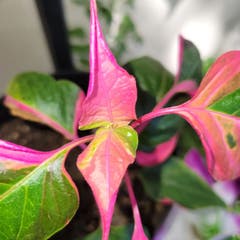
So i checked my kalanchoe today and noticed that one of the leaves have soft and yellowish tip. I watered it 4 days ago and the soil is still pretty moist, i also added some fertilizer with last watering. What could this be? Other leaves are fine, and it's about to start blooming #kalanchoe #succulentsquad #newplantmom #helpneeded


7ft to light, indirect

3” pot with drainage

Last watered 3 years ago

 6
6




@HopefulDill Hello and welcome to Greg, Usta!
Location & Light
Avoid situating your specimen in a dark location, as yellowing leaves and a poor show of blooms are common with deep shade. Instead, locate yours in an area that offers bright light, with the possibility of morning or evening sunlight. Although the risk of sun-scorch can be high with recently purchased specimens, limiting the time spent in the sun to just an hour or two is perfect for long-lasting flowers.
In terms of a location, we'd recommend either a north, east or west-facing window, a semi-shaded conservatory or around a metre from a south-facing window.
Water
During the spring and summer, be sure to keep the specimen on the moist-side to life to avert inconsistent watering. We'd recommend allowing the top third to dry out in between waters, using your finger as a method of confirmation for drying soil. In autumn and winter, reduce the watering so that the majority dries out in between waters. Under-watering symptoms include stunted growth, crispy lower leaves, and wilting flowers - increase waters slightly and decrease the time spent in direct sun or high temperatures. We'd recommend introducing a watering-schedule to avoid future dehydration. Over-watering symptoms include yellowing leaves, stem collapse, root rot, and stunted growth. These issues are usually caused by an excess of soil moisture, too little light, saturating both the foliage & flowers, incorrect soil type, or a pool of standing water between the plastic and decorative pots. For more information about this, scroll down to 'Common Issues' to learn about more on how to address this.
Humidity -
This is not necessary; however, a quick hose down from time to time will wash away both potential pests and dust particles from the leaves. Fungal and bacterial diseases, such as Botrytis petal blight or powdery mildew, will engulf the flowers if excess moisture settles in their cubbyholes. Immediately remove the affected areas and place in a warmer room until the moisture has evaporated.
Fertilisation
During the spring or summer months (and/or when the plant is flowering), fertilise once every four waters using either a 'Houseplant' or 'Flowering Plant' labelled feed. Something with a high count of potassium (N-P-K) is perfect for regulating its flowers and developing buds. From autumn onwards, reduce the frequency to once every six waters, using a 'Houseplant' labelled feed.
Here might be the reason for the yellowing leaf.
Excess or Lack of Lighting
Both excessive light or lack of light affect Kalanchoe leaves. That why if Kalanchoe is placed in shady areas the leaves turns yellow and curl or dull-colored leaves. This occurs due to the reduced production of chlorophyll. The solution is to move the plants to a sunny area.
The kalanchoe plant needs a light spot in the house that should not be exposed to direct midday sun. A location on a windowsill facing east or west is ideal.
The kalanchoe appreciates the light, and direct sunshine does not bother it, except during the strong summer heat, the sun then burning the leaves turning them yellow. The plant will also appreciate a short stay in the garden at the end of spring and until the beginning of autumn, in a shaded position.
The kalanchoe requires sunlight to grow properly, 3 or 4 hours a day is more than enough. Make sure it does not receive direct sunlight, as too much sun rays can have negative consequences (leaf burns). If placing the kalanchoe indoors, try placing it in a bright window.
Kalanchoe likes a place with good lighting, although it can be grown in partial shade, as long as it receives direct sunlight for a few hours a day. To induce flowering, regulate the plant’s sun exposure so that it receives less than 12 hours of light a day.
Location & Light
Avoid situating your specimen in a dark location, as yellowing leaves and a poor show of blooms are common with deep shade. Instead, locate yours in an area that offers bright light, with the possibility of morning or evening sunlight. Although the risk of sun-scorch can be high with recently purchased specimens, limiting the time spent in the sun to just an hour or two is perfect for long-lasting flowers.
In terms of a location, we'd recommend either a north, east or west-facing window, a semi-shaded conservatory or around a metre from a south-facing window.
Water
During the spring and summer, be sure to keep the specimen on the moist-side to life to avert inconsistent watering. We'd recommend allowing the top third to dry out in between waters, using your finger as a method of confirmation for drying soil. In autumn and winter, reduce the watering so that the majority dries out in between waters. Under-watering symptoms include stunted growth, crispy lower leaves, and wilting flowers - increase waters slightly and decrease the time spent in direct sun or high temperatures. We'd recommend introducing a watering-schedule to avoid future dehydration. Over-watering symptoms include yellowing leaves, stem collapse, root rot, and stunted growth. These issues are usually caused by an excess of soil moisture, too little light, saturating both the foliage & flowers, incorrect soil type, or a pool of standing water between the plastic and decorative pots. For more information about this, scroll down to 'Common Issues' to learn about more on how to address this.
Humidity -
This is not necessary; however, a quick hose down from time to time will wash away both potential pests and dust particles from the leaves. Fungal and bacterial diseases, such as Botrytis petal blight or powdery mildew, will engulf the flowers if excess moisture settles in their cubbyholes. Immediately remove the affected areas and place in a warmer room until the moisture has evaporated.
Fertilisation
During the spring or summer months (and/or when the plant is flowering), fertilise once every four waters using either a 'Houseplant' or 'Flowering Plant' labelled feed. Something with a high count of potassium (N-P-K) is perfect for regulating its flowers and developing buds. From autumn onwards, reduce the frequency to once every six waters, using a 'Houseplant' labelled feed.
Here might be the reason for the yellowing leaf.
Excess or Lack of Lighting
Both excessive light or lack of light affect Kalanchoe leaves. That why if Kalanchoe is placed in shady areas the leaves turns yellow and curl or dull-colored leaves. This occurs due to the reduced production of chlorophyll. The solution is to move the plants to a sunny area.
The kalanchoe plant needs a light spot in the house that should not be exposed to direct midday sun. A location on a windowsill facing east or west is ideal.
The kalanchoe appreciates the light, and direct sunshine does not bother it, except during the strong summer heat, the sun then burning the leaves turning them yellow. The plant will also appreciate a short stay in the garden at the end of spring and until the beginning of autumn, in a shaded position.
The kalanchoe requires sunlight to grow properly, 3 or 4 hours a day is more than enough. Make sure it does not receive direct sunlight, as too much sun rays can have negative consequences (leaf burns). If placing the kalanchoe indoors, try placing it in a bright window.
Kalanchoe likes a place with good lighting, although it can be grown in partial shade, as long as it receives direct sunlight for a few hours a day. To induce flowering, regulate the plant’s sun exposure so that it receives less than 12 hours of light a day.
@KikiGoldblatt
Hello and thank you for such a detailed guide! I guess this plant may be getting too little sunlight, so I'll fix that as well!
Hello and thank you for such a detailed guide! I guess this plant may be getting too little sunlight, so I'll fix that as well!
