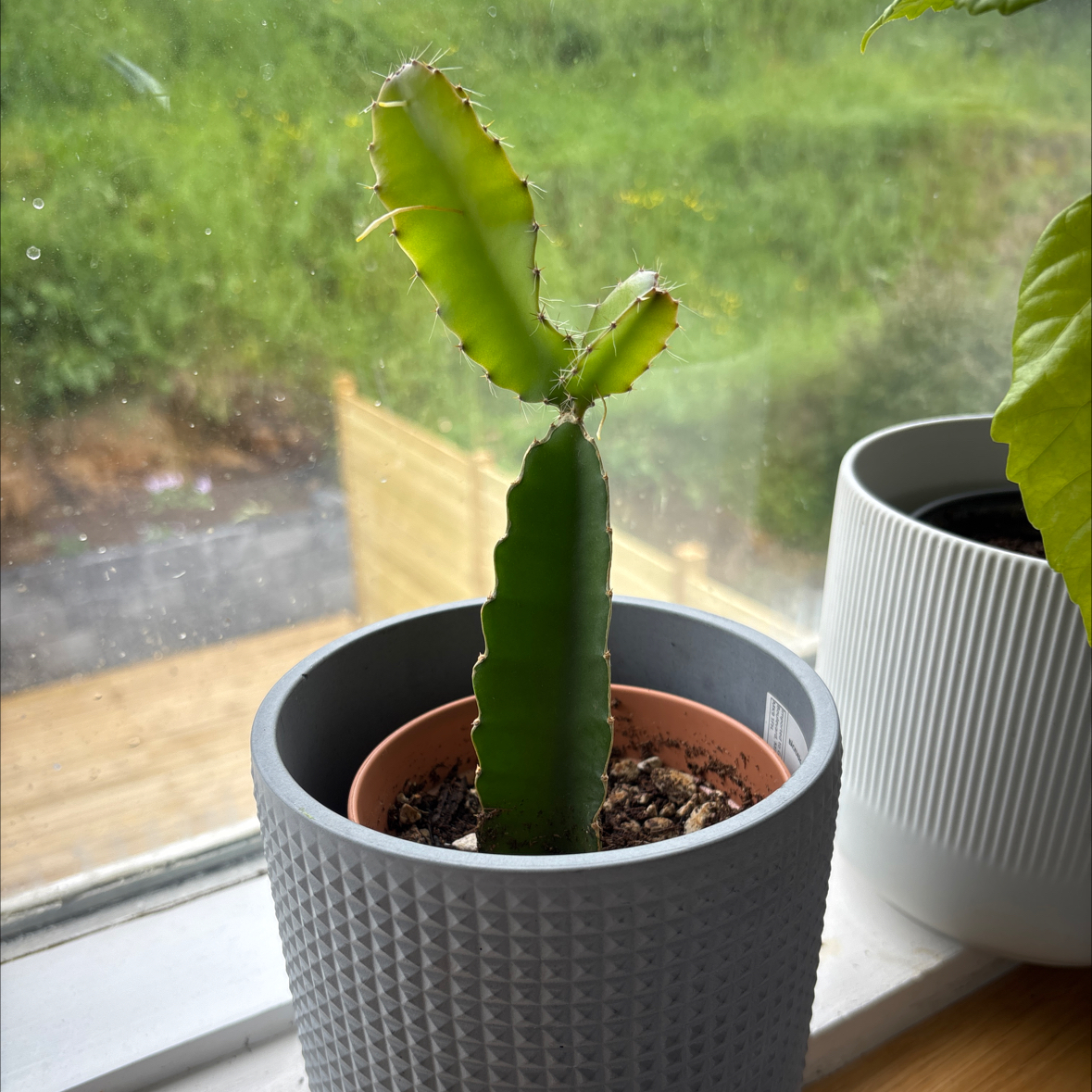
Dragonfruit

Best Soil for Dragonfruit

Selenicereus undatus
Reviewed by Kiersten Rankel M.S.
Quick Answer
Dragonfruit is an epiphytic cactus that naturally grows on tree branches and cliff faces, not in dense soil. It needs a chunky, airy mix with large bark pieces and plenty of perlite โ€” more like an orchid than a typical cactus. A pH of 6.0โ€“7.0 and excellent drainage are non-negotiable.

What Soil Does Dragonfruit Need?

Dragonfruit (Selenicereus undatus) is a climbing, epiphytic cactus from tropical Central America. In the wild, it latches onto trees and rocky outcrops with aerial roots, getting most of its support from structures rather than soil. Its roots need exceptional aeration and drainage โ€” more in common with orchids than with ground-dwelling succulents.

Stays wet
Damp
Waterlogged wet & suffocating
Damp & Airy moisture + oxygen
Compacted dense & dry
Gritty & Fast drains in seconds
Dragonfruit
Regular Potting Soil
Airy
Dries quickly

Because Dragonfruit is epiphytic, its roots are used to drying out rapidly between rainfalls and getting plenty of air circulation. Dense, moisture-retaining soils โ€” even standard cactus mixes โ€” are too heavy and wet for this plant over the long term. The mix needs large, chunky particles that create significant air space around the roots at all times.

Orchid bark (medium or coarse grade) is an excellent base because it mimics the chunky organic debris Dragonfruit roots cling to in the wild. Perlite adds drainage and prevents compaction. A small proportion of potting soil or compost supplies just enough nutrients and organic matter without turning the mix into something that stays wet. The overall feel should be chunky and light, not dense.

In commercial orchards, Dragonfruit is often grown in sandy, loose soil or raised beds with excellent drainage. For container growing, the chunky mix is the key: water should flow straight through within a few seconds, and the mix should feel dry again within a day or two after watering.

What Soil Mix Should I Use for My Dragonfruit?

Recommended Mix
Orchid bark (medium grade) 40%
Perlite 35%
Potting soil 15%
Coarse sand 10%
Stay on top of plant care
Get seasonal reminders for watering and fertilizing โ€” personalized for your plants.
Try Greg Free

What pH Does My Dragonfruit Need?

Dragonfruit grows best in a slightly acidic to neutral pH of 6.0โ€“7.0. This range supports healthy root activity and efficient nutrient uptake. A simple pH meter or test strips from a garden center let you verify your mix before potting. Given the chunky, low-organic mix, pH testing the liquid runoff after watering gives the most useful reading.

If pH drops below 5.5, nutrient availability becomes patchy and you may see pale, washed-out growth. Above 7.5, iron and zinc become less available, causing interveinal yellowing on new growth. Hard tap water can push pH upward over time in containers; periodically flushing with filtered or rainwater helps keep it in range.

Ideal pH Range
Ideal range 6.0โ€“7.0
Tolerable range 5.5โ€“7.5
To lower pH Add a small amount of sulfur or use acidified water
To raise pH Mix in a pinch of garden lime or crushed oyster shell

When Should I Replace My Dragonfruit's Soil?

Orchid bark, the main ingredient in a good Dragonfruit mix, breaks down over 1โ€“2 years into fine particles that start to retain moisture. When you notice that the mix is draining more slowly than it used to, or the bark pieces look dark and mushy rather than firm and fibrous, it is time to repot with fresh mix.

For container plants, check the mix annually. Dragonfruit can grow large and heavy, so repotting a mature plant is a project โ€” do it in early spring before the main growing season. Refresh the mix completely rather than topping up with fresh material, as old decomposed bark buried in the center of the pot will still hold moisture against the roots.

Signs Your Soil Needs Replacing
Bark pieces in the mix appear dark, mushy, or smell sour
Water drains slowly instead of flowing straight through
Aerial roots looking pale or dry despite regular watering
Growth slows noticeably during warm months
Roots tightly packed and circling the bottom of the pot

How Do I Amend Garden Soil for Dragonfruit?

Dragonfruit is a climbing cactus with aerial roots that need loose, fast-draining soil. In the wild it often grows in pockets of leaf litter on tree trunks, so it is adapted to airy, organic-rich ground rather than dense earth.

For clay soil, dig a wide planting area and fill it with a mix of compost, bark, and coarse sand to keep the roots well aerated. Sandy soil works well as a base but benefits from added compost to provide nutrients for fruit production. Plant near a sturdy support structure in a sunny spot with good air circulation.


Got More Questions?

Can I use regular cactus mix for Dragonfruit?
Commercial cactus mixes are better than standard potting soil but still tend to be too fine and moisture-retentive for Dragonfruit's epiphytic roots. Cut cactus mix with extra orchid bark and perlite to get the chunky, airy texture this plant needs.
Does Dragonfruit need special soil to produce fruit?
Fruiting depends more on maturity, pollination, and sunlight than soil type, but good drainage is essential for root health. A stressed, soggy-rooted plant will not produce well. A well-drained mix is a prerequisite for consistent fruiting.
Do I need to sterilize the soil for Dragonfruit?
Fresh bagged orchid bark and perlite are ready to use. Sterilization is not needed unless you are reusing old material from a diseased plant.
Why are my Dragonfruit stems turning yellow or soft?
Soft, yellowing stems usually mean the roots are sitting in too much moisture. Check that the mix drains completely within seconds of watering and that the pot has adequate drainage holes. Overwatering in a dense mix is the most common problem.
How big a container does Dragonfruit need?
Start in a pot at least 10โ€“12 inches wide with a sturdy support post. Dragonfruit grows fast and can reach 10+ feet if given room โ€” plan to move it into progressively larger containers as roots fill the pot.
Stay on top of plant care
Get seasonal reminders for watering and fertilizing โ€” personalized for your plants.
Try Greg Free

About This Article

Kiersten Rankel M.S.
Botanical Data Lead at Greg ยท Plant Scientist
About the Author
Kiersten Rankel holds an M.S. in Ecology & Evolutionary Biology from Tulane University. A certified Louisiana Master Naturalist, she has over a decade of experience in science communication, with research spanning corals, cypress trees, marsh grasses, and more. At Greg, she curates species data and verifies care recommendations against botanical research.
See Kiersten Rankel's full background on LinkedIn.
Editorial Process
Soil recommendations verified against Selenicereus undatus growth data from Greg's botanical database, cross-referenced with USDA hardiness zone data and published horticultural research.
2,335+ Greg users growing this plant
USDA hardiness zones 10aโ€“11b