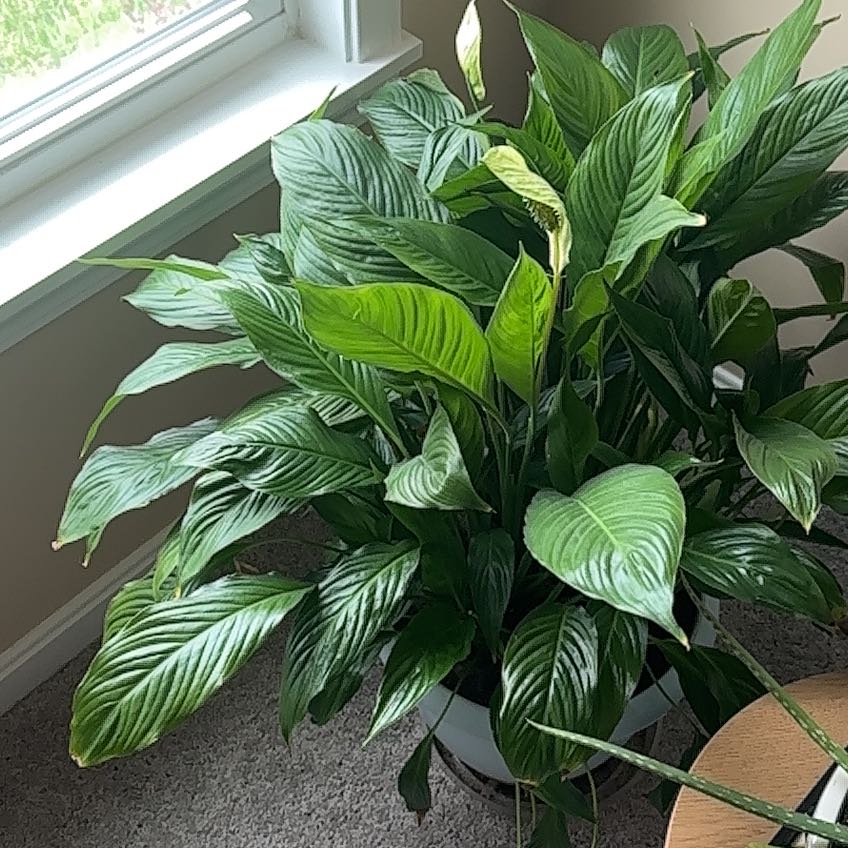
Peace Lily

Best Soil for Peace Lily

Spathiphyllum wallisii
Reviewed by Kiersten Rankel M.S.
Quick Answer
Peace Lily wants a rich, moisture-retentive mix that still drains well between waterings. A blend of potting soil, perlite, and peat moss works perfectly. Target a pH of 5.8 to 6.5, and let the top inch of soil dry before watering again.

What Soil Does a Peace Lily Need?

Peace Lilies grow on the forest floor in tropical Colombia and Venezuela, where the soil is rich in organic matter, consistently moist, and shaded from direct sun. They need a mix that holds moisture long enough to keep the roots happy between waterings, but still allows excess water to drain so the roots don't stay saturated.

Stays wet
Damp
Waterlogged wet & suffocating
Damp & Airy moisture + oxygen
Compacted dense & dry
Gritty & Fast drains in seconds
Peace Lily
Regular Potting Soil
Airy
Dries quickly

Peace Lilies sit between the moisture-loving ferns and the well-draining aroids in terms of soil needs. Their fibrous root system wants consistent moisture but reacts quickly to soggy conditions with yellowing leaves and root rot. A quality all-purpose potting mix is a good foundation, but most benefit from some adjustment.

Adding perlite opens up the mix and prevents compaction, while peat moss or coco coir adds moisture-holding capacity without making the mix feel heavy or waterlogged. This combination keeps the roots damp and well-oxygenated at the same time. Avoid overly chunky mixes designed for orchids or cacti since they dry out too fast for a Peace Lily's liking.

The clumping growth habit of Peace Lily means the root ball gradually fills the pot, and dense older soil can make it hard for water to penetrate evenly. Fresh, well-structured mix at repotting time solves this and gives the plant room to keep expanding.

What Soil Mix Should I Use for My Peace Lily?

Recommended Mix
All-purpose potting soil 50%
Perlite 20%
Peat moss or coco coir 20%
Compost 10%
Stay on top of plant care
Get seasonal reminders for watering and fertilizing โ€” personalized for your plants.
Try Greg Free

What pH Does My Peace Lily Need?

Peace Lily prefers a slightly acidic pH between 5.8 and 6.5. This range keeps iron, calcium, and phosphorus all available to the roots at once, supporting both foliage growth and flower production. A basic pH meter or test strips from the garden center will tell you where your mix falls.

When pH rises above 7.0, Peace Lilies commonly show yellowing on newer leaves as iron and manganese become harder to absorb. If the pH dips below 5.5, nutrient uptake slows more broadly and the plant may show stunted growth or pale, washed-out leaves. Correcting pH often resolves yellowing issues that don't respond to fertilizing.

Ideal pH Range
Ideal range 5.8โ€“6.5
Tolerable range 5.5โ€“7.0
To lower pH Mix in peat moss or apply a sulfur amendment
To raise pH Add a small amount of garden lime and water in

When Should I Replace My Peace Lily's Soil?

Peace Lilies are moderate growers and typically need repotting every one to two years. The organic components in the mix break down and compact over time, reducing drainage and making even watering difficult. Spring is the best time to repot, just as the plant ramps up its growth.

You'll know it's time when roots start poking through the drainage holes, when the plant dries out much faster than it used to, or when watering seems to run straight through the pot without the soil absorbing much. At repotting, gently shake off the old mix and inspect the roots. Trim any brown or mushy sections before moving to fresh soil.

Signs Your Soil Needs Replacing
Roots growing out of the drainage holes
Soil dries out within a day or two of watering
Plant drooping even when soil feels moist
Yellowing leaves that don't respond to regular watering
Soil surface pulling away from the pot edges

What Soil Amendments Does a Peace Lily Need in the Ground?

Peace Lilies have shallow, fibrous roots that need soil that stays consistently moist but never waterlogged. They thrive in rich, humus-heavy ground that mimics the forest floor where they naturally grow.

If your garden soil is clay, work in several inches of compost and fine bark to loosen things up and improve drainage. For sandy soil, blend in compost and leaf mold to help the ground hold onto moisture between waterings. A shaded or dappled-light spot with protection from direct afternoon sun will keep the leaves lush and green.


Got More Questions?

Can I use regular potting soil for my Peace Lily?
All-purpose potting soil works as a base but benefits from perlite and peat mixed in. This improves drainage while keeping enough moisture for the roots between waterings.
Do I need to sterilize soil before repotting?
Fresh potting mix from a sealed bag is already pasteurized, so no sterilizing is needed. If you're reusing old soil, it's usually better to start fresh since old mix loses its structure and drainage over time.
Why is my Peace Lily drooping even though the soil is wet?
Drooping in wet soil usually means root rot from overwatering or poor drainage. Let the soil dry out more between waterings, check that the pot has drainage holes, and inspect the roots for any dark, mushy sections.
Can I grow Peace Lily in water alone?
Peace Lily can be grown hydroponically in water, but it's different from growing in soil. In water, use a clean vase with indirect light and change the water weekly. It won't need any potting mix.
Why does my Peace Lily have yellow leaves even with regular watering?
Yellow leaves in Peace Lily are often caused by overwatering, poor drainage, or pH that's too high. Check that water drains freely from the pot and test soil pH if the problem persists despite good watering habits.
Stay on top of plant care
Get seasonal reminders for watering and fertilizing โ€” personalized for your plants.
Try Greg Free

About This Article

Kiersten Rankel M.S.
Botanical Data Lead at Greg ยท Plant Scientist
About the Author
Kiersten Rankel holds an M.S. in Ecology & Evolutionary Biology from Tulane University. A certified Louisiana Master Naturalist, she has over a decade of experience in science communication, with research spanning corals, cypress trees, marsh grasses, and more. At Greg, she curates species data and verifies care recommendations against botanical research.
See Kiersten Rankel's full background on LinkedIn.
Editorial Process
Soil recommendations verified against Spathiphyllum wallisii growth data from Greg's botanical database, cross-referenced with USDA hardiness zone data and published horticultural research.
70,755+ Greg users growing this plant
USDA hardiness zones 10aโ€“12b