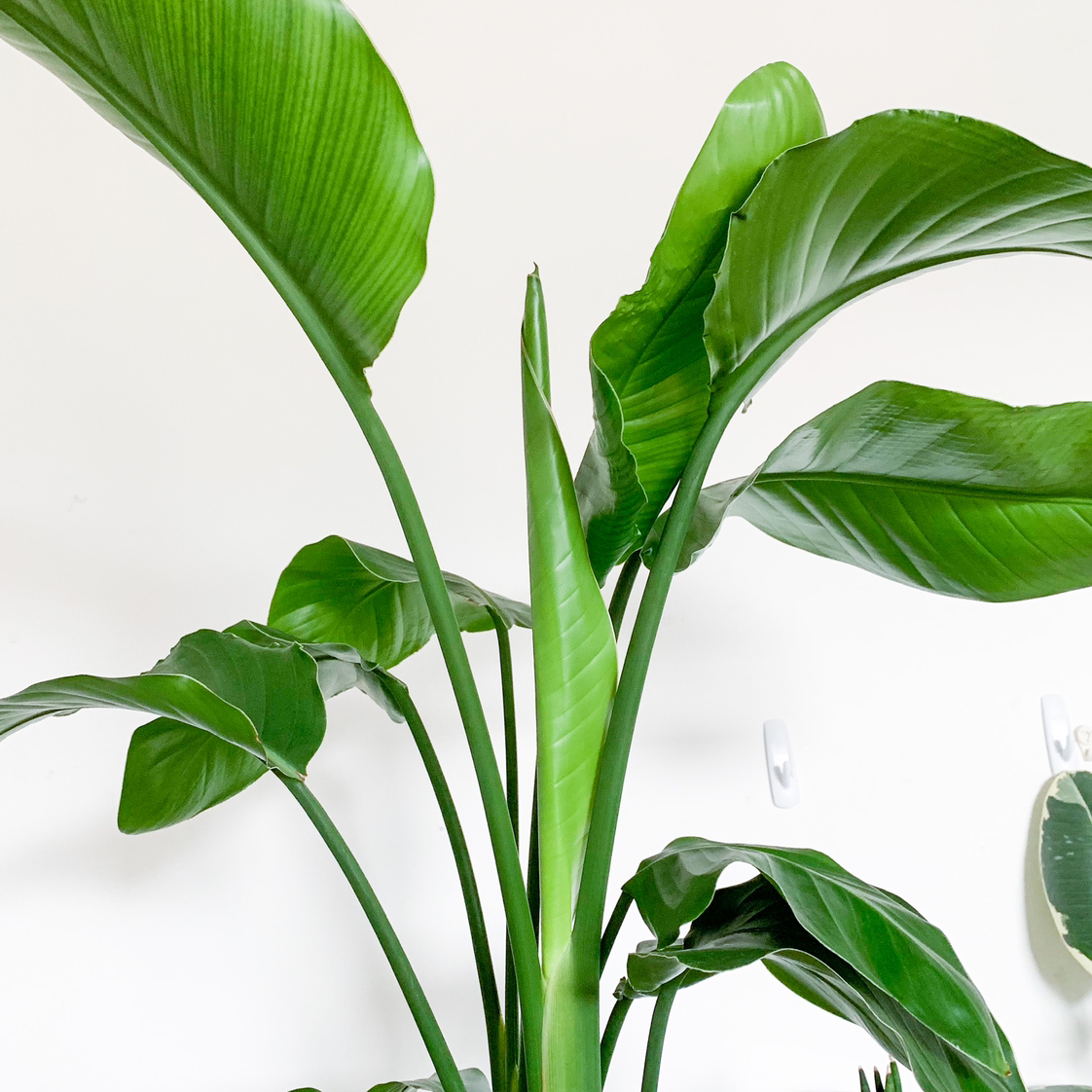
Bird of Paradise

Best Soil for Bird of Paradise

Strelitzia reginae
Reviewed by Kiersten Rankel M.S.
Quick Answer
Bird of Paradise does best in a rich, well-draining mix that holds some moisture without staying soggy. Combine potting soil with perlite and compost for the right balance. Aim for a slightly acidic pH between 5.5 and 6.5.

What Soil Does a Bird of Paradise Need?

Bird of Paradise has thick, fleshy roots that store water but still need oxygen to stay healthy. In its native South African habitat, it grows in loamy ground soil that drains well after rain but retains enough moisture between waterings.

Stays wet
Damp
Waterlogged wet & suffocating
Damp & Airy moisture + oxygen
Compacted dense & dry
Gritty & Fast drains in seconds
Bird of Paradise
Regular Potting Soil
Airy
Dries quickly

Bird of Paradise needs soil that balances moisture retention with good drainage. Its thick, rhizomatous roots are prone to rot if they sit in waterlogged soil, but they also need consistent access to moisture to support those large, paddle-shaped leaves.

Standard potting soil on its own tends to compact over time, which suffocates those fleshy roots. Adding perlite opens up air pockets so water flows through freely. A scoop of compost supplies slow-release nutrients and helps the mix hold just enough water between waterings.

Think of it as a sturdy, well-rounded houseplant mix. You want something that feels loose and crumbly when you squeeze it, not dense and muddy.

What Soil Mix Should I Use for My Bird of Paradise?

Recommended Mix
Potting soil 50%
Perlite 25%
Compost 15%
Horticultural charcoal 10%
Stay on top of plant care
Get seasonal reminders for watering and fertilizing β€” personalized for your plants.
Try Greg Free

What pH Does My Bird of Paradise Need?

Bird of Paradise prefers slightly acidic soil in the 5.5–6.5 range. This matches the conditions it grows in naturally across South Africa. You can check your soil’s pH with an inexpensive soil test kit or a digital pH meter.

If the pH climbs above 7.0, the roots have trouble absorbing iron, which shows up as yellowing leaves with green veins. Dropping below 5.0 can cause nutrient toxicity and root damage.

Ideal pH Range
Ideal range 5.5–6.5
Tolerable minimum 5.0
To lower pH Mix in peat moss or sulfur
To raise pH Add a pinch of garden lime

When Should I Replace My Bird of Paradise's Soil?

Plan to refresh the soil every 2–3 years. Bird of Paradise is a moderate grower, so the mix breaks down at a steady but not rapid pace. The organic components like compost and potting soil gradually compact, reducing the air pockets your plant’s roots depend on.

Spring is the best time to repot and refresh. The plant is entering its active growing season and will recover quickly from the disruption.

Signs Your Soil Needs Replacing
Water pools on the surface before slowly draining
Soil feels dense and heavy when you press it
Roots are tightly packed and circling the pot
Leaves are smaller than usual despite good light
A white crust of mineral buildup appears on the soil surface

What Soil Amendments Does a Bird of Paradise Need in the Ground?

If you're planting a Bird of Paradise outdoors in a warm climate, it needs soil that drains well but still holds enough moisture to support its thick, fleshy root system. These plants form dense clumps over time, so give them room to spread.

In clay ground, mix compost, coarse sand, and bark into the planting area to keep the roots from sitting in wet soil. For sandy soil, add compost and a bit of leaf mold to help the ground retain water and nutrients between waterings. A full-sun spot with some afternoon shelter works well, and a layer of mulch helps keep the root zone evenly moist.


Got More Questions?

Can I use regular potting soil for my Bird of Paradise?
Regular potting soil works as a base, but it compacts over time and holds too much water on its own. Mix in perlite and compost to improve drainage and aeration.
Do I need to sterilize soil before repotting my Bird of Paradise?
It is not necessary if you are using fresh, bagged potting soil from a reputable brand. If you are reusing old soil, baking it at 180Β°F (82Β°C) for 30 minutes can kill lingering pests and pathogens.
Why are my Bird of Paradise's roots growing out of the drainage holes?
This means the plant has outgrown its pot and the soil is likely exhausted. Time to repot into a container one size up with a fresh soil mix.
Should I add sand to my Bird of Paradise's soil?
Coarse horticultural sand can help with drainage, especially for in-ground planting in clay soil. For potted plants, perlite is a better choice because it is lighter and does not compact as much.
Can I use cactus soil for my Bird of Paradise?
Cactus mix drains too quickly and does not hold enough moisture for Bird of Paradise. The thick leaves and large root system need more consistent access to water than a gritty cactus blend provides.
Stay on top of plant care
Get seasonal reminders for watering and fertilizing β€” personalized for your plants.
Try Greg Free

About This Article

Kiersten Rankel M.S.
Botanical Data Lead at Greg Β· Plant Scientist
About the Author
Kiersten Rankel holds an M.S. in Ecology & Evolutionary Biology from Tulane University. A certified Louisiana Master Naturalist, she has over a decade of experience in science communication, with research spanning corals, cypress trees, marsh grasses, and more. At Greg, she curates species data and verifies care recommendations against botanical research.
See Kiersten Rankel's full background on LinkedIn.
Editorial Process
Soil recommendations verified against Strelitzia reginae growth data from Greg's botanical database, cross-referenced with USDA hardiness zone data and published horticultural research.
3,989+ Greg users growing this plant
USDA hardiness zones 10a–11b