

Spider mites
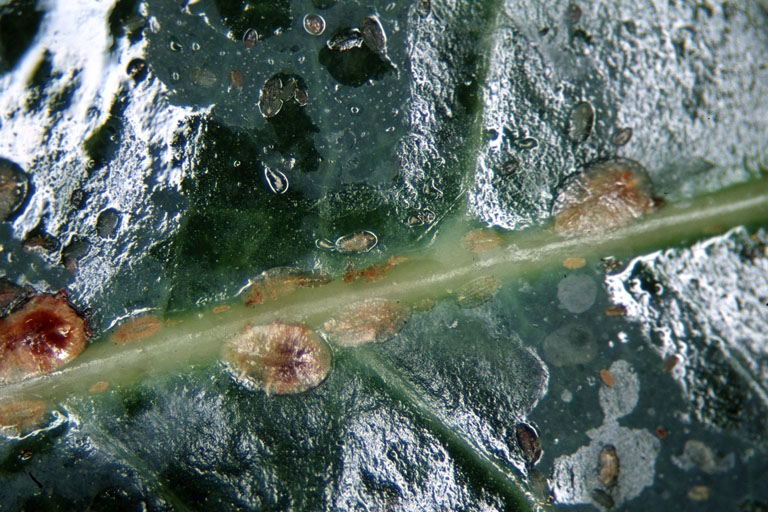
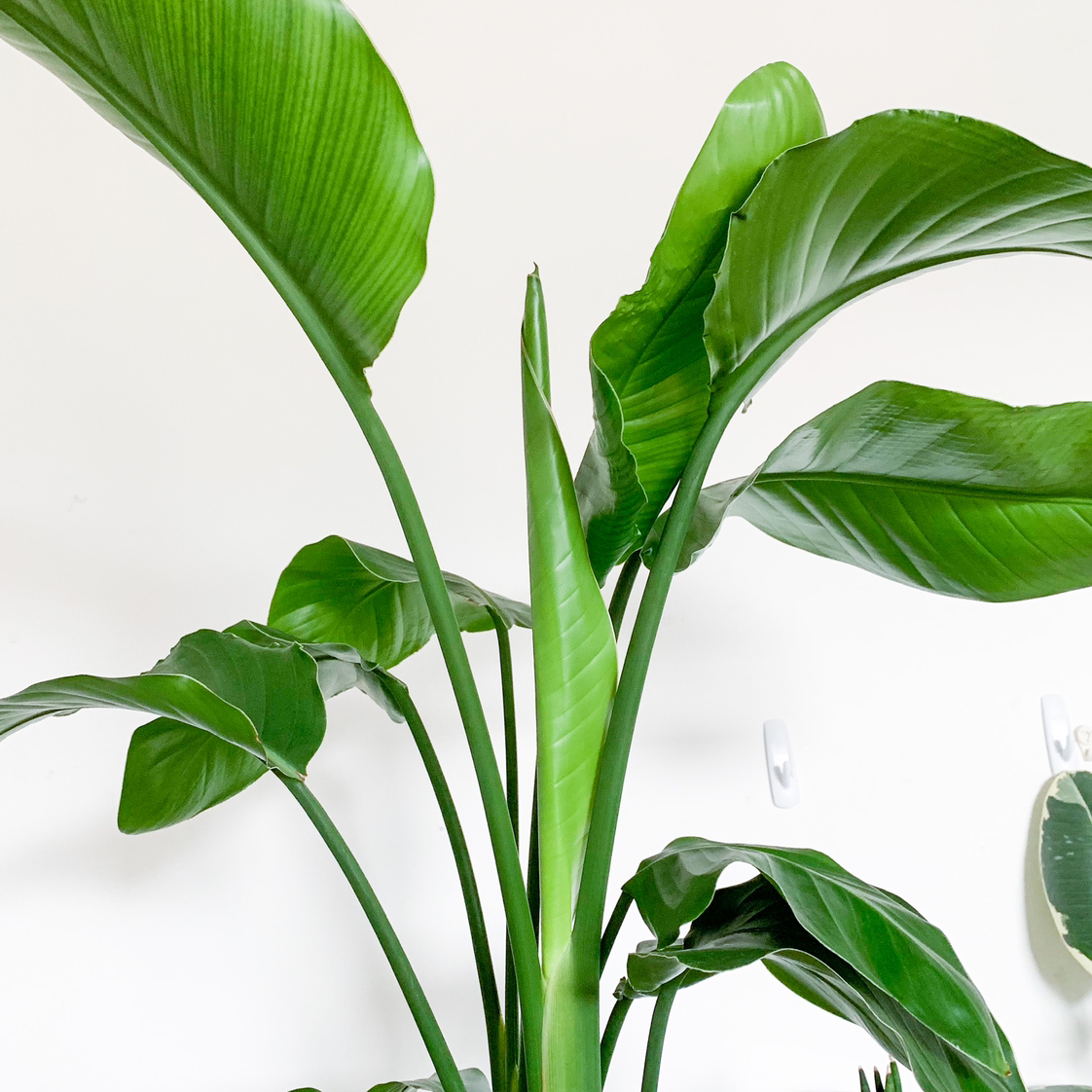
Almost invisible without a hand lens. Yellow-green to red-orange specks running along the underside of leaves and along the central vein. Bird of paradise leaves are large, dust-collecting, and rarely showered, which is exactly the environment spider mites multiply fastest in.
Pale yellow speckling spreading from the central vein outward. Fine webbing strung between the leaf and the long stalk. Heavy infestations bronze the entire leaf and cause new leaves to emerge already malformed. Established colonies can dry out an entire leaf in 4 to 6 weeks.
Shower both sides of every leaf, weekly for 4 weeks
Move the bird of paradise to a shower or take it outside on a warm day.
Spray cool water on the underside of every leaf for 30 seconds, then the upper surface. Mites cluster on the underside and along the central vein.
Repeat weekly for 4 weeks. Bird of paradise needs longer than most because the leaves are large and mites hide in the central vein crease.
Neem oil at lights-out, every 5 days for 3 rounds
Mix 2 tablespoons cold-pressed neem oil and 1 teaspoon dish soap per gallon of water.
Spray every leaf, top and bottom, plus the leaf bases at the crown. Pay special attention to the central vein where mites concentrate.
Repeat every 5 days for 3 rounds. That covers the full egg-to-adult life cycle.
Raise humidity above 50% and wipe leaves weekly
Run a humidifier near the plant for 50 to 60% relative humidity. Bird of paradise evolved in subtropical South Africa and tolerates higher humidity well. Wipe both sides of every leaf with a damp cloth weekly through winter to remove the dust mites need to anchor.