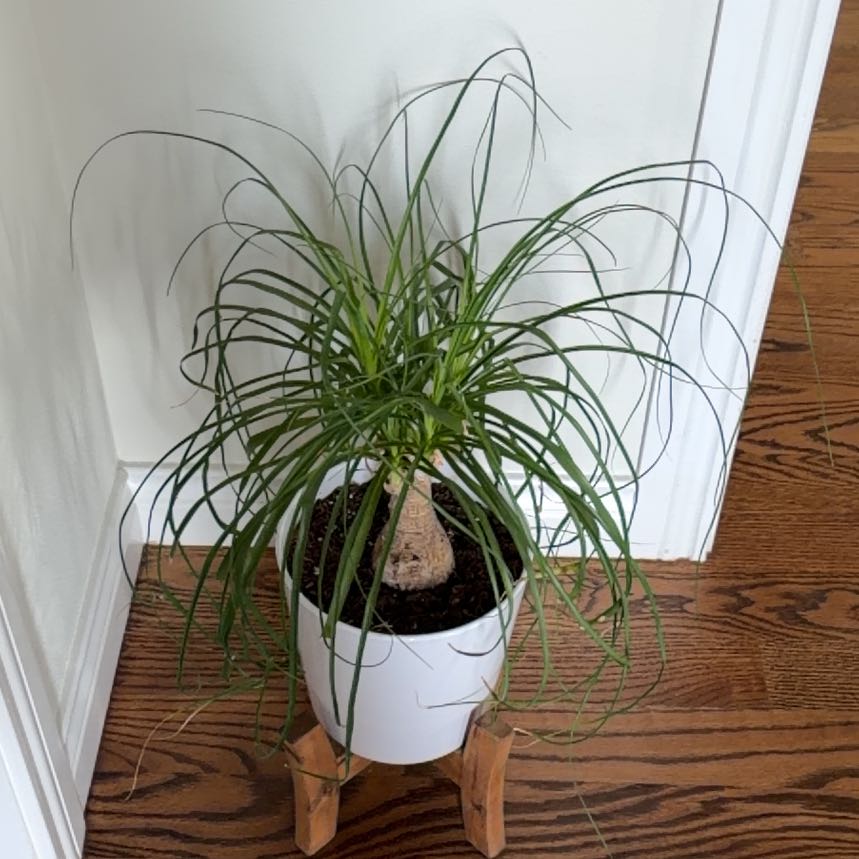
When to Repot a Ponytail Palm
Ponytail Palms want a fresh pot only every three to five years, and many can stretch even longer. Move into a container one to two inches wider than the swollen base in spring, and use a gritty cactus or succulent mix that drains in seconds.

How to Know It's Time to Repot
Every Ponytail Palm is a little different, so the three-to-five-year cadence is a starting point rather than a strict rule. This is one of the slowest-growing houseplants out there, and it tolerates a snug pot for years, so the signs that really matter show up only every few seasons.
-
1The swollen base, called the caudex, is pressed against the rim of the pot with no soil visible around it.
-
2Roots are visible at the drainage holes or have started lifting the plant out of the pot.
-
3Soil dries within a day or two of watering, when it used to take a week or more.
-
4The pot is tipping or the plant has become top-heavy from a wide caudex and tall foliage.
A single sign on its own is worth keeping an eye on, and two or more together mean it's genuinely time. Most Ponytail Palms only need a new pot every three to five years, and some happily live in the same pot for a decade, so resist the urge to upsize before the plant actually asks for it.
The Best Time of Year to Repot
Aim for spring or early summer, when longer days and stronger indoor light help the plant heal cut tissue and send out new roots. Avoid repotting in winter, since the plant is barely growing then and any recovery drags on for weeks. The exact window shifts a bit depending on where you live, so use the map below to find yours.

How to Choose a Pot and Soil Mix
Pot Size
Match the new pot's diameter to the caudex, leaving one to two inches of soil space all the way around. Sizing up too far feels generous, but the extra wet soil sits there with no roots to drink it and quickly rots the caudex. A 6-inch pot suits a small caudex around 4 inches wide, and a 10 to 12-inch pot fits a mature plant comfortably for years. Width matters more than depth, since Ponytail Palm roots are shallow and spreading.
Pot Material
Terracotta is the strongest choice for a Ponytail Palm. Its porous walls let the soil breathe and pull moisture away from the roots, which is exactly what this rot-prone plant wants. Glazed ceramic and plastic also work if you're disciplined about letting the soil dry fully between waterings. Whichever you pick, the pot needs at least one drainage hole, and self-watering styles are a no-go because they keep the caudex sitting in damp soil.
Soil Mix
A simple recipe of equal parts cactus mix, coarse perlite, and a handful of pumice or fine gravel works beautifully. Ponytail Palm grows in lean, rocky soil across its native Mexican habitat, so the roots want a gritty, fast-draining mix that empties in seconds and never holds onto moisture for long. Skip moisture-control formulas, peat-heavy potting soil, and dense garden soil, since all three trap water around the caudex and lead straight to rot.
How to Repot a Ponytail Palm, Step by Step
-
1Let the soil dry first. Stop watering five to seven days before you plan to repot. Dry soil releases the root ball cleanly and lowers the risk of breaking the thick, water-storing roots that bruise easily on a Ponytail Palm.
-
2Lay it on its side. Mature plants are top-heavy thanks to that broad caudex and the tuft of long leaves overhead. Lay the pot on its side on a towel, then squeeze and tap the sides to loosen the root ball. Slide the plant out by easing the base free, never by pulling on the leaves.
-
3Inspect the roots. Shake off the old soil and take a look at what you've got. Healthy Ponytail Palm roots are pale and firm, so trim any dark or mushy sections with clean scissors and leave the rest of the root ball intact. This plant resents heavy root disturbance, so the goal is the lightest touch that gets the job done.
-
4Set the caudex high. Add an inch or two of fresh gritty mix to the bottom of the new pot, then settle the plant in so the entire swollen base sits above the soil line with only the roots buried. Burying any part of the caudex traps moisture against it and leads to rot, which is the single most common way Ponytail Palms are lost after repotting.
-
5Fill, firm, and wait to water. Add more gritty mix around the roots and press gently to remove air pockets, keeping the caudex sitting proud above the soil. Move the plant to bright indirect light and hold off on watering for two to three weeks so any disturbed roots can callus over before they meet moisture. Watering immediately is what tips a healthy repot into a rotted caudex.
What to Expect After Repotting
Weeks 1 to 3
Set the plant in bright indirect light, not full sun, while it settles in. A small amount of leaf tip browning is normal at this stage and not a cause for alarm. Keep the soil completely dry for the first two to three weeks so any disturbed roots can callus over, which is what keeps the caudex from rotting.
Weeks 4 to 12
Move the plant back to its usual sunny spot gradually over a few days so it can readjust to direct light. Give it the first proper drink only once the soil is bone dry all the way through, and then resume normal watering on a let-it-dry-completely schedule. Skip fertilizer for the first two months, since Ponytail Palm grows so slowly it rarely needs feeding right after a repot.
Got More Questions?
About This Article
