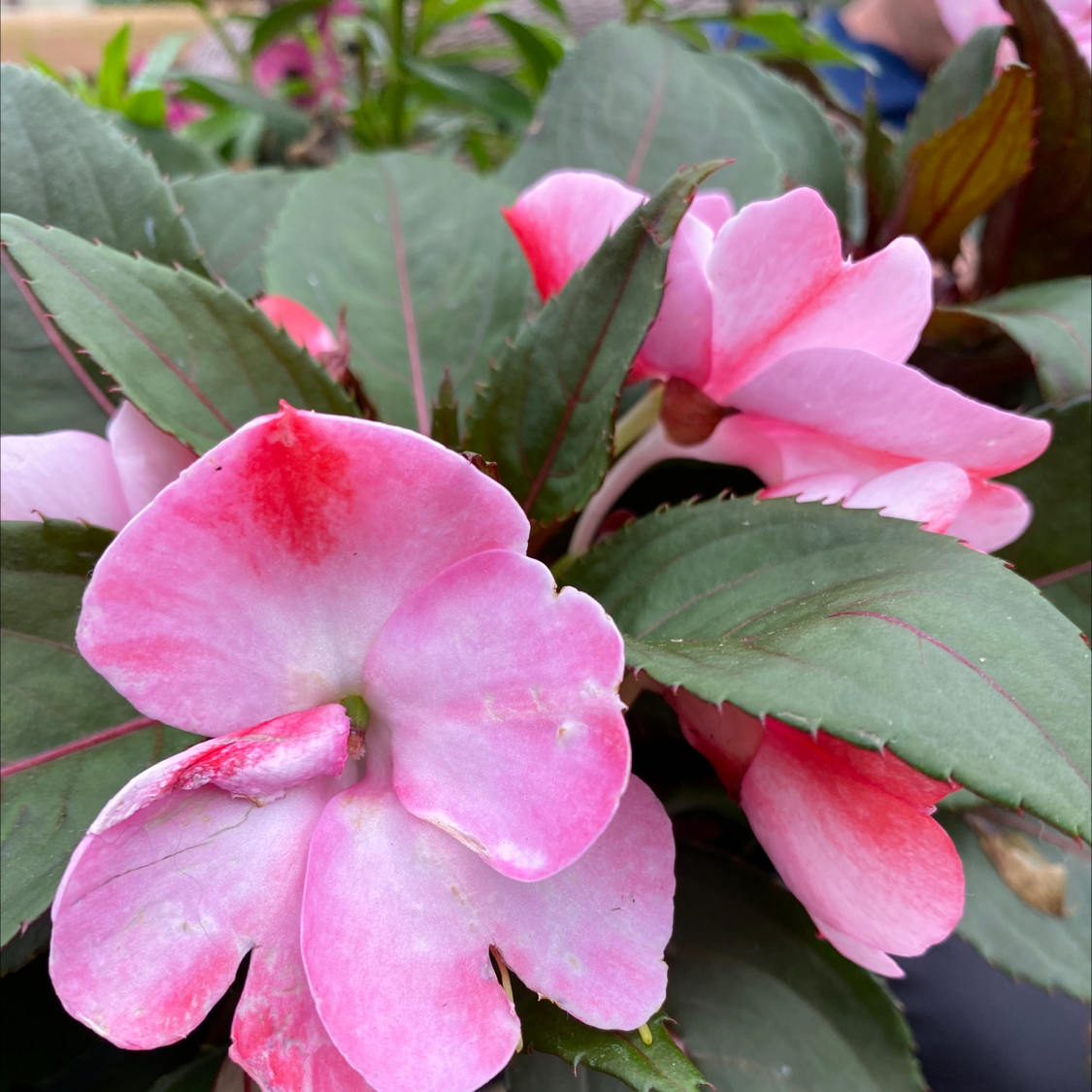
New Guinea Impatiens

How to Prune New Guinea Impatiens

Impatiens hawkeri
Reviewed by Kiersten Rankel M.S.
Quick Answer
Pinch back New Guinea Impatiens in spring and deadhead spent flowers throughout the growing season to keep them full and blooming. Focus on removing faded flowers and any leggy stems that have stretched beyond the main plant outline. As annuals in most climates, they do not require heavy cutting, but regular light pinching makes a noticeable difference in plant shape.

When is the best time to prune?

New Guinea Impatiens are frost-sensitive and pruning follows the active growing season, which runs earlier in warm coastal regions and later in northern zones.

US pruning regions map
Pacific
Mar–Oct
Mountain
Jun–Aug
Midwest
May–Sep
Northeast
May–Sep
Southeast
Mar–Nov
Stay on top of plant care
Get seasonal reminders for watering and fertilizing — personalized for your plants.
Try Greg Free

Why Should I Prune My New Guinea Impatiens?

New Guinea Impatiens naturally drop their spent blooms on their own, which is why they are often called self-cleaning. Even so, regular pinching keeps plants compact and encourages more flower buds to form rather than fewer, larger flushes.

The most useful pruning happens early. When you plant them out in spring, pinch the tips of each stem to encourage branching. A plant that branches well early in the season will be noticeably fuller by midsummer compared to one left to grow on its own.

During the season, cut back any stems that have grown noticeably longer than the rest of the plant. Cut just above a set of leaves or a visible bud. New growth will emerge quickly from below the cut.

New Guinea Impatiens are sensitive to drought and to overwatering alike, so time any hard pruning for when the plant is healthy and well-watered. Stressed plants are slow to recover from even moderate cutting.

Know Before You Cut

Difficulty Easy
Max removal Up to 1/3 of stem length at once
Growth pattern Upright bushy annual
Tools Pruners or fingers

What Should I Remove?

Pinch stem tips at planting time to encourage branching
Remove leggy stems that stretch beyond the plant outline
Cut back to a leaf node or visible side bud
Clear any fallen petals to reduce fungal issues
Don't prune when the plant is dry and wilted
Don't cut into bare woody stem with no leaves below
Don't skip early pinching and expect a full shape later

How Do I Prune Step by Step?

1
Pinch tips at planting time
As soon as you plant out New Guinea Impatiens, pinch the tip of each stem just above the topmost pair of leaves. This simple step promotes branching and prevents leggy growth from the start.
2
Trim leggy stems back to shape
When a stem has grown 2–3 inches longer than the rest of the plant, cut it back to just above a set of leaves. Try to cut so the remaining stem is roughly the same length as its neighbors.
3
Remove spent or damaged foliage
Cut out any yellowed, spotted, or damaged leaves by snipping their stem close to the main branch. This improves airflow and removes possible disease entry points.
4
Do a mid-season shape-up if needed
If the plant has become open and sprawling by midsummer, cut all stems back by about a third. Water well after and expect a flush of new growth within two weeks.

Got More Questions?

Do I need to deadhead New Guinea Impatiens?
They are largely self-cleaning, meaning spent blooms fall off on their own. However, removing faded flowers by hand speeds up the cycle and keeps the plant looking tidy.
Can I prune them hard in summer to refresh the plant?
Yes. Cutting plants back by a third in midsummer will trigger a fresh flush of growth and blooms. Just make sure the plant is well-watered and not heat-stressed before doing it.
My New Guinea Impatiens got leggy. Can they recover?
Yes. Cut the leggy stems back to just above a set of healthy leaves and the plant will branch out from below the cut. It may take a week or two before you see new growth emerge.
Can I keep New Guinea Impatiens over winter?
In zones 10 and above they are perennial and can be pruned back in fall for a winter rest. Elsewhere, you can take cuttings before frost to root and keep indoors over winter.
Stay on top of plant care
Get seasonal reminders for watering and fertilizing — personalized for your plants.
Try Greg Free

About This Article

Kiersten Rankel M.S.
Botanical Data Lead at Greg · Plant Scientist
About the Author
Kiersten Rankel holds an M.S. in Ecology & Evolutionary Biology from Tulane University. A certified Louisiana Master Naturalist, she has over a decade of experience in science communication, with research spanning corals, cypress trees, marsh grasses, and more. At Greg, she curates species data and verifies care recommendations against botanical research.
See Kiersten Rankel's full background on LinkedIn.
Editorial Process
Pruning guidance verified against Impatiens hawkeri growth data from Greg's botanical database, cross-referenced with USDA hardiness zone data and published horticultural research.
2,715+ Greg users growing this plant
USDA hardiness zones 10a–11b
Grow plants with confidence