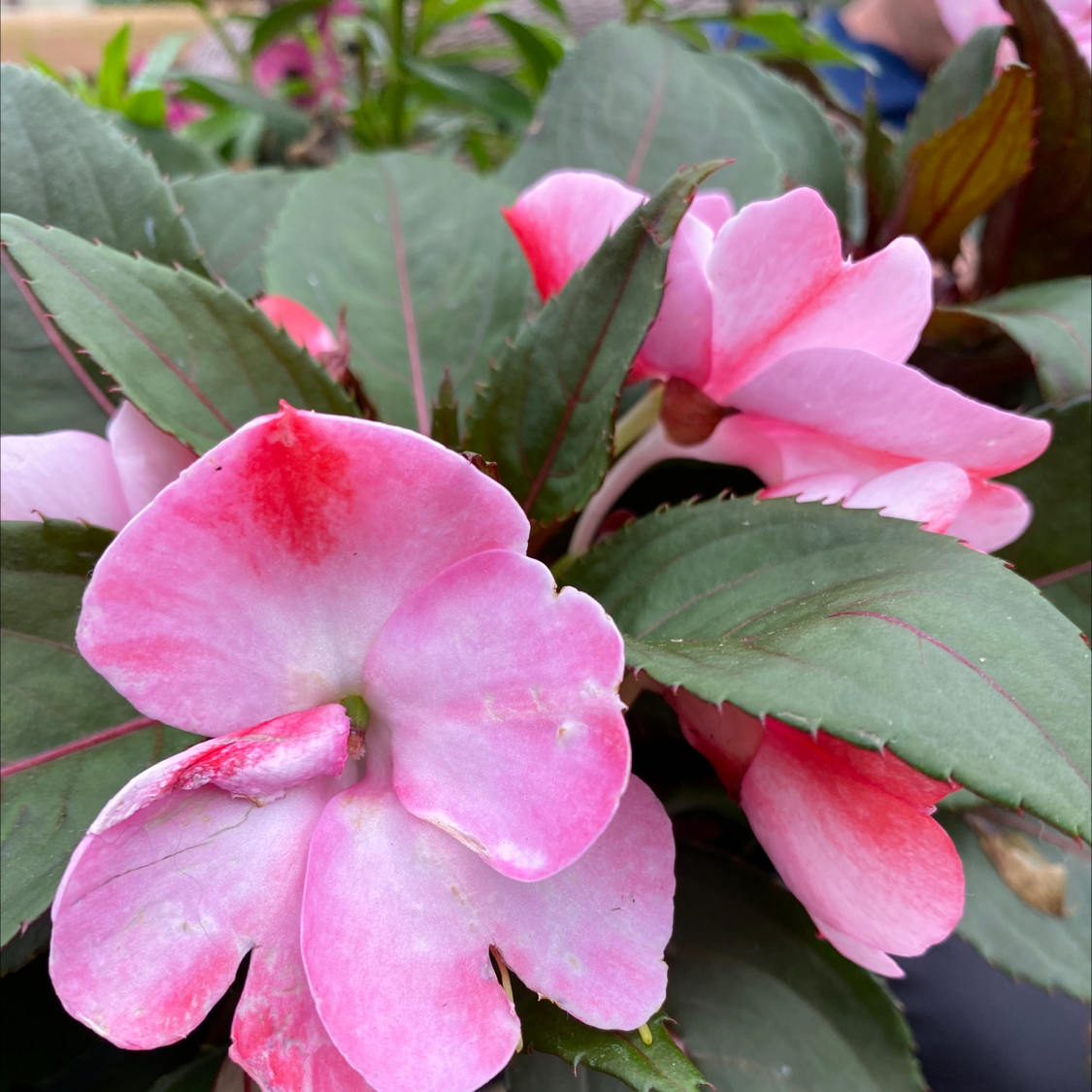
New Guinea Impatiens

What's Eating Your New Guinea Impatiens?

Impatiens hawkeri
Reviewed by Kiersten Rankel M.S.
Quick Answer

For New Guinea impatiens, the most likely culprits are thrips (the most damaging because they vector tomato spotted wilt and impatiens necrotic spot virus) and spider mites (defoliate stressed container plants in hot dry summer heat). Aphids cluster on flower stalks and the soft new growth at the stem tips. Slugs chew the lower leaves at night.

Stay on top of plant care
Get seasonal reminders for watering and fertilizing, personalized for your plants.
Try Greg Free

What does the damage look like?

Tap the closest match to jump straight to the fix.

Pests, ranked by impact

Slender adult thrips (Frankliniella sp.) on a flower petal

Thrips

Damage
High
Removal
Hard
What it looks like

Tiny slender insects under 2 mm long, pale yellow to brown. Hide inside the 5-petal single flowers and along the central vein on the underside of lance-shaped leaves. Adults fly when disturbed. Often invisible until you tap a bloom over a white sheet of paper.

What the damage looks like

Brown streaks on petals, malformed buds that open lopsided, and a silvery sheen on leaves with tiny black dots of frass. The bigger threat is virus. Thrips vector tomato spotted wilt and impatiens necrotic spot virus, which cause ringspots, leaf curl, and stunted plants.

How to get rid of them
Option 1

Blue sticky traps and spinosad rotation, every 7 days for 3 weeks

1

Hang blue sticky traps (Trappify or Stingmon, ~$10) just above the canopy. Blue catches more thrips than yellow.

2

Spray spinosad (Captain Jack's Deadbug Brew or Monterey Garden Insect Spray, ~$12 to $15) on flower buds, petals, and the underside of leaves at dusk.

3

Repeat every 7 days for 3 weeks. Spinosad reaches thrips inside buds where contact sprays miss them.

Option 2

Pinch off any plant with virus ringspots

If you see concentric ringspots, leaf curl, or sudden stunting that doesn't match the watering pattern, the plant likely has tomato spotted wilt or impatiens necrotic spot virus. There's no cure. Bag and discard the whole plant to keep thrips from spreading the virus to neighboring containers and bedding plants. Do not compost.

Option 3

Insecticidal soap on flower buds at lights-out

Spray ready-to-use insecticidal soap (Safer or Bonide, ~$10) directly into open flowers and on the underside of new leaves at dusk. Soap only kills on contact, so saturate the bloom interior where adults shelter. Repeat every 4 days for two weeks.

Spider mite infestation on a stem with fine silk webbing and pale speckled leaf damage

Spider mites

Damage
High
Removal
Moderate
What it looks like

Almost invisible without a hand lens. Yellow-green or red specks running along the underside of lance-shaped leaves and where leaf petioles meet the succulent stem. Hot dry summer air on a sunny patio container is exactly the climate that triggers a population explosion.

What the damage looks like

Tiny pale yellow dots on the upper leaf surface, then bronze patches that spread between veins. Fine webbing strung between petioles and the stem in heavy infestations. Stressed plants defoliate fast in summer heat once mites take hold, leaving bare succulent stems and dropped blooms.

How to get rid of them
Option 1

Shower the foliage weekly for 3 weeks

Move the container to the shower or take it outside on a warm day. Spray cool water on the underside of every leaf for 30 seconds. Mites can't reattach quickly when knocked off, and the rinse humidity slows survivors. Be gentle because the succulent stems snap easily. Repeat weekly for 3 weeks.

Option 2

Neem oil at lights-out, every 5 days for 3 rounds

1

Mix 2 tablespoons cold-pressed neem oil and 1 teaspoon dish soap per gallon of water.

2

Spray the underside of every leaf at lights-out. Pay attention to the petiole-stem junction where mites cluster.

3

Repeat every 5 days for 3 rounds. That covers the full egg-to-adult life cycle.

Option 3

Move container to morning-sun-only location

Spider mites breed fastest when leaves stay above 85F. New Guinea impatiens tolerate more sun than standard impatiens but still scorch and stress in afternoon heat. Move the container to a spot that gets direct sun before 11 AM and dappled shade after, especially in zones 7 and warmer. The cooler canopy slows mite reproduction.

Dense colony of aphids clustered on a plant stem

Aphids

Damage
Medium
Removal
Easy
What it looks like

Tiny pear-shaped insects 1 to 3 mm long, in shades of green, pink, or black. Cluster densely on flower stalks below the bud and on the soft new growth at the stem tips. New Guinea impatiens flush new growth and buds continuously, so aphids find a fresh target year-round in warm weather.

What the damage looks like

Buds that fail to open, distorted new leaves, and a sticky shiny film on lower foliage. Black sooty mold grows on the residue over a few weeks. Heavy infestations cause flower drop and slow the next bloom flush. Aphids also vector several mosaic viruses on impatiens.

How to get rid of them
Option 1

Strong water blast every 2 to 3 days for 2 weeks

Hold a hose nozzle 12 inches from the affected stem tips and bud stalks and spray at high pressure. Most aphids dislodge and don't make it back. Be careful with the succulent stems because they snap with too direct a hit. Aim across the cluster, not into it. Repeat every 2 to 3 days for 2 weeks.

Option 2

Insecticidal soap spray at dusk, every 4 days for 2 weeks

Spray ready-to-use insecticidal soap on the underside of new leaves and along bud stalks at dusk. Soap melts the soft cuticle and kills on contact. Stay off open flowers because soap can damage the petals. Repeat every 4 days for 2 weeks.

Option 3

Companion plant alyssum nearby outdoors

For outdoor beds and large container groupings, plant sweet alyssum within 12 inches of the impatiens. Alyssum attracts hoverflies and lacewings, which feed on aphids. Established plantings keep aphid pressure low without sprays and last the full bedding season.

Large red-brown slug (Arion rufus) crawling on a rhubarb leaf

Slugs

Damage
Medium
Removal
Moderate
What it looks like

Soft brown or gray mollusks 1 to 3 inches long, active at night and on damp overcast days. Hide under container rims, in the mulch around bedding plants, and in the moist soil that New Guinea impatiens need. Spot them with a flashlight an hour after dark.

What the damage looks like

Big ragged holes chewed through young plants and lower lance-shaped leaves overnight. Silvery dried slime trails on leaves and along the soil line confirm slugs over caterpillars. Lower leaves and seedlings disappear first. The succulent stems can also get gnawed near the base on heavy nights.

How to get rid of them
Option 1

Iron phosphate slug bait around the container or bed

Scatter iron phosphate bait (Sluggo or Garden Safe Slug & Snail Bait, ~$12) on the soil surface and around the container rim. Iron phosphate is safe for pets, kids, and birds, unlike older metaldehyde baits. Reapply after rain. Continue for 2 weeks to break the breeding cycle.

Option 2

Hand-pick at night with a flashlight

1

Walk the container or bed an hour after dark with a headlamp or flashlight.

2

Pick slugs off the leaves, container rim, and surrounding mulch.

3

Drop into a jar of soapy water. Repeat every 2 to 3 nights for a week.

Option 3

Switch to morning watering

Slugs need moist surfaces to feed at night. Water New Guinea impatiens in the morning so the leaves and top inch of soil dry by sunset. The plant still gets the consistent moisture it wants, but the night surface is drier and slugs feed elsewhere.

Stay ahead of all of them

Four habits that keep New Guinea impatiens pest pressure low through the bedding season.
1

Bud and underleaf check, every Sunday

Thrips hide inside the 5-petal blooms and aphids cluster on flower stalks below the bud. A weekly 30-second scan of open flowers and new growth catches both before they spread across a container or bedding row.

2

Quarantine nursery plants for 2 weeks

Most thrips and spider mites come home from the garden center on the bedding plant you bought. Two weeks of isolation away from established containers catches them before they jump to a healthy planting. Critical with thrips because of the virus risk.

3

Mulch containers and beds 1 inch deep

A thin bark or pine straw mulch keeps soil moisture even, which reduces drought stress that spider mites exploit. The mulch also blocks slug movement compared to bare wet soil. Skip thick mulch because New Guinea impatiens roots rot if the crown stays wet.

4

Water in the morning, not at dusk

New Guinea impatiens want consistent moisture, but wet leaves and soil at sunset invite slugs at night and fungal pressure that weakens the plant. Morning watering lets foliage dry through the day and keeps the night surface less inviting to slugs.

Stay on top of plant care
Get seasonal reminders for watering and fertilizing, personalized for your plants.
Try Greg Free

About This Article

Kiersten Rankel M.S.
Botanical Data Lead at Greg · Plant Scientist
About the Author
Kiersten Rankel holds an M.S. in Ecology & Evolutionary Biology from Tulane University. A certified Louisiana Master Naturalist, she has over a decade of experience in science communication, with research spanning corals, cypress trees, marsh grasses, and more. At Greg, she curates species data and verifies care recommendations against botanical research.
See Kiersten Rankel's full background on LinkedIn.
Editorial Process
Pest identification and treatment guidance verified against Impatiens hawkeri field reports from Greg's botanical database, cross-referenced with university extension sources and published horticultural research.