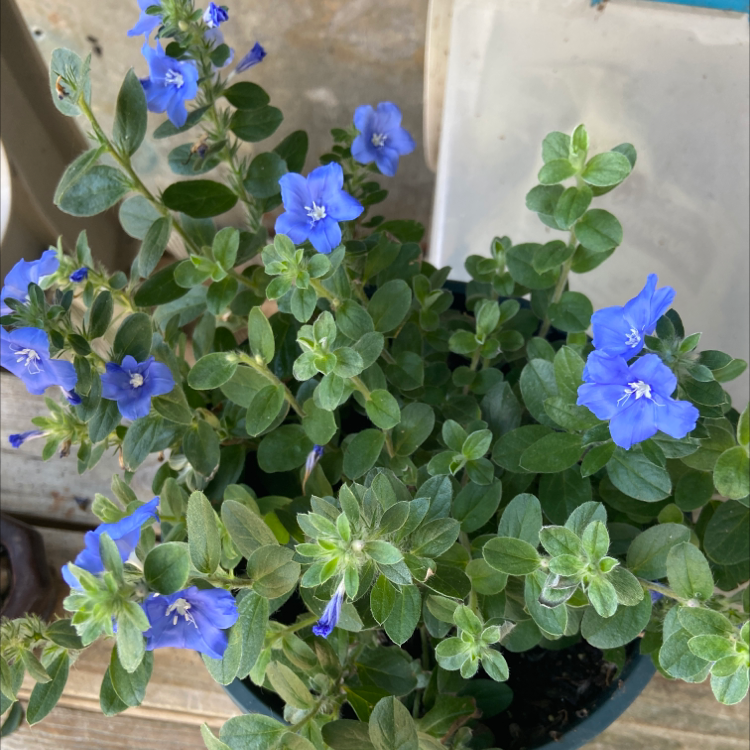
Beach Bum Blue

How to Prune Beach Bum Blue

Evolvulus glomeratus
Reviewed by Kiersten Rankel M.S.
Quick Answer
Prune Beach Bum Blue in spring (March–April) or right after the first big flowering flush to tidy up the mound. Focus on cutting back any leggy stems and removing spent or dead growth. Never remove more than a third of the plant at once, as it dislikes severe cutbacks.

When is the best time to prune?

Pruning timing shifts slightly by region because Beach Bum Blue is frost-sensitive and grows best when temperatures stay reliably warm.

US pruning regions map
Pacific
Mar–Apr
Mountain
May–Jun
Midwest
May–Jun
Northeast
May–Jun
Southeast
Mar–Apr
Stay on top of plant care
Get seasonal reminders for watering and fertilizing — personalized for your plants.
Try Greg Free

Why Should I Prune My Beach Bum Blue?

Beach Bum Blue (Evolvulus glomeratus) is grown mainly as a warm-season annual or tender perennial for its nonstop sky-blue flowers. It forms a low, spreading mound that can get a bit straggly by midsummer if left alone.

Light trimming in spring sets up a compact, bushy shape before the heavy flowering season begins. A quick pass with scissors after the first big flush of blooms also refreshes the plant and triggers another wave of flowers.

Avoid cutting back into bare woody stems. Beach Bum Blue does not resprout well from old wood, so keep your cuts in the green, leafy portions of the plant.

In frost-free climates (zones 9–11), this plant may persist year-round. Cut it back by about a third in late winter to rejuvenate it before the growing season starts.

Know Before You Cut

Difficulty Easy
Max removal 1/3 of the plant at a time
Growth pattern Low mounding perennial
Tools Sharp scissors or hand pruners

What Should I Remove?

Trim leggy or sprawling stems back to the mound
Remove spent flower clusters to encourage reblooming
Cut back in late winter in frost-free climates for rejuvenation
Pinch growing tips early in the season to promote bushiness
Don’t cut into bare, woody stem bases
Don’t prune when frost is still a risk
Don’t remove more than a third of the plant at once

How Do I Prune Step by Step?

1
Choose the right time
Wait until nighttime temperatures are reliably above 50°F. For most regions this means May or June, though coastal and southern gardens can start in March.
2
Assess the plant’s shape
Look for stems that have grown out past the tidy mound shape, or any that look brown or dried out. These are your targets.
3
Cut back leggy stems
Trim sprawling stems back to just above a leaf node, keeping the cut in green, leafy tissue. Aim to restore a rounded, compact mound.
4
Remove spent and dead growth
Snip out any dried flower clusters and brown stems at their base. This also helps air circulation and reduces the chance of fungal issues.
5
Clean up and water
Collect the trimmings, then give the plant a good water and a light fertilizer to support the regrowth flush.

Got More Questions?

Can I prune Beach Bum Blue in midsummer?
Yes, a light trim after the main flowering flush is fine and actually encourages a second round of blooms. Just avoid heavy cutbacks in the heat of summer.
What if I accidentally cut into the woody base?
Beach Bum Blue doesn’t always recover from cuts into bare, leafless wood. If some stems die back, remove them cleanly and let the remaining healthy growth fill in.
How do I keep it from getting leggy?
Pinching the growing tips early in spring encourages branching. Regular light trims throughout the season also help maintain a compact shape.
Does it need pruning to rebloom?
Removing spent flower clusters (deadheading) helps trigger a new flush of blooms, especially if the plant gets a little light shaping at the same time.
Stay on top of plant care
Get seasonal reminders for watering and fertilizing — personalized for your plants.
Try Greg Free

About This Article

Kiersten Rankel M.S.
Botanical Data Lead at Greg · Plant Scientist
About the Author
Kiersten Rankel holds an M.S. in Ecology & Evolutionary Biology from Tulane University. A certified Louisiana Master Naturalist, she has over a decade of experience in science communication, with research spanning corals, cypress trees, marsh grasses, and more. At Greg, she curates species data and verifies care recommendations against botanical research.
See Kiersten Rankel's full background on LinkedIn.
Editorial Process
Pruning guidance verified against Evolvulus glomeratus growth data from Greg's botanical database, cross-referenced with USDA hardiness zone data and published horticultural research.
81+ Greg users growing this plant
USDA hardiness zones 8a–11b
Grow plants with confidence