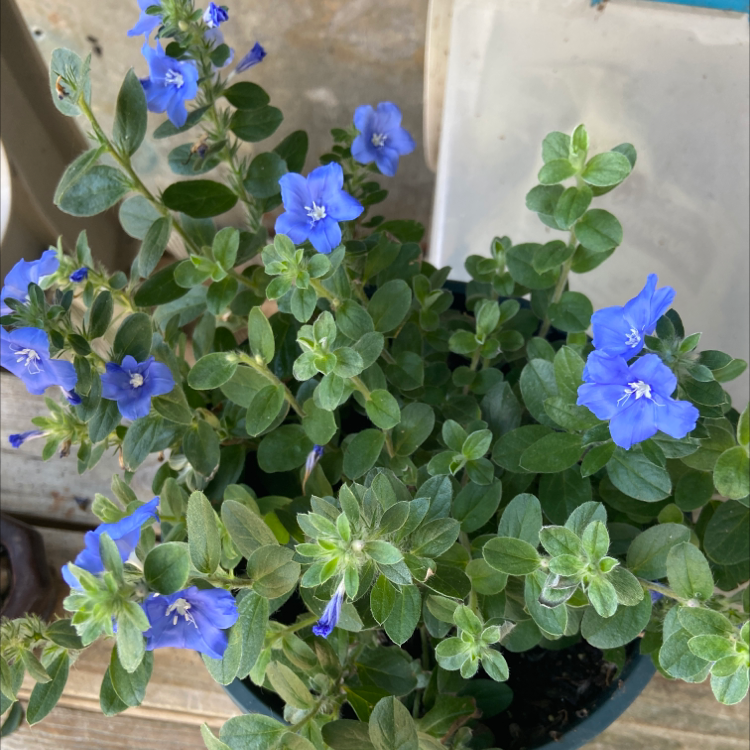
How to Plant a Blue Daze
Plant Blue Daze in spring after the last frost in full sun with fast-draining soil. Set the root ball even with the surrounding soil, space plants 12 to 18 inches apart, and water deeply once after planting. Hold off on a second watering until the top inch of soil feels dry. Expect sky-blue flowers within two to three weeks and a low trailing mound by the end of the first month.

When and where to plant
Blue Daze needs full sun to flower well, six or more hours of direct light each day. The blooms close in shade and on cloudy days, so a part-sun site cuts the flower show in half. In the hottest southern zones, the plant takes full sun all day without sulking, since its silvery foliage reflects light and slows water loss.
Plant after your last spring frost once nighttime lows stay above 50°F. In zones 8 through 11 the plant is a returning perennial. In zone 7 and colder it works as a warm-season annual that gets ripped out at the first hard freeze, so plant a couple of weeks later in the spring to make the most of the season.
The site has to drain fast. Heavy clay or any spot where water pools after a storm causes crown rot and ends the plant within weeks. On clay or low ground, plant on a slight mound or in a raised bed. Sandy, rocky, or gravelly soil is ideal. Allow 12 to 18 inches between plants for a trailing mass planting, or 24 inches if you want each mound to stand alone.
Planting from a nursery transplant
Pick a stocky plant with silvery green foliage and at least a few open blue flowers, since seeing the color confirms a healthy plant ready to bloom. The single most important rule for Blue Daze is drainage. Wet feet rot the crown faster than almost any other planting mistake on this species, so the site choice and the watering pace after planting matter more than how you dig the hole.
-
1Pick a warm, dry planting day Aim for a morning when the soil is workable and no heavy rain is in the forecast for the next two days. Planting into already saturated soil sets the crown up to rot before roots even reach into the surrounding ground. If you must plant before rain, hold off on the initial watering until the storm passes.
-
2Dig the hole twice as wide as the root ball Measure the root ball and dig a hole roughly twice as wide but exactly the same depth, not deeper. The wide hole loosens soil so new roots can push laterally into the native ground. Going deeper than the root ball creates a sunken pocket that collects water against the crown.
-
3Loosen the root ball and set the plant Slide the plant out of the nursery pot and gently rough up the sides of the root ball with your fingers, especially if you see roots circling the edge. Set the plant in the hole so the top of the root ball sits even with or a quarter inch above the surrounding soil. Settling below grade traps moisture against the crown and invites the rot that kills this plant.
-
4Backfill and water in once Fill the hole with the same native soil you removed, firming gently around the root ball with your hands to remove large air pockets. Water deeply enough to settle the soil, about a half gallon per plant, then stop. A single thorough watering is all the plant needs at planting, and the next one waits until the top inch of soil feels dry to the touch.
The first month
Blue Daze settles in fast for a flowering perennial. Most of the action in the first month is above ground, with new silvery foliage and the first wave of sky-blue flowers showing up within two to three weeks of planting. Below ground, roots push out into the surrounding soil at the same time, building the foundation for a heat- and drought-tolerant plant by midsummer.
The most common new-grower mistake during this period is overwatering. The plant looks small and the soil dries quickly on the surface, so it is tempting to water every other day. Doing that keeps the deeper soil saturated, suffocates the new roots, and starts crown rot. The fix is to water deeply but only when the top inch of soil feels dry, which usually means once every five to seven days in average summer weather.
Healthy first-month progress looks like steady new growth at the tips, fresh blue flowers opening each morning, and trailing stems beginning to spread out beyond the original footprint.
What can go wrong
-
Wilting the first few days after planting
Some droop in the first 24 to 48 hours is normal as the root ball adjusts to a new soil and light environment. Check that the soil is moist but not soggy an inch below the surface. If it is dry, water deeply once and wait. If it is wet and the plant is still wilting, the cause is crown stress from saturated soil rather than thirst, and adding more water makes it worse. -
Yellowing lower leaves and a mushy stem base
Overwatering or poor drainage is the culprit. The crown, where the stem meets the roots, suffocates in saturated soil and the plant signals trouble with yellow lower leaves before the rot spreads up the stem. Stop watering immediately and let the soil dry out completely. If the site itself stays wet after rain, lift the plant and replant on a 4 to 6 inch mound or move to a faster-draining bed. -
No flowers despite healthy foliage
Too little direct sun is almost always the reason. Blue Daze needs at least six hours of direct light to set buds, and the open flowers themselves close on cloudy days and in shade. Move the plant to a sunnier spot if it is in a container, or thin overhead branches if a tree is shading the bed. Cutting back on nitrogen-heavy fertilizer also helps, since high nitrogen pushes leaves at the expense of flowers. -
Leggy stretched growth with weak stems
The plant is reaching for light. Either the site does not get full sun, the plants are spaced too closely and shading each other, or a recent stretch of cloudy weather pulled the stems up. Pinch the tips back by about a third to encourage branching, and if light is the underlying problem, transplant to a sunnier location. Stems that flop and root along the soil surface are also normal trailing behavior, not a defect. -
Browning crispy leaf edges
Heat-driven drought stress is the usual cause in midsummer, especially on container plants where the root ball dries out faster than in the ground. Water deeply enough that water runs out the bottom of the container, then let the top inch dry before watering again. In-ground plants almost never need more than one deep watering a week once established. Salt buildup from over-fertilizing can also cause edge browning, in which case flush the soil with plain water. -
Frost damage on leaves and stems
Even a light frost burns Blue Daze foliage, since the plant is tender below about 32°F. In zones 8 and 9 the plant usually pushes fresh growth from the crown in spring after a mild winter freeze, so leave damaged foliage in place until you see new shoots, then cut back. In zone 7 and colder the plant rarely returns and is treated as a warm-season annual that gets replaced each spring. -
Fine webbing and stippled leaves
Spider mites move in during hot dry stretches, especially on container plants and against warm walls. Look for fine webbing on the undersides of leaves and a stippled, dusty appearance on top. Spray the foliage thoroughly with a strong stream of water in the morning, repeating every three days for two weeks. For heavier infestations, an insecticidal soap spray hits the mites without harming the plant. -
Flowers fading from blue to washed out
Color thins when the plant is heat-stressed in the hottest part of summer, when it is short on water, or when bloom production slows late in the season. Deep watering once a week and a light shearing of the trailing tips reset the plant for another wave of fresh, sky-blue flowers. A mild balanced fertilizer at quarter strength every six weeks also keeps color saturated, but avoid heavy feeding since it pushes foliage over flowers.
About This Article
