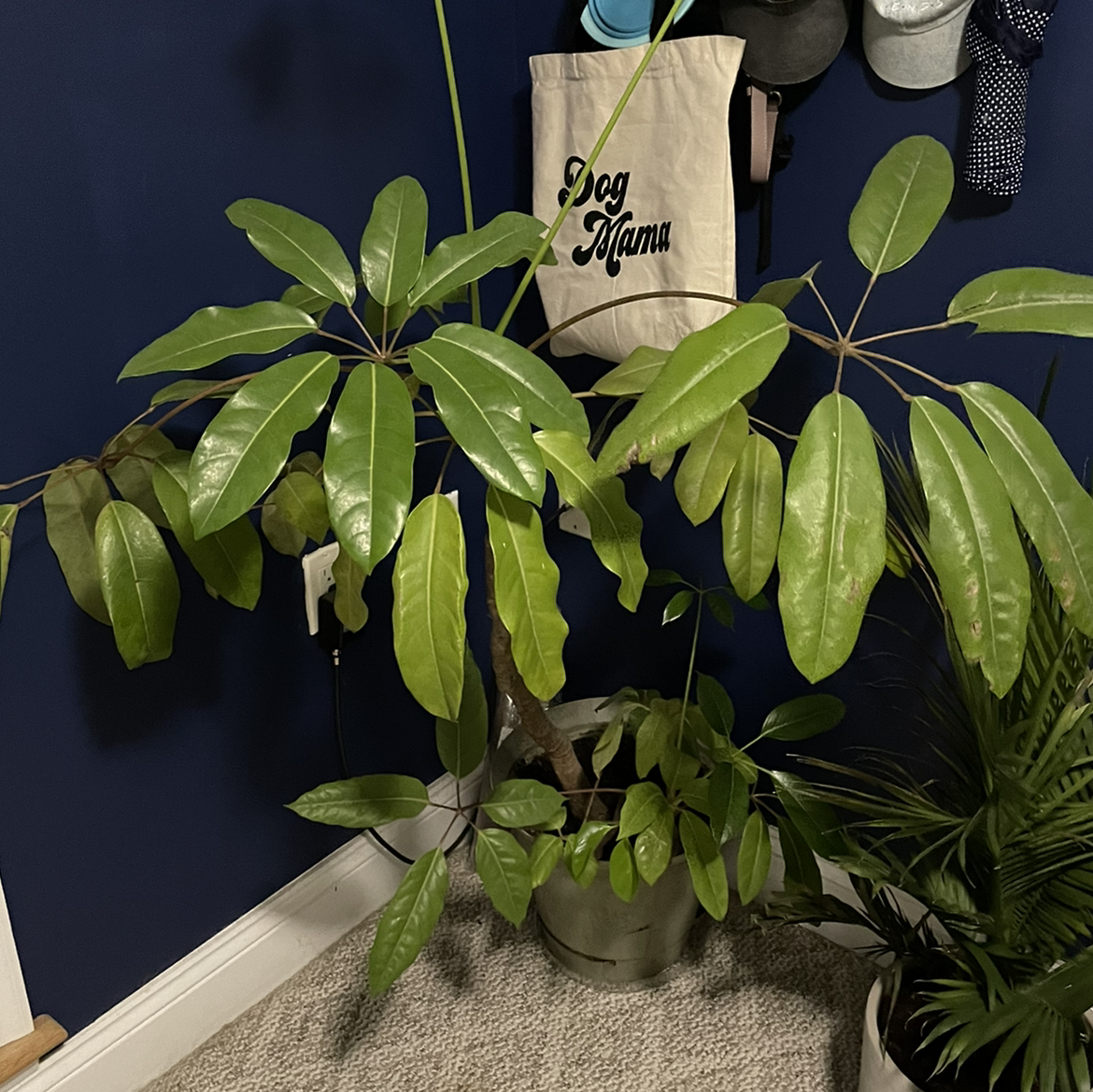
Umbrella Tree

What's Wrong with My Umbrella Tree?

Heptapleurum actinophyllum
Reviewed by Kiersten Rankel M.S.
Quick Answer
1.
Leaf drop almost always means shock.
Moving the plant, a nearby draft, or a sudden temperature shift are the top triggers for mass leaf drop on Schefflera. Check what changed in the environment before blaming watering.
2.
Soil moisture disambiguates the rest.
Yellow leaves, drooping, and limpness all overlap in cause. Check the soil with your finger before deciding what's wrong. Wet soil points to overwatering. Dry soil points to thirst.
3.
New umbrella at the tip means it's thriving.
A fresh cluster of bright, glossy leaflets pushing out from a stem tip is the clearest sign your Schefflera is healthy and recovering. If it's growing, it's still fighting.
Stay on top of plant care
Get seasonal reminders for watering and fertilizing โ€” personalized for your plants.
Try Greg Free

Common Umbrella Tree Problems

Leaf drop

Environmental shock

Schefflera is unusually sensitive to sudden change. Moving the pot, a nearby heating vent, a cold draft, or a shift in light level can trigger the plant to shed dozens of leaves within days. Each leaf on this species is a compound umbrella of 7-16 leaflets, so a single drop looks dramatic. The plant isn't dying, it's shedding load in response to stress.

1. Identify what changed and reverse it where possible. Move the plant back to its previous spot, block the draft, or shift it away from a vent
2. Leave the plant completely undisturbed for at least two to three weeks once it's in its new permanent spot
3. Reduce watering slightly while the plant is stressed, since bare stems lose less water than leafed ones
4. Watch for new umbrella clusters at the branch tips, which signal recovery is underway
Overwatering

Schefflera's roots are vulnerable to rot when the soil stays wet for too long. Rotting roots can't support the plant's large compound leaves, and the plant sheds them to reduce demand. The leaves yellow first, then drop, often working from the bottom of the plant upward.

1. Press the soil. If it's wet several inches down, stop watering immediately
2. Move the plant to a brighter spot to help the soil dry faster
3. Resume watering only when the top two inches of soil are dry to the touch
Underwatering

A bone-dry pot stresses the plant just as badly as a soggy one. Schefflera's multiple stems and dense canopy of large compound leaves transpire heavily, so the pot dries out faster than many owners expect. The leaves droop, then drop, without yellowing first.

1. Water thoroughly until it runs from the drainage hole
2. Check the soil every few days and water again when the top two inches are dry
3. If the pot feels very light when lifted, the soil may have dried out completely and be resisting water. Set the pot in a tray of water for 20 minutes to rehydrate from the bottom, then drain

Yellow leaves

Overwatering

Waterlogged soil suffocates Schefflera's roots, which then rot and stop delivering nutrients to the canopy. The oldest leaves at the base of the plant yellow first as the plant pulls what nutrients remain from the least productive leaves. This bottom-up progression is the giveaway.

1. Stop watering and let the soil dry out completely before the next drink
2. Remove the worst yellow leaves to tidy the plant and redirect its energy
3. If leaves keep yellowing after a full dry cycle, check the base of the stems for soft tissue, which signals rot has moved up from the roots
Cold drafts

Schefflera is a tropical tree native to Australian and New Guinean rainforests and is intolerant of cold air. Even brief exposure to a cold draft from an open window or an air conditioning vent yellows and drops leaves, often within a day or two of the exposure.

1. Move the plant away from any air source blowing below 60ยฐF
2. Keep it at least a foot from exterior windows in winter, where glass radiates cold
3. New growth should come in healthy once the plant is away from the cold source
Normal shedding

As the plant matures and pushes new umbrella clusters from the stem tips, the oldest lowest leaves yellow and fall. If only a few leaves at the base are yellowing while the rest of the plant looks full and the tips are pushing new growth, this is normal turnover.

Drooping leaves

Underwatering

Schefflera's large compound leaves droop fast when the soil runs dry. The plant holds a lot of leaf surface area relative to its root system, so it loses water quickly in a dry pot. Recovery is usually visible within a few hours of a thorough watering.

1. Water thoroughly until it runs from the drainage hole
2. If the soil is completely dry and the water is running straight through, bottom-soak the pot for 20 minutes before top-watering
3. The leaves should lift back up within a few hours
Overwatering

Rotting roots can't move water up the stems, so the plant droops even when the soil is wet. If the leaves are limp but the soil is still damp, overwatering is the likely cause. Pressing the stem at the base for softness helps confirm it.

1. Stop watering and check how wet the soil is
2. If wet and the plant is still drooping, let the soil dry completely before watering again
3. If the base of the main stems feels soft, root rot has set in. Trim any soft stems back to firm tissue and repot in fresh, dry mix

Leggy stems

Insufficient light

Schefflera stretches toward any light source when it doesn't get enough. New stems grow long and thin between leaf clusters, the umbrella groups get smaller, and overall the plant looks sparse and lopsided. This species can grow 6-10 feet tall indoors, so it has the structure to stretch dramatically. Low light is the only cause of leggy growth on this plant.

1. Move the plant to a brighter spot with several hours of bright indirect light each day
2. Prune leggy stems back by a third to encourage denser branching lower on the plant
3. Once in better light, new umbrella clusters will emerge from the cut points over the following weeks

Pests

Spider mites

Schefflera is a classic spider mite target. The glossy leaflets on each umbrella cluster create ideal surfaces for mites to colonize, and dry indoor air is what invites them in. Look for pale stippling or tiny speckles across the leaf surface and fine webbing in the joints where leaflets meet the central stem. Infestations spread rapidly in low humidity.

1. Rinse the entire plant under a strong shower to knock mites off the leaflets and stems
2. Wipe every leaflet top and bottom with insecticidal soap or 70% isopropyl alcohol on a cloth
3. Repeat every three to four days for two weeks to break the life cycle
4. Run a humidifier nearby or move the plant away from heat sources, since mites struggle in humid air above 50%
Mealybugs

White cottony clumps where the leaflet stems meet the central stem of each umbrella cluster. Mealybugs target the tight axils of Schefflera's compound leaves, where the 7-16 leaflets converge, giving them plenty of sheltered crevices to hide and feed.

1. Dab each cluster with a cotton swab soaked in 70% isopropyl alcohol
2. Follow with an insecticidal soap spray over the whole plant, working into every leaf joint
3. Repeat every five to seven days for three weeks to catch newly hatched eggs
Scale

Small brown or tan waxy bumps on the stems and along the central shaft of each leaf cluster. Scale insects pierce the tissue and suck sap, leaving yellowed, pitted spots nearby and a sticky honeydew residue on the leaves below.

1. Scrape the bumps off with a soft toothbrush or the edge of a card
2. Wipe affected stems and leaf shafts with a cloth dampened in 70% isopropyl
3. Check weekly for a month and repeat if new bumps appear

Preventing Umbrella Tree Problems

A few consistent habits prevent most of what goes wrong with Schefflera.
Weekly Check
1
Choose a permanent spot and leave the plant there.
Schefflera drops leaves in response to being moved more readily than almost any other houseplant. Pick a bright, draft-free location and commit to it. Every relocation risks a shedding episode.
2
Water when the top two inches of soil are dry.
This species needs consistent moisture but rots easily in soggy soil. Checking two inches down before watering prevents both overwatering and the leaf drop that follows underwatering.
3
Keep it away from heating vents, air conditioners, and cold windows.
Drafts and sudden temperature shifts are the two fastest triggers for leaf drop. A stable temperature between 65 and 85ยฐF with no moving air prevents most stress episodes.
4
Run a humidifier nearby or group with other plants.
Dry indoor air is the primary driver of spider mite outbreaks, which are a chronic problem for this species. Keeping humidity above 50% makes the plant less hospitable to mites and reduces leaf stress.
5
Wipe leaflets monthly and inspect the stem joints for pests.
The converging leaf shafts where each umbrella meets the stem are mealybug and scale hiding spots. A quick check during watering keeps infestations small.
Stay on top of plant care
Get seasonal reminders for watering and fertilizing โ€” personalized for your plants.
Try Greg Free

About This Article

Kiersten Rankel M.S.
Botanical Data Lead at Greg ยท Plant Scientist
About the Author
Kiersten Rankel holds an M.S. in Ecology & Evolutionary Biology from Tulane University. A certified Louisiana Master Naturalist, she has over a decade of experience in science communication, with research spanning corals, cypress trees, marsh grasses, and more. At Greg, she curates species data and verifies care recommendations against botanical research.
See Kiersten Rankel's full background on LinkedIn.
Editorial Process
Every problem and fix in this article was verified against Greg's botanical database, cross-referenced with USDA hardiness zone data and published horticultural research from Missouri Botanical Garden and Royal Horticultural Society. The Heptapleurum actinophyllum care profile reflects 3,700+ Greg users growing this species indoors, alongside peer-reviewed sources on Araliaceae cultivation and indoor spider mite management.