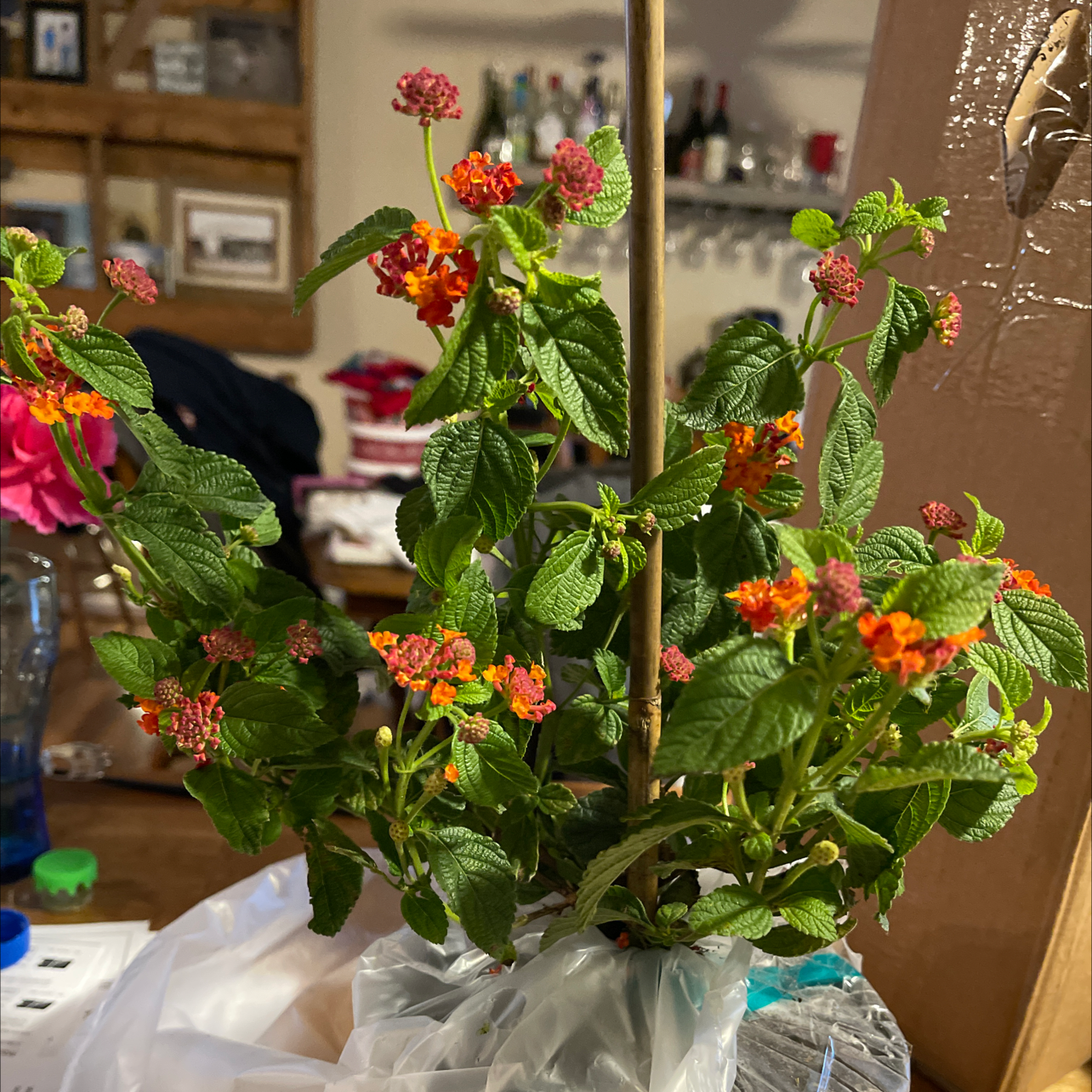
What's Wrong with My Lantana?

Lantana camara
Reviewed by Kiersten Rankel M.S.
Quick Answer
1.
Shade is behind most Lantana problems.
Lantana evolved on open, sun-baked hillsides and needs full sun to flower reliably. Few or no blooms, leggy stems, and powdery mildew all get worse when the plant is not getting at least six hours of direct sun per day.
2.
Check soil moisture if sun looks right.
Lantana hates wet feet. Yellow leaves and a plant that looks sick despite good sun usually trace back to overwatering or poorly drained soil. The roots are shallow and rot quickly when they stay soggy.
3.
New flower buds at branch tips mean it's still fighting.
A continuous cluster of new buds forming at the shoot tips, plus two or more bloom colors visible as older flowers age, means the plant is actively growing and problems on older growth are usually fixable.
Stay on top of plant care
Get seasonal reminders for watering and fertilizing โ€” personalized for your plants.
Try Greg Free

Common Lantana Problems

No flowers

Too much shade

Lantana is native to open, tropical scrubland and sets flower buds only when it gets full sun. In partial shade, the plant puts energy into leafy growth and skips blooming almost entirely. Even a few hours of afternoon shade from a fence or tree can cut flower production dramatically.

1. Count actual sun hours at the planting site across the day, not just at one moment
2. Move the plant or container to a spot with at least six full hours of direct sun
3. Trim or remove any overhanging branches blocking morning or afternoon light
Too much nitrogen

High-nitrogen fertilizers push Lantana into producing lush, dark-green foliage at the expense of flowers. A plant that looks healthy and full but refuses to bloom in summer is a classic sign. Lantana in good soil rarely needs supplemental nitrogen at all.

1. Stop applying any high-nitrogen fertilizer
2. Switch to a low-nitrogen, bloom-boosting fertilizer (low first number on the label) or skip fertilizing entirely
3. Give the plant one full growing season to shift back into flowering mode
Spent flowers left on the plant

Lantana slows new flower production when old flower heads mature into berries. The plant shifts energy toward seed development. Removing spent clusters before they form berries keeps the plant focused on producing the next flush of blooms.

1. Deadhead spent flower clusters by pinching or snipping them off before berries form
2. Do this every one to two weeks through the blooming season to keep new buds coming

Yellow leaves

Overwatering

Lantana is drought-tolerant by nature and its shallow, fibrous roots rot quickly when the soil stays wet. Soggy conditions cut off oxygen to the roots, and the plant responds by yellowing its oldest leaves first. The rest of the plant often looks fine until the roots are badly damaged.

1. Check soil moisture two to three inches down. If it still feels damp, hold off watering
2. Let the soil dry out almost completely between waterings, especially in containers
3. Improve drainage by adding coarse grit to the soil mix or moving to a pot with large drainage holes
Nutrient deficiency

Lantana growing in very poor or sandy soil can develop pale or yellow foliage from lack of iron or magnesium, especially when pH is too high. The yellowing tends to show between the veins or across whole leaves uniformly, rather than starting from the oldest leaves at the base.

1. Test soil pH. Iron and magnesium lock up above pH 7, so high pH is often the root cause
2. Apply a balanced slow-release fertilizer with micronutrients, or use chelated iron if veins stay green
3. Top-dress with compost to improve soil structure and nutrient availability over time

Powdery mildew

Humid conditions with poor airflow

Powdery mildew shows up as a white or gray dusty coating on Lantana's leaves and stems. Unlike most fungal diseases, it spreads in warm, dry weather when nights are humid and airflow is poor. Lantana planted against a wall or in a crowded bed with little air movement is most vulnerable.

1. Move containers to a spot with better airflow or thin surrounding plants to open up the canopy
2. Remove and discard all heavily affected leaves and stems
3. Spray with a dilute neem oil or potassium bicarbonate solution, coating both leaf surfaces
4. Repeat every seven to ten days until the outbreak clears

Whiteflies

Whiteflies

Lantana is a classic whitefly host. Shake the plant and a cloud of tiny white winged insects lifting off is the signature sign. They cluster on the undersides of leaves, suck sap, and leave sticky honeydew that turns black with sooty mold. Heavy infestations cause leaves to yellow and drop.

1. Knock adults off by shaking the plant or blasting with a strong stream of water
2. Spray the undersides of all leaves with insecticidal soap or neem oil
3. Hang yellow sticky traps nearby to catch adults and monitor the population
4. Repeat the spray every five to seven days for three weeks to break the egg cycle

Leggy woody growth

No pruning

Lantana naturally converts its lower stems to hard, woody growth over time. Without pruning, the flower-bearing zone retreats to the branch tips and the center of the plant becomes a bare tangle of old wood. An unpruned Lantana after two or three seasons often looks sprawling and sparse despite being alive.

1. Cut the plant back by one third to one half in early spring before new growth starts
2. Pinch back stem tips every few weeks through the growing season to encourage branching and more bloom sites
3. In frost-free zones, do a hard cutback every two to three years to renew the framework from lower stems

Preventing Lantana Problems

A few consistent habits prevent most of what goes wrong with Lantana.
Weekly Check
1
Plant in full sun with at least six hours of direct light.
Sun is the non-negotiable requirement for Lantana. Without it, the plant drops flower production, grows leggy, and becomes more vulnerable to powdery mildew. No other fix compensates for too much shade.
2
Water only when the soil has dried out almost completely.
Lantana's shallow fibrous roots rot quickly in consistently moist soil. Letting the ground dry between waterings is the single most effective defense against root stress and yellow leaves.
3
Plant in fast-draining soil and avoid low spots where water pools.
Mixing in coarse grit or perlite, or planting on a slight slope, prevents the soggy root zone that kills more Lantanas than anything else. In containers, use a well-draining potting mix and pots with large drainage holes.
4
Deadhead spent flowers before they form berries.
Removing old flower heads every one to two weeks keeps the plant in continuous bloom mode and prevents energy from shifting into seed production. It also reduces the risk from the plant's toxic berries.
5
Cut the plant back by one third each spring.
Annual pruning keeps Lantana from going woody and bare in the center, encourages branching, and creates more flower-bearing shoot tips. Plants that are pruned regularly stay compact and bloom far more than those left to sprawl.
Stay on top of plant care
Get seasonal reminders for watering and fertilizing โ€” personalized for your plants.
Try Greg Free

About This Article

Kiersten Rankel M.S.
Botanical Data Lead at Greg ยท Plant Scientist
About the Author
Kiersten Rankel holds an M.S. in Ecology & Evolutionary Biology from Tulane University. A certified Louisiana Master Naturalist, she has over a decade of experience in science communication, with research spanning corals, cypress trees, marsh grasses, and more. At Greg, she curates species data and verifies care recommendations against botanical research.
See Kiersten Rankel's full background on LinkedIn.
Editorial Process
Every problem and fix in this article was verified against Greg's botanical database, cross-referenced with USDA hardiness zone data and published horticultural research from the Missouri Botanical Garden, university extension programs, and species-specific literature. The Lantana camara care profile reflects documented species behavior combined with years of community grower feedback in Greg.
2,899+ Greg users growing this plant
USDA hardiness zones 8aโ€“11b