What's Wrong with My Pink Princess Philodendron?

Common Pink Princess Philodendron Problems
Losing pink
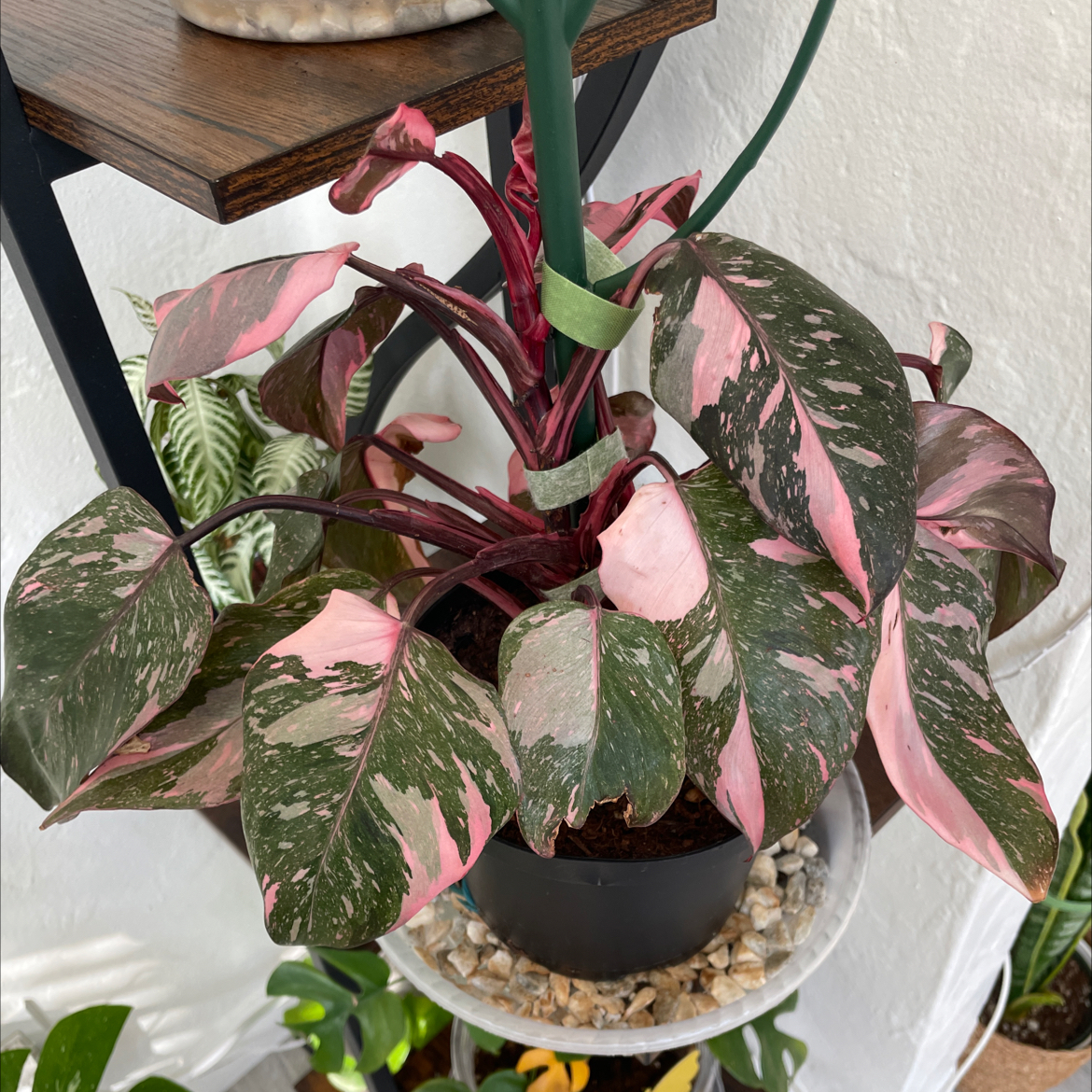
Pink Princess is a chimeral variegated plant, meaning its pink cells lack chlorophyll and contribute nothing to photosynthesis. When light drops, the plant pushes more chlorophyll-producing cells into new leaves to compensate, and new growth comes out all-green. The reversion happens leaf by leaf on new growth.
If you propagated from an all-green section of the stem, the chimeral mutation is simply not present in that cutting. Pink Princess can also permanently revert a stem if the growing tip loses the mutation. Once a stem is fully reverted, no amount of light will bring the pink back on that stem.
Yellow leaves
Pink Princess is a climbing philodendron with thick aerial roots adapted to attaching to bark, not sitting in saturated soil. Waterlogged conditions collapse oxygen around the roots and they rot. The plant then pulls nitrogen and other nutrients back from its oldest leaves first, so yellowing starts at the bottom and works upward.
As Pink Princess vines upward and produces new leaves at the growing tip, it sheds the oldest lower leaves to redirect energy. One or two yellowing leaves at the base of an otherwise active vine with new growth emerging at the top is normal.
Brown tips
Pink Princess originates from humid tropical forests and wants humidity above 50–60%. Its large, dark leaves lose moisture through their tips faster than smaller-leaved philodendrons, and the pink tissue is especially fragile since it carries no chlorophyll to support cell repair. Dry air from heating or AC shows up as browning at the tips and edges.
Pink Princess is sensitive to fluoride and mineral salts in tap water. These accumulate in the leaf tissue over time and cause tip browning that looks like low humidity but persists even when humidity is fine. The pink areas, which have no chlorophyll to dilute the buildup, tend to show tip damage first.
Slow growth
Pink Princess is a slow grower even in good conditions, but very low light makes it nearly stop. When light is insufficient, the plant cannot fuel new leaf production and may sit for months without pushing a single new leaf. The issue is compounded by the fact that roughly half of each leaf's surface area is pink and photosynthetically inactive, so the green portions have to do all the work.
When Pink Princess is severely root-bound, its thick climbing roots have nowhere to expand and the plant stalls. It will also dry out extremely fast between waterings, making it harder to maintain consistent moisture.
Pests
Fine webbing on leaf undersides and pale stippling across the surface are the signs. Spider mites target the chlorophyll-poor pink tissue first, since those areas have weaker cell defenses. The damage shows up as browning and speckling on the pink patches before spreading to the green portions. Dry indoor air accelerates infestations.
White cottony clumps tucked into the nodes where new leaves emerge and along the stem where leaves attach. Pink Princess has thick, fleshy stems with prominent nodes that give mealybugs good cover. A light infestation can go unnoticed for weeks until the cottony clusters are large enough to spot.
Preventing Pink Princess Philodendron Problems
About This Article
