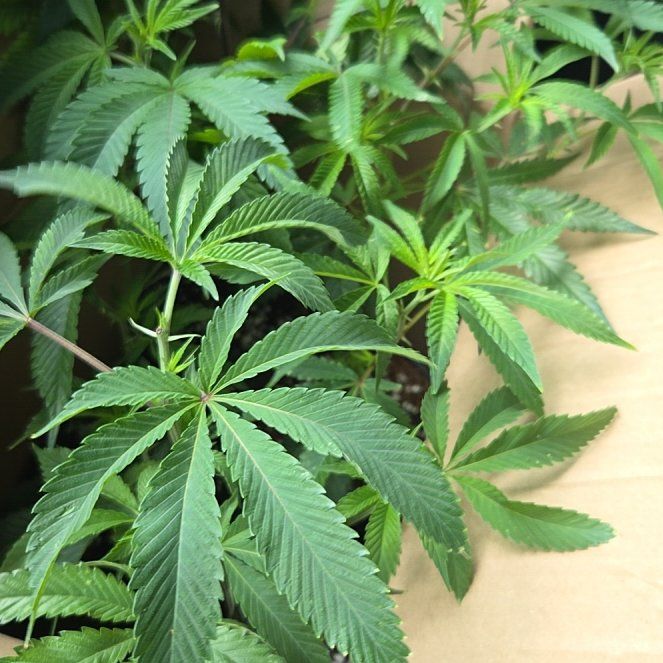
Marijuana

What's Wrong with My Marijuana?

Cannabis sativa
Reviewed by Kiersten Rankel M.S.
Quick Answer
1.
pH drift causes most nutrient symptoms.
Cannabis roots absorb nutrients only in a narrow pH window. Check and correct pH at the root zone before treating any leaf symptom as a nutrient deficiency.
2.
Dense buds mean mold risk.
Botrytis hides inside tight flower clusters where airflow is low. Keep humidity under 50% during the last few weeks of flowering to protect the harvest.
3.
Dense frosty buds forming means you're on track.
In flowering, a heavy coat of resin glands on the buds is your main health signal. If new bud sites are developing and trichomes are growing, the plant is doing its job.
Stay on top of plant care
Get seasonal reminders for watering and fertilizing โ€” personalized for your plants.
Try Greg Free

Common Marijuana Problems

Yellow leaves

Nitrogen deficiency

Cannabis is a heavy nitrogen feeder during vegetative growth. When nitrogen runs low, the plant pulls it back from its oldest leaves first, causing yellowing that starts at the bottom of the plant and climbs steadily upward toward the canopy.

1. Check pH first. Root zone pH outside 6.0โ€“7.0 in soil (5.5โ€“6.5 in hydro) locks out nitrogen even when it's present.
2. If pH is correct, feed with a nitrogen-rich fertilizer formulated for the vegetative stage.
3. Remove the most affected leaves so the plant stops spending energy on them.
4. Resume normal feeding and monitor new growth for improvement within a week.
Nutrient burn

Cannabis shows nutrient burn as dark green leaves with tips that go yellow, then brown and crispy, often curling down. Overfeeding floods the roots with dissolved salts that pull moisture out of the plant through osmosis, causing leaf tips to dry out even while the soil is wet.

1. Flush the root zone with plain pH-corrected water to push excess salts through.
2. Resume feeding at half the previous dose once flushing is complete.
3. Clip off the worst-burned tips so you can monitor new growth clearly.
4. Hold at the lower dose for one or two feeding cycles before increasing again.

Bud mold

Botrytis (gray mold)

Botrytis colonizes the dense interior of cannabis flower clusters where air cannot reach. It starts as gray or brown fuzzy growth deep inside a bud and can hollow out an entire cola before the outer surface shows any discoloration. The risk spikes in the final weeks of flowering when buds are tightest and resin is heaviest.

1. Cut out the affected bud and the surrounding flower material down to healthy tissue.
2. Dispose of infected material in a sealed bag. Do not compost it.
3. Drop humidity to 40โ€“50% and increase airflow in the growing space immediately.
4. Inspect remaining buds daily since botrytis spreads spore-by-spore through the canopy.

Leaf curl

Nitrogen toxicity

Overfeeding nitrogen causes cannabis leaves to claw downward at the tips, a pattern growers call the nitrogen claw. The whole leaf curves and the tips point straight down while the rest of the leaf stays dark green. It is most obvious on fan leaves in the middle and lower canopy.

1. Hold all nutrients for one feeding cycle and water with plain pH-corrected water.
2. Flush lightly if the soil or media is heavily saturated with nutrients.
3. Resume feeding at half strength and gradually work back up over two to three feedings.
Heat stress

Leaves close to an indoor grow light or in an outdoor spot with afternoon heat above 85ยฐF cup upward and inward to reduce exposed surface area. Cannabis canopy leaves closest to the light source show it first, and the plant may also show bleached or light-yellow patches on the tops of exposed leaves.

1. Raise the grow light or move it to the recommended distance for its wattage.
2. Improve ventilation to keep canopy temperature below 82ยฐF.
3. For outdoor plants, add a shade screen during the hottest part of the afternoon.

Pests

Spider mites

Spider mites are the most common cannabis pest, especially in warm indoor grows with low humidity. They live on leaf undersides and cause pale stippling across the leaf surface. Fine webbing shows up between leaves and stems as the colony grows, and a large infestation can severely reduce photosynthesis before harvest.

1. Inspect leaf undersides with a loupe or phone camera and look for moving dots and webbing.
2. Spray the whole plant top and bottom with insecticidal soap or diluted neem oil.
3. Repeat every 3โ€“4 days for at least two weeks since eggs are not killed by most contact sprays.
4. Raise humidity above 60% in veg since mites struggle in moist air.
Fungus gnats

Small black flies that emerge when you water or disturb the soil. Adult fungus gnats are mostly a nuisance, but larvae in the top few inches of growing medium feed on fine root hairs. Cannabis seedlings and plants in early veg are most vulnerable since root damage at that stage stalls growth.

1. Let the top 2โ€“3 inches of soil or media dry out completely between waterings to kill larvae.
2. Place yellow sticky traps at soil level to monitor and trap adults.
3. Top-dress with mosquito bits (Bacillus thuringiensis israelensis) to kill larvae in the root zone.
4. Bottom-water temporarily to keep the top layer consistently dry.
Thrips

Thrips leave silver or bronze streaking across leaf surfaces and deposit tiny black specks of frass on the undersides. They target new growth and can spread rapidly through a cannabis canopy. Damage early in veg reduces total leaf area and affects the structure of the plant heading into flowering.

1. Isolate affected plants immediately if growing multiple plants.
2. Spray with insecticidal soap or spinosad, coating both leaf surfaces and the growing tips.
3. Repeat every 4โ€“5 days until new damage stops appearing.

Stretchy, leggy growth

Insufficient light

Cannabis plants that do not get enough light stretch toward the source, producing long gaps between leaf nodes and weak, thin stems that cannot support buds later. Indoors this is the most common sign that the grow light is too far away or underpowered. Outdoors it happens when the plant is in partial shade instead of full sun.

1. Move the grow light closer to the canopy, staying within the manufacturer's recommended minimum distance.
2. For outdoor plants, relocate to a spot with at least 6 hours of direct sun.
3. Support any already-stretched stems with stakes or a trellis net to prevent them snapping under bud weight.

Seeds inside buds

Hermaphroditism or male pollen

Female cannabis plants produce banana-shaped pollen sacs inside their flower clusters when stressed, a survival mechanism that allows self-pollination. Stress triggers include light leaks during the dark cycle, heat, irregular photoperiod, or physical damage. Even one open pollen sac can seed an entire crop, converting resin energy into seed production.

1. Inspect bud sites closely for small yellow or green banana-shaped growths among the pistils.
2. Remove any pollen sacs or entire affected buds immediately with tweezers and dispose of them in a sealed bag.
3. Find and fix the stress source. Eliminate light leaks, stabilize temperature, and confirm your timer is running a consistent 12-hour dark period.
4. Check the rest of the crop daily since more bananas often appear once the first ones form.

Preventing Marijuana Problems

A few consistent habits prevent most of what goes wrong with cannabis.
Weekly Check
1
Check and adjust pH every time you water.
Root zone pH is the single biggest lever on cannabis health. Most nutrient deficiency symptoms are actually pH lockout. Target 6.0โ€“7.0 in soil, 5.5โ€“6.5 in hydro.
2
Feed at half the recommended dose and work up slowly.
Cannabis is easy to overfeed. Starting low prevents nutrient burn and salt buildup that are harder to correct than a mild deficiency.
3
Drop humidity to 40โ€“50% during the last four weeks of flowering.
Dense buds with poor airflow are ideal conditions for botrytis. Keeping humidity low through late flower is the primary defense against bud mold.
4
Keep the dark period completely uninterrupted.
Even brief light leaks during the 12-hour dark cycle stress photoperiod plants and trigger hermaphroditism. Use a timer and check for light gaps around doors and vents.
5
Inspect leaf undersides weekly for pests.
Spider mites, thrips, and fungus gnats establish fast in warm growing environments. Catching colonies early means a few spray treatments. Missing them until flowering means a much harder battle.
Stay on top of plant care
Get seasonal reminders for watering and fertilizing โ€” personalized for your plants.
Try Greg Free

About This Article

Kiersten Rankel M.S.
Botanical Data Lead at Greg ยท Plant Scientist
About the Author
Kiersten Rankel holds an M.S. in Ecology & Evolutionary Biology from Tulane University. A certified Louisiana Master Naturalist, she has over a decade of experience in science communication, with research spanning corals, cypress trees, marsh grasses, and more. At Greg, she curates species data and verifies care recommendations against botanical research.
See Kiersten Rankel's full background on LinkedIn.
Editorial Process
Every problem and fix in this article was verified against Greg's botanical database, cross-referenced with USDA hardiness zone data and published horticultural research from the Missouri Botanical Garden, university extension programs, and species-specific literature. The Cannabis sativa care profile reflects documented species behavior combined with years of community grower feedback in Greg.
6,942+ Greg users growing this plant
USDA hardiness zones 8aโ€“11b