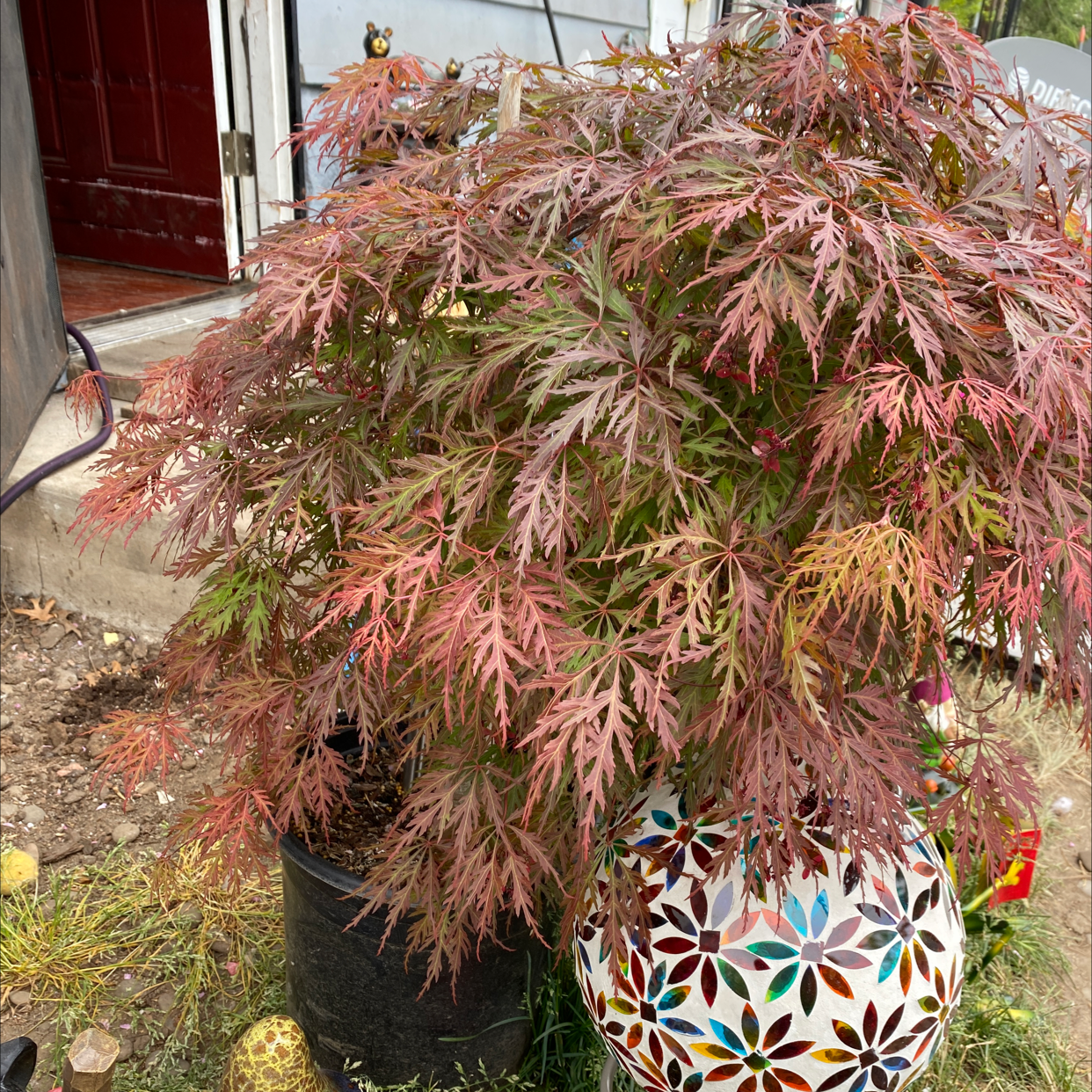
Japanese Maple

What's Wrong with My Japanese Maple?

Acer palmatum
Reviewed by Kiersten Rankel M.S.
Quick Answer
1.
Sun, wind, and drought act together.
Leaf scorch is the most common complaint and it almost always comes from all three stressors combining. Check whether the tree is getting harsh afternoon sun and if the soil has dried out at the same time.
2.
Sudden wilting on one branch is serious.
Wilting confined to one branch or one side of the tree can mean verticillium wilt, a soil-borne fungal disease that blocks the vascular system. Drought causes whole-plant wilting. If only part of the tree is affected, the cause is different and the stakes are higher.
3.
New leaf tips mean recovery is happening.
A flush of healthy red-tinted new leaves pushing out at branch tips confirms the tree is still growing and fighting. If you see new buds opening, the tree has enough healthy vascular tissue to pull through.
Stay on top of plant care
Get seasonal reminders for watering and fertilizing โ€” personalized for your plants.
Try Greg Free

Common Japanese Maple Problems

Leaf scorch

Too much sun plus dry soil

Japanese Maple evolved as an understory tree beneath larger canopy, so its thin, deeply lobed leaves have almost no built-in protection against harsh direct sun. When afternoon sun hits the leaf surface at the same time the soil is dry and wind is pulling moisture out of the leaves, the edges and tips cook faster than the roots can replace the water. The damage shows up first on the outer margins of each lobe and spreads inward.

1. Water the tree deeply and thoroughly, soaking to at least 12 inches
2. Lay a 3-inch ring of mulch from the trunk flare outward to the drip line to hold soil moisture
3. Block or reduce afternoon sun if the tree is in a western exposure, using shade cloth or a nearby structure
4. Scorched leaves will not recover, but fresh growth should come in clean once moisture and shade improve

Wilting branches

Drought stress

Japanese Maple has a shallow, fibrous root system that dries out faster than deep-rooted trees. When the soil dries completely, the whole tree wilts together and leaves may roll or droop uniformly. Wilting that affects the entire canopy at once almost always traces back to drought.

1. Water deeply and slowly, letting a hose run at low pressure for 20 to 30 minutes so the water soaks down to the full root zone
2. Check for soil moisture 6 inches down before and after watering to confirm the water is penetrating
3. Add a 3-inch layer of mulch across the root zone to slow evaporation
Verticillium wilt

Verticillium is a soil fungus that invades through the roots and clogs the vessels that carry water up the stem. Japanese Maple is particularly susceptible. Unlike drought, which wilts the whole canopy evenly, verticillium wilts one branch or one whole side of the tree first because the fungus blocks individual vessel bundles before spreading. If you cut a wilting branch you will often see dark olive or brown streaking in the wood just under the bark.

1. Prune out all wilting branches at least 6 inches below the last visible discoloration in the wood
2. Sterilize pruning tools with 70% isopropyl between every cut to avoid spreading the fungus
3. Remove pruned material from the property entirely. Do not compost it
4. Fertilize lightly with a low-nitrogen fertilizer to support recovery without pushing excessive soft growth. There is no chemical cure for the infection in the soil

Yellow leaves mid-season

Soil pH blocking iron or manganese

Japanese Maple performs best in slightly acidic soil and struggles to absorb iron and manganese when the pH is too high. The symptom is yellowing between the leaf veins while the veins themselves stay green, showing up on the newest leaves first. This interveinal yellowing pattern is distinct from the browning caused by drought or scorch.

1. Test the soil pH. Japanese Maple wants a pH of 5.5 to 6.5
2. If pH is above 6.5, apply granular sulfur or an acidifying fertilizer according to the package rate
3. Avoid applying lime anywhere near the root zone
Overwatering or waterlogged roots

Japanese Maple's fibrous roots suffocate quickly in soil that stays saturated. Waterlogged roots rot and can no longer take up nutrients, so leaves yellow and the tree loses vigor even when the soil looks wet. Poor drainage is the main culprit, especially in clay-heavy soils.

1. Check the soil drainage by digging a small hole 12 inches deep and filling it with water. If it does not drain within an hour, drainage is the problem
2. Improve drainage by working coarse grit or compost into the planting area around the root zone
3. Avoid irrigating again until the top 2 to 3 inches of soil are dry

Early leaf drop

Summer drought stress

When a Japanese Maple runs short of water in midsummer, it drops leaves early as a survival response. The tree sheds canopy to reduce the surface area losing water. The remaining leaves often show scorch before they fall. This is different from normal autumn drop, which is gradual and even across the canopy.

1. Water deeply and immediately if the soil is dry
2. Mulch the root zone generously to conserve soil moisture through summer
3. The tree typically pushes new growth once conditions improve
Verticillium or root damage

Early and sudden leaf drop on one branch or one section of the canopy points to a vascular problem rather than drought. Verticillium wilt, physical root damage from digging or construction, or severe root rot can all cause the affected part of the canopy to drop leaves weeks ahead of the rest of the tree.

1. Look at the drop pattern. If one side is dropping and the other is not, prune back into the affected branch until you find healthy white wood with no dark streaking
2. Sterilize your pruning tool between every cut
3. If the drop is whole-tree and fast, check soil moisture and water immediately. If watering does not help within a week, the problem is likely vascular

Dead branches

Winter dieback

Japanese Maple's thin bark and slender branch tips are vulnerable to late-frost damage and to hard freezes when the wood has not hardened off fully in autumn. The outermost branch tips die first. In spring the dead wood is obvious because healthy branches leaf out while dead ones stay bare.

1. Wait until the tree has fully leafed out in spring before pruning, so you can see exactly where live growth stops
2. Cut dead branches back to a live bud or the nearest healthy lateral
3. Sterilize your tools before and after pruning
4. In future years, avoid fertilizing after midsummer, which can push soft growth that fails to harden before frost
Canker disease

Canker fungi enter through wounds or stressed bark and girdle individual branches, cutting off water flow. On Japanese Maple, the thin bark makes it easy for canker to encircle a branch quickly. The branch above the canker dies while wood below looks healthy. Look for sunken, darkened, or cracked bark at the point where the branch stopped leafing out.

1. Prune the affected branch at least 4 to 6 inches below the canker margin into healthy wood
2. Sterilize pruning tools between cuts
3. Do not wound the bark unnecessarily with string trimmers or mowers, since fresh wounds are the main entry point for canker

Pests

Aphids

Soft-bodied aphids cluster on the undersides of new growth and on tender leaf stems. Japanese Maple's fresh spring flush draws them because the new leaves are thin-skinned and easy to pierce. Affected leaves curl, and a sticky residue called honeydew coats the surface below the colony.

1. Blast the affected branches with a firm stream of water to knock the colonies off
2. Follow up with an insecticidal soap spray on the leaf undersides
3. Repeat every three to five days until populations drop
Spider mites

Spider mites thrive on Japanese Maple in hot, dry summer conditions. They feed on the undersides of the delicate lobed leaves, causing fine stippling and a dull, washed-out color across the canopy. Fine webbing between leaf lobes confirms mites rather than a disease.

1. Rinse the foliage with water, paying attention to leaf undersides
2. Apply insecticidal soap or a miticide spray to the undersides of affected leaves
3. Repeat every five to seven days for two to three weeks, since mites cycle through eggs quickly

Preventing Japanese Maple Problems

A few consistent habits protect Japanese Maple through the stressful summer months and into winter.
Weekly Check
1
Mulch the root zone every spring.
A 3-inch layer of wood chip mulch from the trunk flare to the drip line holds soil moisture, moderates root temperature, and reduces the drought stress that causes most leaf scorch and early drop.
2
Plant in afternoon shade in zones 7 and warmer.
Japanese Maple is an understory tree and its thin leaves burn in harsh western sun. A spot with morning sun and afternoon shade prevents the most common cause of scorched leaf margins.
3
Water deeply and infrequently through dry summers.
Shallow watering only wets the top few inches. Japanese Maple's roots run wide and need a slow, deep soak every one to two weeks during dry periods to stay healthy.
4
Avoid fertilizing after midsummer.
Late-season nitrogen pushes soft new growth that does not harden before frost. This growth is the first to suffer winter dieback. Stop fertilizing by July.
5
Keep pruning tools sterilized and minimize bark wounds.
Canker and verticillium both enter through wounds. Clean cuts with sterilized tools and keeping string trimmers away from the base reduces the main entry points for both diseases.
Stay on top of plant care
Get seasonal reminders for watering and fertilizing โ€” personalized for your plants.
Try Greg Free

About This Article

Kiersten Rankel M.S.
Botanical Data Lead at Greg ยท Plant Scientist
About the Author
Kiersten Rankel holds an M.S. in Ecology & Evolutionary Biology from Tulane University. A certified Louisiana Master Naturalist, she has over a decade of experience in science communication, with research spanning corals, cypress trees, marsh grasses, and more. At Greg, she curates species data and verifies care recommendations against botanical research.
See Kiersten Rankel's full background on LinkedIn.
Editorial Process
Every problem and fix in this article was verified against Greg's botanical database, cross-referenced with USDA hardiness zone data and published horticultural research from Missouri Botanical Garden, Royal Horticultural Society, and the US Forest Service. The Acer palmatum care profile reflects 2,000+ Greg users growing Japanese Maples across USDA zones 5โ€“8, alongside peer-reviewed research on Aceraceae pathology and ornamental tree care.