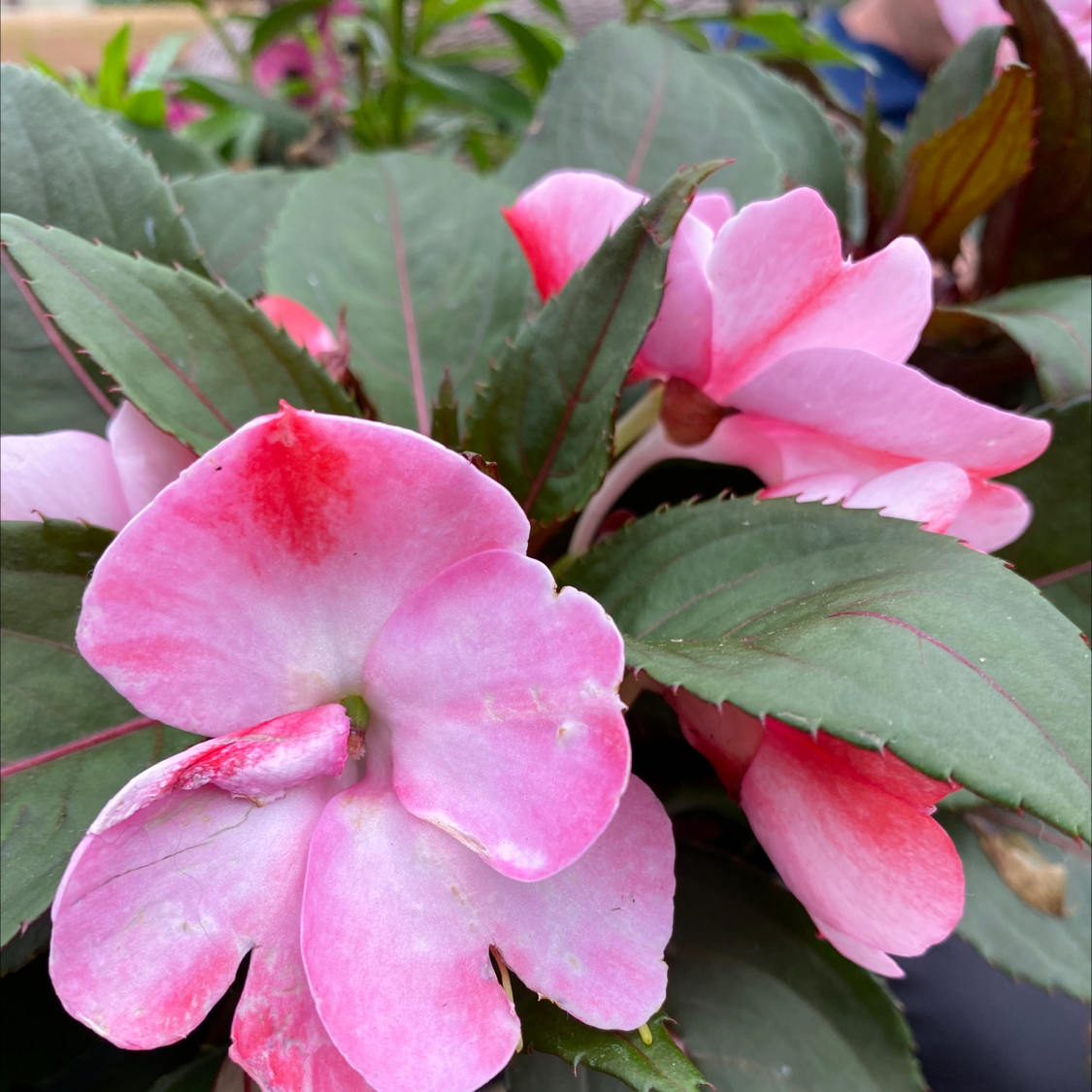
New Guinea Impatiens

What's Wrong with My New Guinea Impatiens?

Impatiens hawkeri
Reviewed by Kiersten Rankel M.S.
Quick Answer
1.
Wilting first? Check moisture immediately.
New Guinea Impatiens wilts faster than almost any bedding plant when it dries out in hot weather. Press the soil right away. If it is dry, a deep watering should bring the plant back within hours.
2.
No flowers? Look at light and fertilizer.
Too much harsh afternoon sun burns blooms away before they open. Too much nitrogen fertilizer pushes all-leaf growth at the expense of flowers. These two are behind most no-bloom complaints on container plants.
3.
New buds at the tips mean it is still blooming.
A healthy New Guinea Impatiens forms a constant stream of new flower buds at every growing tip throughout warm months. If you see fresh buds forming, the plant is performing normally even if older blooms are dropping.
Stay on top of plant care
Get seasonal reminders for watering and fertilizing โ€” personalized for your plants.
Try Greg Free

Common New Guinea Impatiens Problems

Wilting

Dry soil

New Guinea Impatiens has shallow, fine roots and thin-stemmed leaves that lose water fast in heat. In warm weather, a container can go from adequately moist to dangerously dry within a few hours. The entire plant collapses dramatically, but because the stems and roots are still intact, it recovers quickly once it gets water.

1. Water deeply until water runs freely from the drainage holes
2. Move the pot to shade while the plant recovers if temperatures are high
3. Check the soil daily during hot spells and water before the plant wilts next time
Root rot from overwatering

New Guinea Impatiens wilts from overwatering too, and the two causes look identical from above. Rotted roots cannot move water upward, so the plant droops even when the soil is wet. The wet-soil-plus-wilt combination is the giveaway.

1. Press the soil before watering. If it is already wet and the plant is still limp, stop watering
2. Tip the pot and look at the roots. Healthy roots are pale and firm. Rotten ones are brown and soft
3. Cut away soft roots and repot into fresh, well-draining potting mix
4. Allow the top inch of soil to dry before the next watering

No flowers

Wrong light

New Guinea Impatiens needs more light than common Impatiens to bloom well, but direct afternoon sun at peak heat stresses the plant and burns blooms before they open. The sweet spot is bright morning sun with shade or filtered light from midday onward. Plants in dense shade produce lush foliage but few flowers.

1. Move the plant to a spot with morning sun and afternoon shade
2. If already in shade, give it brighter filtered light and expect new buds within two to three weeks
3. Deadhead spent flowers to keep the plant channeling energy into new buds
Too much nitrogen

High-nitrogen fertilizers push leaf and stem growth at the expense of flowering. New Guinea Impatiens in containers are often overfed with a balanced or high-nitrogen formula, which results in a plant that looks impressively green and leafy but produces almost no blooms.

1. Switch to a fertilizer higher in phosphorus, such as a bloom booster formula
2. Skip fertilizer for two to three weeks to let existing nitrogen flush out
3. Resume with a balanced liquid fertilizer at half strength every two weeks

Leaf drop

Heat stress or dry soil

During intense heat, New Guinea Impatiens sheds leaves to reduce the surface area losing moisture. The plant prioritizes survival over appearance, and leaf drop is how it responds when wilting becomes chronic. The lowest and oldest leaves go first, but whole stems can defoliate during a prolonged drought spell.

1. Water deeply and move the container to a shadier spot during the hottest part of the day
2. Keep the soil consistently moist, not wet, through the warmest weeks
3. Trim any bare stems back by half to encourage fresh growth once temperatures ease
Root rot

Leaves also drop when roots are rotting and cannot supply the stems. Unlike heat-stress drop, which affects the whole plant evenly, rot-driven drop often starts on one side or on the lowest stems where the soil stays wettest. The soil will feel cold and soggy.

1. Check the soil moisture and drainage hole before watering again
2. If the soil is waterlogged, tip the pot out and inspect the roots
3. Trim rotted roots, repot into fresh mix, and water only when the top inch dries

Yellow leaves

Overwatering

Yellowing that starts at the bottom of the plant and climbs upward is the most common overwatering pattern on New Guinea Impatiens. The fine roots suffocate in waterlogged soil and rot, and the plant pulls nutrients back from its oldest leaves first. Containers without drainage holes or pots sitting in standing water are the most common culprits.

1. Remove the plant from any saucer holding standing water
2. Allow the top inch of soil to dry out before watering again
3. If the problem is severe, repot into fresh mix and ensure the container has drainage holes
Normal aging

A single yellow leaf on the lowest part of the stem is usually just age. New Guinea Impatiens sheds its oldest leaves as it produces new growth and flowers at the tips. If only one or two bottom leaves are affected and the rest of the plant is flowering normally, nothing is wrong.

Spider mites

Hot, dry conditions

Spider mites thrive when temperatures are high and humidity is low, exactly the summer conditions that New Guinea Impatiens grown in outdoor containers often experience. Look for fine webbing between the leaf stems and pale, stippled upper surfaces. On this plant, mites spread fast across densely branched stems before most owners notice.

1. Rinse the plant thoroughly with a strong stream of water, focusing on leaf undersides
2. Spray the whole plant with insecticidal soap or neem oil, coating both leaf surfaces
3. Repeat every four to five days for two weeks
4. Move the plant to a spot with more humidity or mist the area around it to discourage reinfestation

Pests

Aphids

Soft-bodied green or black insects clustered on new growth and flower buds. New Guinea Impatiens produces a constant flush of fresh shoots and buds, which are exactly what aphids target. A large colony leaves behind sticky honeydew that coats the leaves below.

1. Knock aphids off with a strong spray of water, targeting new growth and buds
2. Follow up with insecticidal soap if they return within a few days
3. Check new growth weekly through the season since aphid populations build fast
Whiteflies

Tiny white moths that lift off in a cloud when you brush the foliage. They feed on the undersides of leaves and leave behind sticky honeydew and pale, mottled spots on the upper surface. Warm, sheltered container spots with little air movement give whitefly populations room to grow.

1. Hang yellow sticky traps near the plant to catch adults
2. Spray leaf undersides with insecticidal soap or neem oil
3. Improve air circulation around the plant by moving it to a less sheltered location
4. Repeat treatment every five to seven days for three weeks

Preventing New Guinea Impatiens Problems

A few consistent habits keep New Guinea Impatiens blooming all season.
Weekly Check
1
Water daily during hot weather, before the plant wilts.
Container-grown plants can go bone dry in hours on a hot afternoon. Watering early in the morning keeps the roots consistently moist and prevents the wilting and leaf drop that follows drought stress.
2
Place in morning sun with afternoon shade.
Bright morning light drives flowering, but direct afternoon sun at peak summer heat burns blooms before they open and stresses the plant into dropping leaves. East-facing spots or dappled afternoon shade are ideal.
3
Fertilize every two weeks with a balanced or bloom-focused formula.
Container soil depletes fast when you are watering daily. A balanced liquid fertilizer at half strength keeps flowers coming. Avoid high-nitrogen formulas, which push foliage at the expense of blooms.
4
Plant in containers with drainage holes and empty saucers after rain.
New Guinea Impatiens roots rot quickly in standing water. Good drainage prevents the overwatering and root rot that cause yellowing, leaf drop, and wilting on wet soil.
5
Check leaf undersides weekly for spider mites and aphids.
Both pests build up fast in summer heat. Catching them early, when populations are small, means a simple rinse with water is usually enough. Ignoring them for two weeks often means a full spray treatment.
Stay on top of plant care
Get seasonal reminders for watering and fertilizing โ€” personalized for your plants.
Try Greg Free

About This Article

Kiersten Rankel M.S.
Botanical Data Lead at Greg ยท Plant Scientist
About the Author
Kiersten Rankel holds an M.S. in Ecology & Evolutionary Biology from Tulane University. A certified Louisiana Master Naturalist, she has over a decade of experience in science communication, with research spanning corals, cypress trees, marsh grasses, and more. At Greg, she curates species data and verifies care recommendations against botanical research.
See Kiersten Rankel's full background on LinkedIn.
Editorial Process
Every problem and fix in this article was verified against Greg's botanical database, cross-referenced with USDA hardiness zone data and published horticultural research from Cornell Cooperative Extension and Missouri Botanical Garden. The Impatiens hawkeri care profile reflects 2,400+ Greg users growing this species as an annual across USDA zones 4โ€“11, alongside peer-reviewed research on Impatiens downy mildew (Plasmopara obducens) and shade-garden integrated pest management.