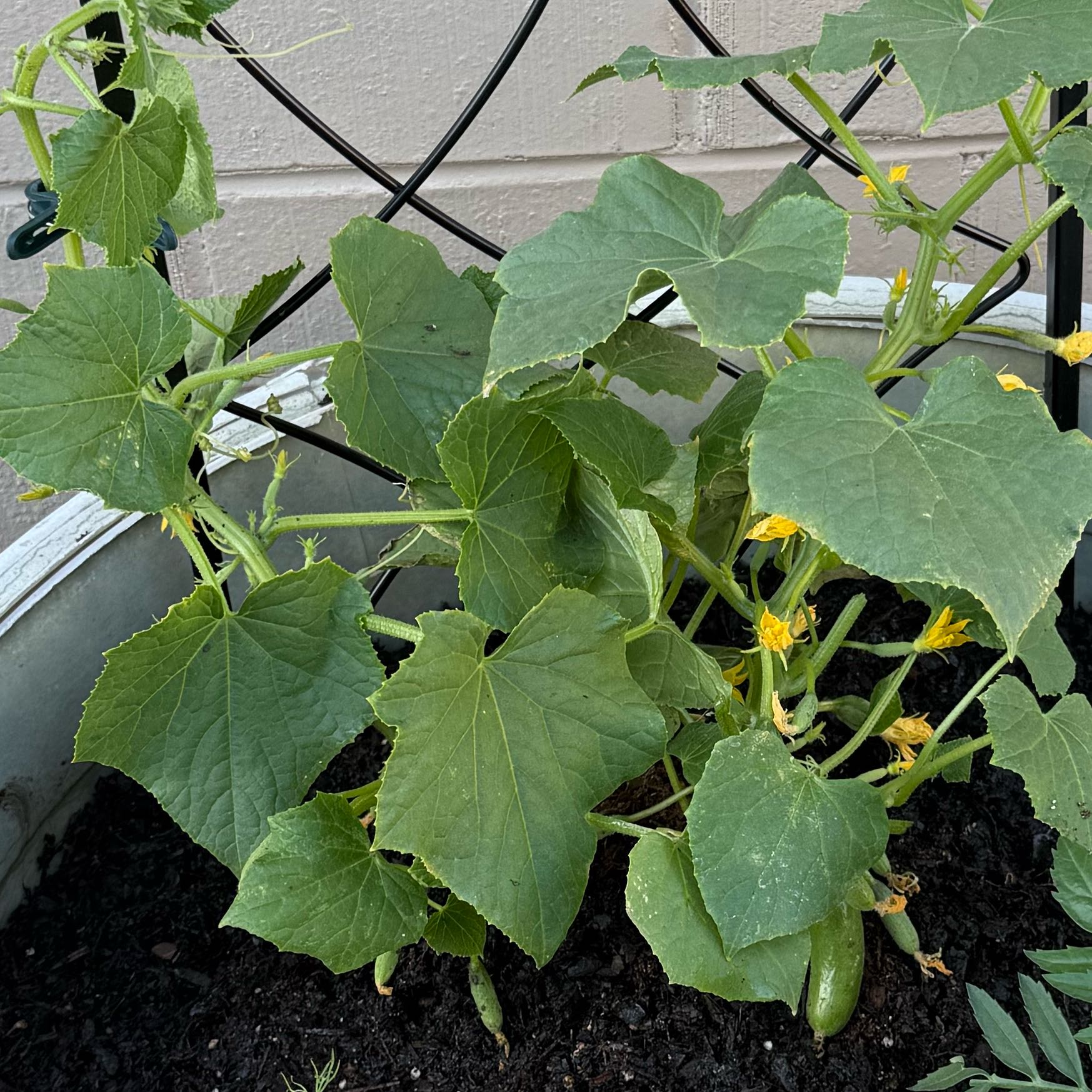
What's Wrong with My Cucumber?

Common Cucumber Problems
White powder on leaves
Cucumbers are one of the most mildew-susceptible vegetables in the garden. The Cucurbitaceae family's broad, shallow-veined leaves create a large surface for the fungal spores to colonize, and the warm dry days with cool nights of late summer are exactly the conditions powdery mildew needs to explode. Unlike most fungi, it thrives in dry air rather than wet, so it hits hardest when you think the weather is fine.
Yellow leaves
Cucumbers are fast-growing, heavy feeders with vines that can push several inches a day at peak. That pace depletes nitrogen from the root zone quickly. When the supply runs short, the plant draws it back from the oldest leaves first, so yellowing starts at the base and progresses up the vine toward the tips.
Mildew often shows as general yellowing before the white coating is visible. The fungus blocks photosynthesis by colonizing the leaf surface, and older leaves yellow from the base up. If you see any faint white dusting or a slightly powdery texture on the yellow leaves, mildew is the cause, not a nutrient problem.
Bitter fruit
Cucumbers produce cucurbitacins, the bitter compounds that give gourds their characteristic sharpness, when the plant is water-stressed. The fast-growing cucumber vine needs consistent moisture to dilute these compounds as the fruit swells. When the soil dries out repeatedly during fruit development, bitterness concentrates at the stem end and throughout the skin.
As a cucumber matures past its prime, cucurbitacin levels rise and seeds harden. A slicing cucumber left to turn yellow on the vine tastes bitter even if the plant was perfectly watered. Cucumbers grow fast and can go from ideal to overripe in 48 hours during peak summer heat.
Poor fruit set
Cucumbers produce separate male and female flowers on the same vine, and bees must carry pollen between them. Without a bee visit, the tiny cucumber behind the female flower shrivels and drops within a few days. Low pollinator activity from rain, heavy pesticide use, or growing in an isolated spot all reduce fruit set.
Cucumber pollen becomes unviable when temperatures push above 95°F for extended periods. Flowers open and close without successful pollination, and female flowers abort the tiny developing fruit. Heat also causes plants to produce a flush of male flowers while delaying female ones, creating a further gap.
Wilting vines
Bacterial wilt is spread by cucumber beetles and is one of the fastest killers in the vegetable garden. Once the beetles feed and introduce the bacterium, it multiplies in the vascular system and blocks water movement from the roots upward. A single vine wilts first, usually in the morning when temperatures are still cool, then collapses completely within days. There is no recovery once a plant has bacterial wilt.
Cucumber vines can wilt dramatically by midday when soil moisture is low, even on healthy plants. The vine's large leaves and fast growth rate mean it moves a tremendous amount of water. Midday wilt that recovers by evening is usually heat and drought stress, not disease.
Pests
Striped or spotted cucumber beetles are the most damaging pest specific to cucumbers and their relatives. They feed on leaves, flowers, and fruit, but the real danger is that they carry bacterial wilt. A light infestation that gets ignored can introduce the disease and kill a vine that otherwise looks fine.
Aphid colonies form quickly on cucumber growing tips and the undersides of young leaves, curling and puckering the soft tissue. Cucumbers push tender new growth continuously through the summer, giving aphids a sustained food source. Dense colonies also transmit cucumber mosaic virus, which can distort leaves and reduce yield.
Spider mites thrive in hot, dry conditions and can build to damaging numbers on cucumber foliage within a week during a heat wave. They feed by puncturing leaf cells, creating a stippled, bronzy appearance on the upper surface. Cucumber leaves are broad enough that serious mite damage can halve photosynthesis before webbing becomes visible.
Preventing Cucumber Problems
About This Article
