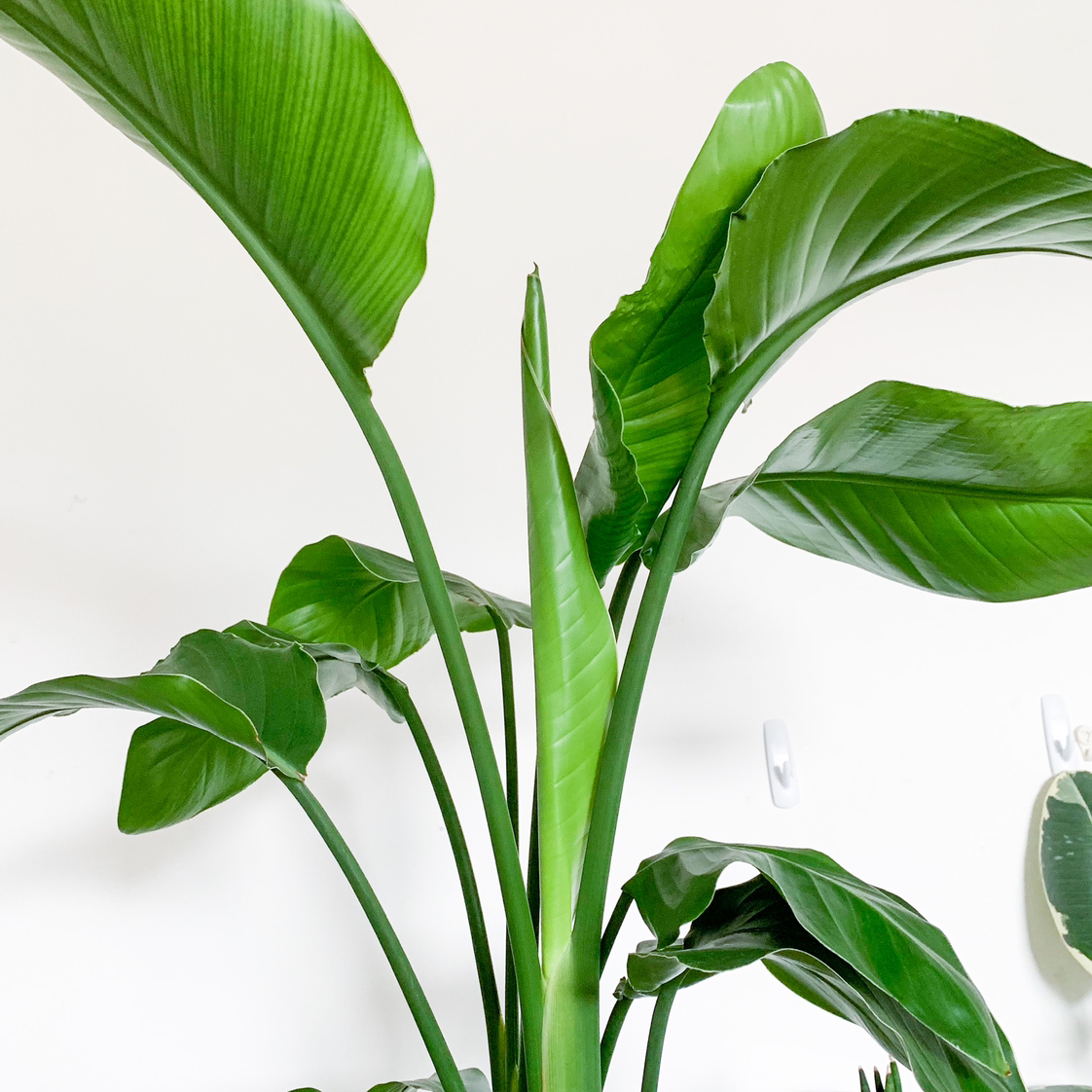
Bird of Paradise

What's Wrong with My Bird of Paradise?

Strelitzia reginae
Reviewed by Kiersten Rankel M.S.
Quick Answer
1.
Split leaves are completely normal.
Bird of Paradise leaves develop slits naturally, the same way banana leaves do. It is a wind adaptation, not damage. If your plant is splitting, it is healthy.
2.
Brown edges point to dry air.
Low humidity, fluoride in tap water, and fertilizer salt buildup are behind most crispy brown margins. Check humidity and switch to filtered water if edges keep browning.
3.
Watch the new spear leaf emerging.
A healthy Bird of Paradise pushes tightly rolled spear-like new leaves from the center several times a year. If a new spear is emerging, the plant is still growing and problems are fixable.
Stay on top of plant care
Get seasonal reminders for watering and fertilizing โ€” personalized for your plants.
Try Greg Free

Common Bird of Paradise Problems

Split leaves

Normal wind adaptation

Bird of Paradise leaves split along the blade naturally as they mature. Like banana leaves, which are close botanical relatives, the slits are a design feature that lets wind pass through without snapping the thick petiole. Splitting is not damage and will not harm the plant.

Physical damage

Rough handling, brushing against furniture, or being bumped during a move can tear the large paddle-shaped leaves along the natural split lines. Unlike wind-driven splits, these tears are irregular and may show bruising or dark margins at the tear edge.

1. Move the plant to a spot where leaves have clearance from walls, furniture, and foot traffic
2. Trim any ragged torn edges with clean scissors so they do not catch and extend the tear
3. Avoid rotating or repositioning the plant frequently

Brown leaf edges

Low humidity

Bird of Paradise is native to coastal South Africa and adapted to moderate humidity. Indoors in dry air, the large paddle leaves lose moisture faster than the roots can supply it, and the leaf margins go brown and papery first. Crispy edges that progress inward are the signature of chronic low humidity.

1. Run a humidifier nearby and aim for 40-60% relative humidity
2. Group the plant with other large plants to raise the local microclimate
3. Move it away from heating vents and air conditioner registers, which strip moisture from the air
Salt and mineral buildup

Bird of Paradise is sensitive to fluoride in tap water and to fertilizer salts accumulating in the soil. Both deposit minerals in the leaf margins, causing brown scorched-looking tips and edges that look similar to drought stress but appear even when watering is consistent. Heavy feeding on dry soil can push damage through within days, while tap water fluoride tends to build up gradually over months.

1. Flush the pot thoroughly by running plain water through until it drains freely from the bottom several times in a row, which washes accumulated salts out of the root zone
2. Switch to filtered, distilled, or rainwater for ongoing watering
3. Cut back fertilizer to half strength once a month during the growing season and stop entirely in winter. Never feed dry soil

Yellow leaves

Overwatering

Bird of Paradise has thick, fleshy roots that store moisture but rot quickly if they sit in waterlogged soil for long. When the roots fail, the plant can no longer move nutrients to the older lower leaves, and those leaves go yellow and limp. The soil will feel damp or smell sour.

1. Stop watering and let the soil dry down several inches before the next drink
2. Check that the pot has a drainage hole and that the saucer is not holding standing water
3. If multiple leaves are yellowing, unpot and inspect the roots, trimming any brown or mushy sections before repotting in fresh, well-draining mix
Natural aging

As Bird of Paradise pushes new growth from the central spear, it sheds the oldest outer leaves to redirect energy. One or two lower leaves turning yellow and dying off while the plant is actively growing new ones is normal turnover, not a sign of trouble.

Curling leaves

Underwatering

When the soil runs too dry, Bird of Paradise rolls its large leaves inward along the midrib to cut down on water loss through the leaf surface. The whole leaf curls like a loose tube. The soil will feel dry several inches down and the pot will feel light when lifted.

1. Water thoroughly until it drains from the bottom of the pot
2. If the soil has dried out and pulled away from the pot walls, bottom-soak the pot in a tray of water for 20 to 30 minutes to re-wet the rootball
3. Shorten the watering interval slightly so the soil does not get that dry again
Cold or drafts

Bird of Paradise is native to a frost-free climate and dislikes temperatures below 50 degrees Fahrenheit. Cold air from a drafty window or air conditioning vent causes the leaves to curl and can cause dark water-soaked patches where cold-damaged cells collapse. Curling from cold is usually paired with the plant being near a cold source.

1. Move the plant away from drafty windows, exterior doors, and air conditioning vents
2. Keep it in a spot where temperatures stay above 55 degrees year-round
3. Remove any leaves with dark, collapsed cold-damage patches, as they will not recover

No flowers

Plant too young or too dark

Bird of Paradise rarely blooms indoors and most plants kept as houseplants never flower at all. Outdoors it typically takes 4 to 6 years from a young plant to first bloom and needs several hours of direct sun per day. Indoors, the light level is almost never enough to trigger flowering, and the plant may simply be too young regardless of care.

1. Move the plant to the brightest spot in your home, ideally a south-facing window with at least a few hours of direct sun daily
2. Move the plant outdoors for the warm season if your climate allows, placing it in full sun to build up the energy reserves that flowering requires
3. Accept that most indoor Bird of Paradise plants do not flower, which is normal and not a sign of poor care

Pests

Spider mites

Spider mites are the most common pest on Bird of Paradise indoors. Dry indoor air encourages them, and they colonize the undersides of the large paddle leaves where fine webbing and stippled, pale patches appear. The wide leaf surface shows damage clearly once the infestation is established.

1. Rinse the plant in a shower or with a hose, hitting the undersides of every leaf to knock mites off
2. Wipe both sides of each leaf with a cloth dampened with insecticidal soap or 70% isopropyl
3. Repeat every 3 to 4 days for two to three weeks
4. Run a humidifier nearby, since spider mites struggle in humid air
Scale

Scale insects appear as small brown or tan bumps along the thick midrib and petioles of Bird of Paradise leaves. They suck sap steadily and are often noticed only when sticky honeydew drips onto lower leaves or the floor beneath the plant.

1. Scrape off visible bumps with a soft toothbrush or the edge of a card
2. Wipe affected areas with a cotton pad soaked in 70% isopropyl
3. Follow with a horticultural oil or insecticidal soap spray over the whole plant
4. Repeat weekly for three to four weeks to catch newly hatched crawlers

Preventing Bird of Paradise Problems

A few consistent habits prevent most of what goes wrong with Bird of Paradise.
Weekly Check
1
Water when the top 2 inches of soil feel dry, then water deeply.
Bird of Paradise stores moisture in its thick roots but rots when the soil stays consistently wet. Checking the soil rather than watering on a calendar schedule prevents both overwatering and the drought stress that causes leaf curling.
2
Use filtered or distilled water and flush the soil every few months.
Fluoride in tap water and accumulated fertilizer salts are the main causes of brown leaf edges. Switching to filtered water and flushing the pot every 2 to 3 months removes the salts before they scorch the margins.
3
Give it the brightest spot you have, with direct sun if possible.
Bird of Paradise needs strong light to stay healthy indoors. Low light causes slow growth, yellowing, and almost guarantees the plant will never flower. A south or west window with direct sun is ideal.
4
Keep humidity at 40-60% and away from heating and air conditioning vents.
Dry air from HVAC equipment drives spider mite outbreaks and causes the brown, crispy leaf edges that are the most common complaint about this plant indoors.
5
Check leaf undersides monthly for spider mites and scale.
Both pests colonize the large leaf surfaces quietly until the infestation is well established. A monthly wipe-down or visual inspection catches them early when they are easy to treat.
Stay on top of plant care
Get seasonal reminders for watering and fertilizing โ€” personalized for your plants.
Try Greg Free

About This Article

Kiersten Rankel M.S.
Botanical Data Lead at Greg ยท Plant Scientist
About the Author
Kiersten Rankel holds an M.S. in Ecology & Evolutionary Biology from Tulane University. A certified Louisiana Master Naturalist, she has over a decade of experience in science communication, with research spanning corals, cypress trees, marsh grasses, and more. At Greg, she curates species data and verifies care recommendations against botanical research.
See Kiersten Rankel's full background on LinkedIn.
Editorial Process
Every problem and fix in this article was verified against Greg's botanical database, cross-referenced with USDA hardiness zone data and published horticultural research from the Missouri Botanical Garden, university extension programs, and species-specific literature. The Strelitzia reginae care profile reflects documented species behavior combined with years of community grower feedback in Greg.
3,972+ Greg users growing this plant
USDA hardiness zones 10aโ€“11b