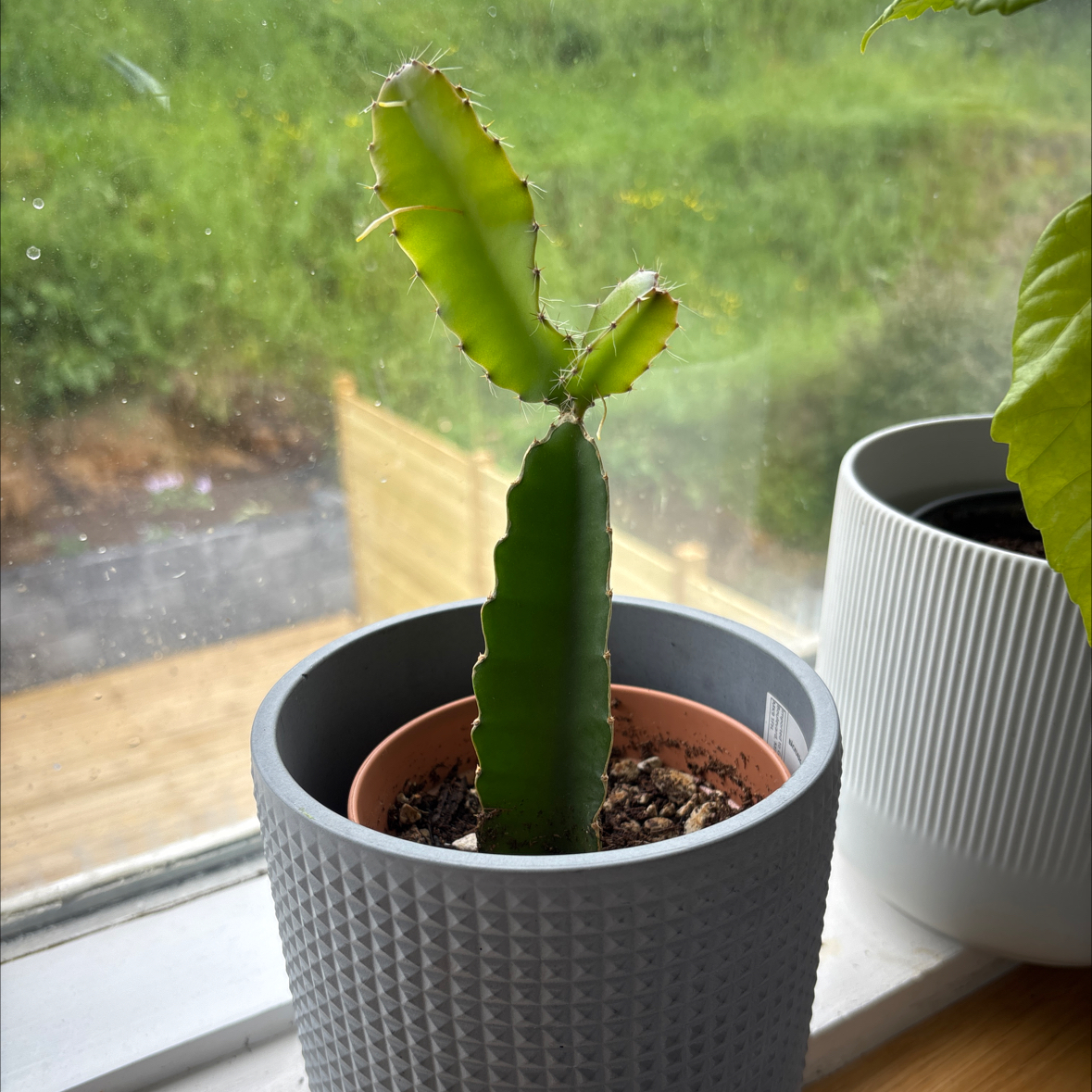
Dragonfruit needs a large, well-draining pot, at least 10 gallons for a young plant. Fabric or unglazed ceramic pots work best because the roots need to dry out between waterings. Drainage holes are essential, and you'll need a strong trellis since this is a climbing cactus.
What Size Pot Does a Dragonfruit Need?
Dragonfruit is a large, climbing cactus that puts on fast growth when it's happy. Start with at least a 10-gallon container for a young plant. Anything smaller dries out too fast in summer heat and restricts the root system enough to limit fruit production.
As the plant matures and sends out multiple climbing stems, move to a 15 to 25 gallon pot. Width matters more than depth here, since dragonfruit roots spread outward rather than diving deep.
The pot also needs to support a sturdy trellis or post. A T-shaped wooden post is the standard setup. Make sure the container is wide and heavy enough that it won't tip over when the plant is loaded with stems and fruit.
Young cutting (single stem)5-gallon (12" wide)
Established plant (2–3 stems)10-gallon (16–18" wide)
Dragonfruit is a tropical cactus with roots adapted to dry quickly between waterings. The root system is shallow and spreading, which means it's sensitive to waterlogging but also to overheating near the soil surface. Good airflow through the root zone prevents the rot that kills more container dragonfruit than anything else.
Since this is a full-sun outdoor plant that holds heavy fruiting stems, the pot needs to handle heat, support a trellis, and resist tipping.
Dries fastest → Slowest
Best for Dragonfruit
Fabric
Excellent drainage and air pruning. The breathability keeps shallow roots cool in summer. A top choice.
Unglazed Ceramic
Great airflow through the walls and heavy enough to anchor the trellis. Hard to find in large sizes.
Wood
Good insulation and drainage. A half-barrel with drainage holes works well for a single plant.
Glazed Ceramic
Less breathable, so use extra perlite in the soil mix. The weight helps stabilize a top-heavy plant.
Plastic
Affordable and available in large sizes. Choose light colors to reduce heat buildup in full sun.
MetalOVERHEATS
Gets dangerously hot in the full sun dragonfruit needs, which cooks shallow roots near the pot walls.
Dragonfruit is a cactus with shallow roots that need fast drainage and good airflow. Fabric pots are a top choice because they keep roots cool and dry quickly. Wood planters with drainage holes also work well, especially for supporting the trellis this climbing plant needs.
Avoid metal pots. Dragonfruit grows in full sun, and metal heats up dangerously in direct light. Those shallow roots sit right near the pot walls where temperatures spike the fastest.
Stay on top of plant care
Get seasonal reminders for watering and fertilizing — personalized for your plants.
Yes, absolutely. Dragonfruit is a cactus, and despite its tropical origins, it rots quickly in standing water. The shallow root system is especially vulnerable because it sits right in the zone where water collects at the bottom of a pot.
Use a container with multiple large drainage holes. Elevate the pot on bricks or pot feet to make sure water flows freely. In rainy climates, consider moving the plant under cover during extended wet spells.
When Should I Repot My Dragonfruit?
Dragonfruit grows fast and a young plant may need a larger pot within the first year. Once you reach a 15 to 25 gallon container, you won't need to size up again. Instead, refresh the top several inches of soil each spring.
Repot in spring or early summer when the plant is growing actively. Avoid disturbing roots during winter dormancy.
The roots are shallow and somewhat delicate. Tip the plant carefully, shake off old soil, trim any dead or mushy roots, and settle it into fresh cactus mix with plenty of perlite. Replant at the same depth as before.
Signs It's Time to Repot
Stems look thin and pale despite good light
Soil dries out within hours of watering
Roots are matted on the soil surface
Fruit production has declined from previous seasons
The plant seems unstable despite a trellis
When Can I Plant My Dragonfruit in the Ground?
Dragonfruit is hardy in USDA zones 10a through 11b. In these warm climates, plant in the ground in spring in a spot with full sun and excellent drainage. Raised beds work well if your native soil is heavy clay. Provide a sturdy post or trellis at planting time.
Outside these zones, container growing is the way to go. You can move the pot outdoors in summer and bring it into a bright, frost-free space when nighttime temperatures drop below 40 degrees F. Even brief frost damages the stems and kills flower buds.
Got More Questions?
Can I use a pot without drainage holes for my Dragonfruit?
No. Dragonfruit is a cactus that rots quickly in standing water. Always use a pot with large drainage holes and make sure water flows freely.
How do I know if my pot is too big?
If the soil stays wet for more than a few days after watering, the pot is too large. Excess moisture around unused soil is the most common cause of root rot in container dragonfruit.
How do I anchor a trellis in the pot?
Sink a sturdy wooden or metal post into the center of the pot before planting. Bury it at least 6 to 8 inches deep in the soil. A T-bar at the top lets the stems drape over for better fruit production.
Can I grow dragonfruit indoors?
It's difficult. Dragonfruit needs full sun and a large container. A bright south-facing window may sustain the plant but is unlikely to produce fruit. Outdoor growing in summer gives the best results.
What soil mix should I use?
A cactus or succulent mix amended with extra perlite and coarse sand works best. The goal is a fast-draining medium that doesn't hold moisture for long. Avoid standard potting soil on its own.
Stay on top of plant care
Get seasonal reminders for watering and fertilizing — personalized for your plants.
Kiersten Rankel holds an M.S. in Ecology & Evolutionary Biology from Tulane University. A certified Louisiana Master Naturalist, she has over a decade of experience in science communication, with research spanning corals, cypress trees, marsh grasses, and more. At Greg, she curates species data and verifies care recommendations against botanical research.
See Kiersten Rankel's full background on LinkedIn.
Editorial Process
Container guidance verified against Selenicereus undatus growth data from Greg's botanical database, cross-referenced with USDA hardiness zone data and published horticultural research.