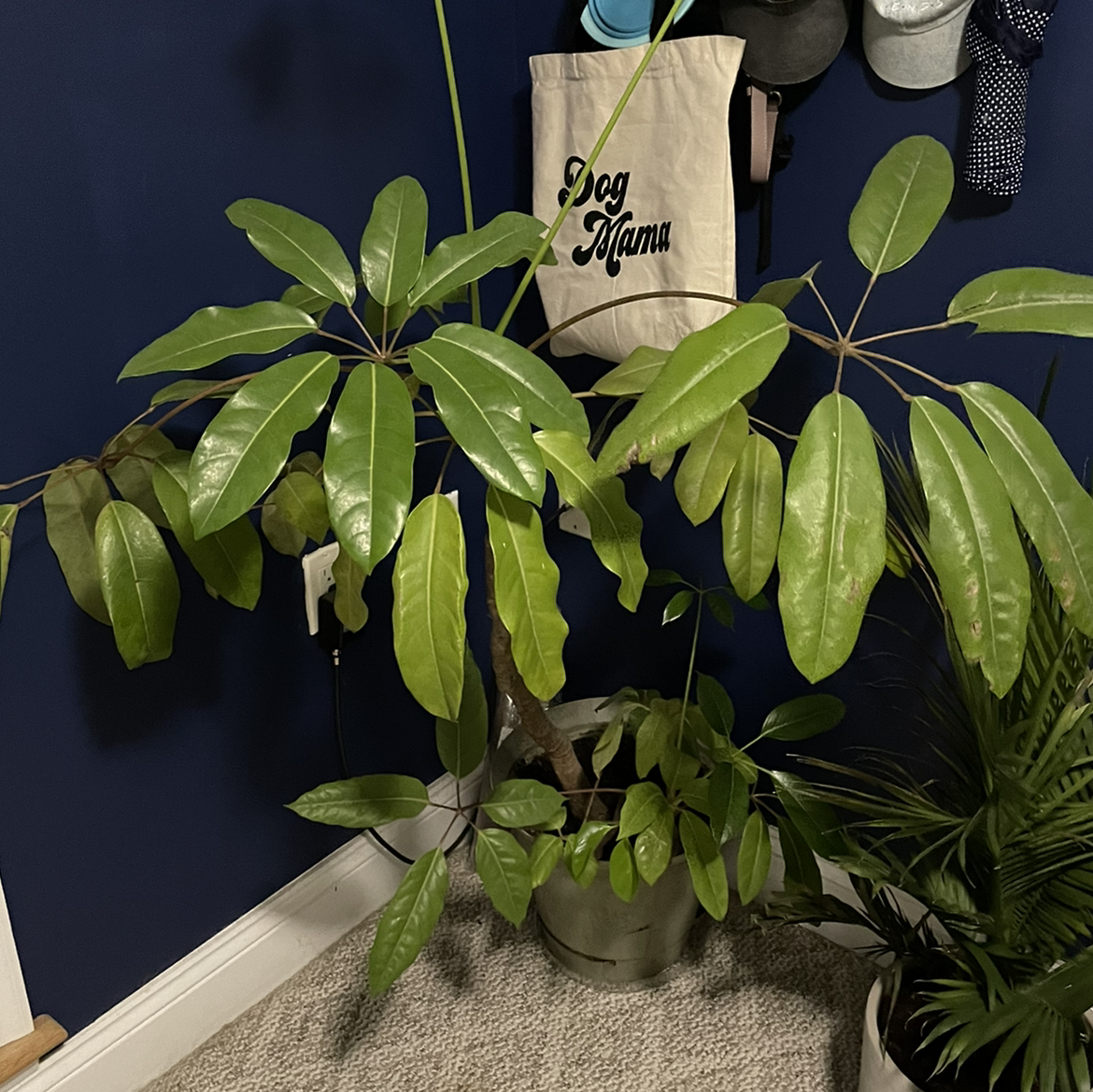
An Umbrella Tree does well in a glazed ceramic or plastic pot with drainage holes. Choose a pot about 2 inches wider than the root ball. These plants grow tall and top-heavy, so a sturdy pot with some weight helps keep things upright.
What Size Pot Does an Umbrella Tree Need?
Umbrella Trees grow upright with a single trunk or a few main stems, and they put down a strong root system to support that height. Start with a pot about 2 inches wider than the nursery container. A slightly snug fit encourages vertical growth rather than endless root sprawl.
Size up when roots start circling the bottom or when the plant dries out much faster than usual. Jumping more than 2 inches at a time leaves excess wet soil that the roots can't reach.
A mature indoor Umbrella Tree typically needs a 14 to 18 inch pot. That's enough to anchor a 6 to 8 foot plant while keeping the soil volume manageable.
Young plant (under 1 ft)4–6" pot
Growing plant (1–3 ft)8–10" pot
Established plant (3–5 ft)12–14" pot
Mature tree (5–8 ft)16–18" pot
What Material Pot Is Best for Umbrella Tree?
Umbrella Trees have thick, fleshy roots that like consistent moisture but will rot if they sit in waterlogged soil. The root system grows dense enough to anchor a tall plant, so the pot just needs to provide even moisture and not get in the way.
Weight is a practical consideration. A 6-foot Umbrella Tree in a lightweight plastic pot tips easily. Heavier materials add stability without any horticultural downside.
Dries fastest → Slowest
Best for Umbrella Tree
Fabric
Dries faster, so water a bit more often. Works well in humid rooms or if you tend to overwater.
Unglazed Ceramic
Breathable and heavy enough to anchor a tall plant. A great all-around choice.
Wood
Good moisture balance and insulation. Use a plastic liner to extend the pot's lifespan.
Glazed Ceramic
Holds moisture evenly and adds stabilizing weight. One of the best options for a large Umbrella Tree.
Plastic
Lightweight and affordable. Consider a heavier cachepot for mature plants to prevent tipping.
Metal
Fine for indoor use. Just make sure it has drainage holes and isn't sitting in direct window sun.
Umbrella Trees are adaptable and grow happily in just about any pot material. They appreciate consistent moisture without being waterlogged, so most options from breathable fabric to moisture-retaining plastic will work fine.
For mature Umbrella Trees, consider weight. These plants grow tall and can get top-heavy, so a glazed ceramic or metal pot adds stability. If you prefer lightweight plastic, a heavier cachepot or some gravel in the saucer can help prevent tipping.
Stay on top of plant care
Get seasonal reminders for watering and fertilizing — personalized for your plants.
Yes. Umbrella Trees handle brief dry spells without complaint, but waterlogged soil causes root rot that shows up as dropping leaves and a mushy stem base. Always use a pot with at least one drainage hole.
If you prefer a decorative pot without holes, set the plant in a nursery pot inside it. Lift the inner pot out to water, let it drain fully, and then place it back. Never let the outer pot hold standing water.
When Should I Repot My Umbrella Tree?
Young Umbrella Trees grow quickly and usually need repotting every 1 to 2 years. Once they reach a mature size in a 14 inch or larger pot, you can stretch to every 2 to 3 years and just top-dress with fresh soil each spring.
Spring is the best time to repot. The plant is entering its active growth phase and will recover quickly and push new roots into fresh soil.
Umbrella Tree roots are thick and somewhat fragile. Be gentle when loosening the root ball, and trim any roots that are circling tightly. Use a well-draining potting mix with perlite.
Signs It's Time to Repot
Roots visible through drainage holes
Soil dries out within a day or two of watering
Lower leaves yellow and drop despite proper care
Plant becomes wobbly or top-heavy in its pot
New leaves are noticeably smaller than older ones
When Can I Plant My Umbrella Tree in the Ground?
Umbrella Trees are only hardy outdoors in USDA zones 10a through 12b, so in-ground planting is limited to tropical and subtropical climates. In these zones, plant in a sheltered spot with bright, indirect light and well-drained soil. They can grow 30 feet or taller in the ground.
In cooler climates, this is strictly a container plant. Bring it indoors before temperatures drop below 50 degrees F. Even a single night of frost can cause serious damage to the leaves and stems.
Got More Questions?
Can I use a pot without drainage holes for my Umbrella Tree?
It's not recommended. Umbrella Trees are susceptible to root rot in standing water. Use a pot with holes, or nest a draining inner pot inside a decorative one.
How do I know if my pot is too big?
If the soil stays wet for more than a week after watering, the pot is too large. The excess moisture around unused soil invites root rot and fungal problems.
Should I stake my Umbrella Tree in its pot?
If it's leaning or top-heavy, a single bamboo stake tied loosely to the trunk can help. Most healthy Umbrella Trees develop a sturdy enough trunk to stand on their own.
Can I keep my Umbrella Tree in a small pot to limit its size?
Somewhat, but it's not the best strategy. A very root-bound plant gets stressed and drops leaves. Pruning the top growth is a more reliable way to manage height.
What soil mix works best?
A standard indoor potting mix with about 25% added perlite gives good drainage while retaining enough moisture. Avoid heavy garden soil, which compacts and suffocates the roots.
Stay on top of plant care
Get seasonal reminders for watering and fertilizing — personalized for your plants.
Kiersten Rankel holds an M.S. in Ecology & Evolutionary Biology from Tulane University. A certified Louisiana Master Naturalist, she has over a decade of experience in science communication, with research spanning corals, cypress trees, marsh grasses, and more. At Greg, she curates species data and verifies care recommendations against botanical research.
See Kiersten Rankel's full background on LinkedIn.
Editorial Process
Container guidance verified against Heptapleurum actinophyllum growth data from Greg's botanical database, cross-referenced with USDA hardiness zone data and published horticultural research.