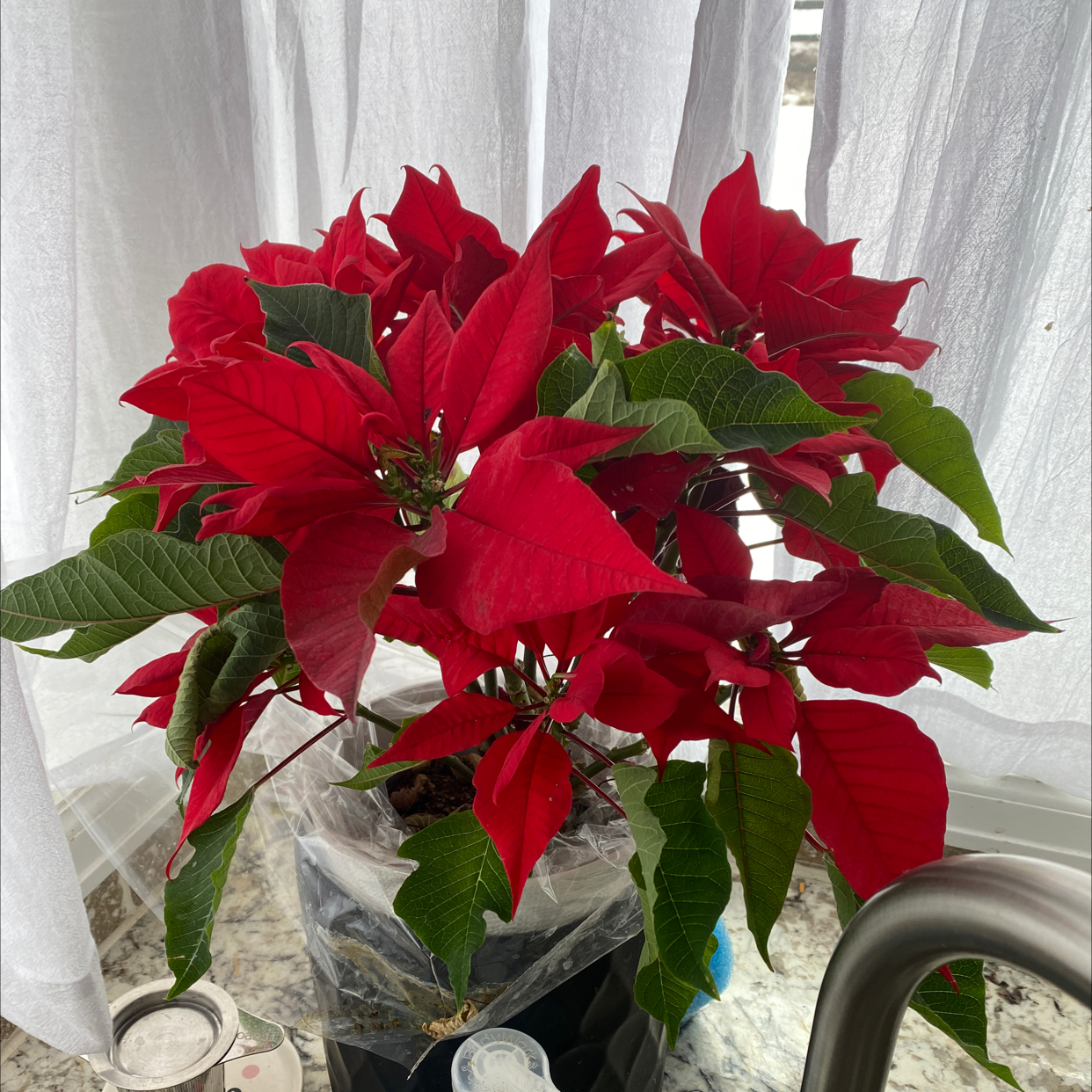
Poinsettias do best in glazed ceramic or plastic pots with drainage holes. Keep the pot just 1–2 inches wider than the root ball since these plants are sensitive to excess moisture. Good drainage is non-negotiable for poinsettia roots.
What Size Pot Does a Poinsettia Need?
Poinsettias have compact, shallow root systems that don't need a lot of soil volume. Most holiday poinsettias come in 6 inch pots, and that size works fine for the rest of the season.
If you're keeping your poinsettia long-term, only size up when roots start circling the bottom of the pot. Go just 1–2 inches wider. Poinsettias are more likely to struggle in an oversized pot than a snug one.
A pot that's too large holds moisture around roots that can't absorb it all. For a plant this sensitive to wet feet, staying slightly rootbound is actually safer.
Holiday gift size4–6" pot
Established plant (1–2 ft)6–8" pot
Mature shrub (2–4 ft)8–12" pot
What Material Pot Is Best for Poinsettia?
Poinsettia roots are delicate and rot easily when soil stays wet too long. They prefer a pot that dries out at a moderate pace, not too fast and not too slow. Even moisture between waterings keeps the leaves from dropping.
Since most poinsettias live indoors near a bright window, heat from direct sun on the pot isn't usually a concern. Focus on a material that balances moisture retention with good drainage.
Dries fastest → Slowest
Best for Poinsettia
Fabric
Fast drying keeps poinsettia roots safe from rot, but you may need to water more often in dry indoor air.
Unglazed Ceramic
Breathable walls help the soil dry evenly, which suits poinsettia's preference for moderate moisture.
Wood
Good airflow and natural insulation, though less common for indoor poinsettia display.
Glazed Ceramic
Attractive for holiday display and holds moisture at a steady rate that poinsettias handle well.
Plastic
The most common option for poinsettias. Just make sure it has drainage holes and don't let the saucer collect water.
Metal
Works fine for indoor poinsettias since they don't sit in direct outdoor sun. Use a liner to protect the metal from moisture.
Poinsettias do well in just about any pot material, which is good news since most are bought as holiday gifts in whatever container they come in. Plastic is the most common option, and it works perfectly as long as there are drainage holes and the saucer does not collect standing water.
If you are repotting, glazed ceramic makes a beautiful display pot that holds moisture at a steady rate. All six materials on the spectrum are suitable for this adaptable indoor plant.
Stay on top of plant care
Get seasonal reminders for watering and fertilizing — personalized for your plants.
Yes. Poinsettias are highly sensitive to overwatering, and standing water at the bottom of a pot is one of the fastest ways to kill one. Drainage holes let excess water escape before roots start to suffocate.
Most holiday poinsettias come wrapped in foil. Remove the foil or poke holes in the bottom so water can drain freely. Decorative pot covers without drainage should only be used as cachepots with the grower pot sitting inside.
When Should I Repot My Poinsettia?
Most people treat poinsettias as seasonal plants, but if you're growing one long-term, repot in late spring after it finishes blooming. Cut the stems back to about 6 inches before moving it to a slightly larger pot.
Poinsettias don't grow quickly, so you'll only need to repot every 1–2 years. Use a well-draining potting mix and go up just one pot size.
Handle the root ball gently during repotting. Poinsettia stems produce a milky sap when cut or broken, which can irritate skin. Wear gloves and avoid snapping roots unnecessarily.
Signs It's Time to Repot
Roots circling tightly at the bottom of the pot
Water runs straight through without soaking in
Plant wilts quickly even after watering
Soil has become compacted and pulls away from pot edges
When Can I Plant My Poinsettia in the Ground?
Poinsettias can grow in the ground year-round only in zones 9a through 11b. They're tropical shrubs native to Mexico that can reach 10 feet tall outdoors in warm climates. Any frost will damage or kill them.
If you live in a warm enough zone, plant in a sheltered spot with morning sun and afternoon shade. In cooler climates, keep your poinsettia in a pot so you can bring it indoors when temperatures drop below 50°F.
Got More Questions?
Can I use a pot without drainage holes for my poinsettia?
It's risky. Poinsettias rot easily in waterlogged soil. If your decorative pot doesn't have holes, keep the plant in its grower pot and set it inside the decorative one.
How do I know if my poinsettia's pot is too big?
If the soil stays wet for more than a week after watering, the pot is too large. Poinsettia roots can't use all that moisture, and the excess leads to root rot.
Should I remove the foil wrapping from my holiday poinsettia?
Yes, or at least poke drainage holes in the bottom. The foil traps water around the roots and is one of the most common reasons holiday poinsettias die within weeks.
Can I keep my poinsettia in the same pot year after year?
If the roots haven't outgrown the pot, yes. Poinsettias prefer being slightly snug. Only repot when you see clear signs the roots need more space.
Is the sap from poinsettia stems harmful?
The milky sap can irritate skin and upset stomachs if ingested. Wear gloves when repotting and keep the plant away from curious pets and children.
Stay on top of plant care
Get seasonal reminders for watering and fertilizing — personalized for your plants.
Kiersten Rankel holds an M.S. in Ecology & Evolutionary Biology from Tulane University. A certified Louisiana Master Naturalist, she has over a decade of experience in science communication, with research spanning corals, cypress trees, marsh grasses, and more. At Greg, she curates species data and verifies care recommendations against botanical research.
See Kiersten Rankel's full background on LinkedIn.
Editorial Process
Container guidance verified against Euphorbia pulcherrima growth data from Greg's botanical database, cross-referenced with USDA hardiness zone data and published horticultural research.