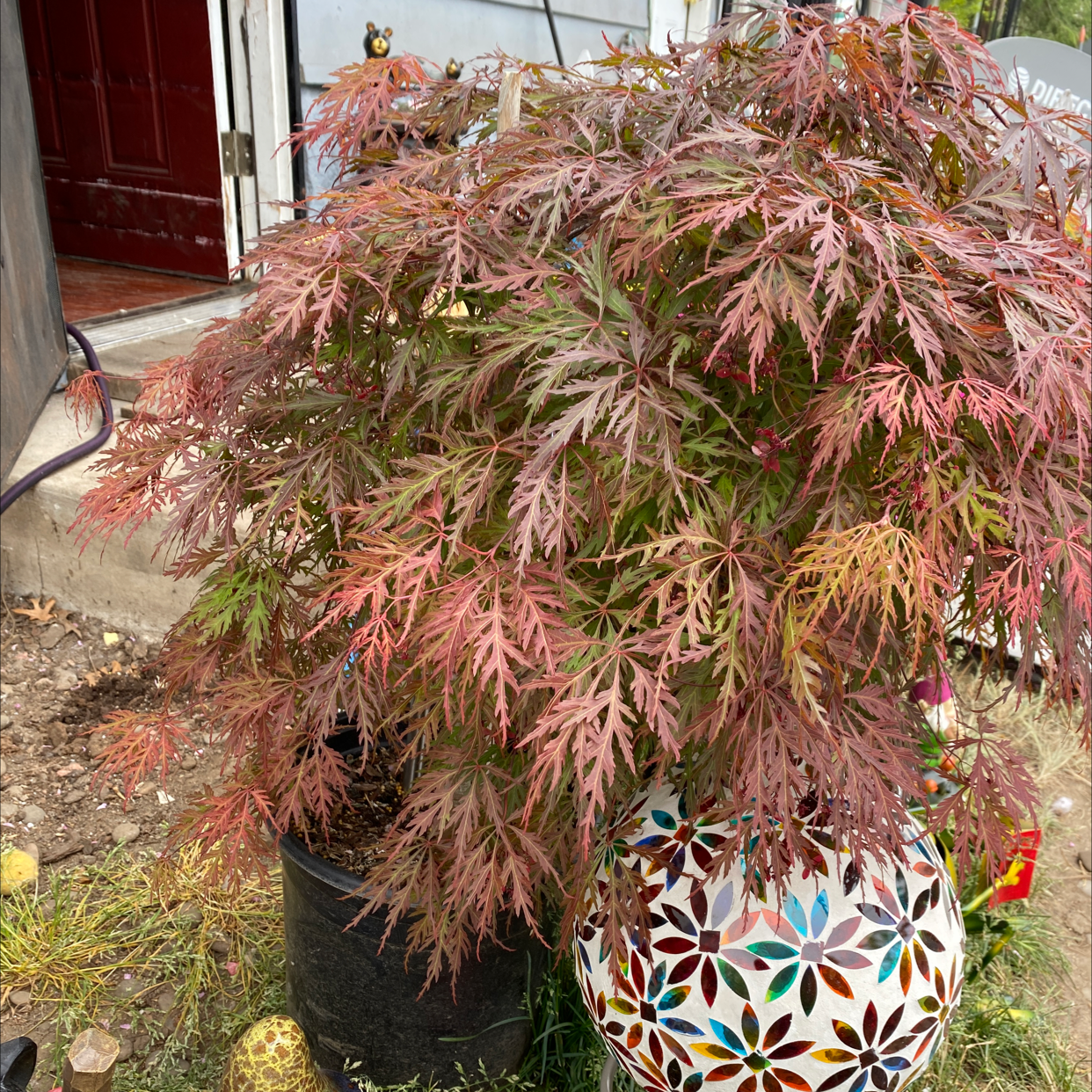
Japanese Maples do best in a wide, shallow pot with drainage holes. Choose unglazed ceramic or wood for breathability. Go 2–4 inches wider than the root ball, and repot every 2–3 years in early spring.
What Size Pot Does a Japanese Maple Need?
Japanese Maples have shallow, spreading roots that grow outward rather than deep. Pick a pot that's wider than it is tall, with 2 to 4 inches of space between the root ball and the pot wall.
A pot that's too big holds extra wet soil the roots can't reach, which stays soggy and invites rot. Too small and the roots circle the edges, choking the tree. When you see roots at the drainage holes, it's time to go one size up.
Young tree (1–3 ft)12–14" pot
Established (3–6 ft)18–22" pot
Mature (6–10 ft)24–30" pot
What Material Pot Is Best for Japanese Maple?
Japanese Maple roots are fine and shallow, sitting close to the pot walls where temperature swings hit hardest. They need a material that holds moisture evenly and insulates against summer heat and winter cold.
Since most Japanese Maples live outdoors year-round, the pot also has to survive freeze-thaw cycles. Weight matters too. A heavier pot keeps the tree from tipping in wind.
Dries fastest → Slowest
FabricTOO FAST
Loses moisture from all sides. Dries in hours , roots can't keep up.
Unglazed CeramicTOO FAST
Porous walls wick moisture out. Best in humid climates where waterlogging is the risk.
Best for Japanese Maple
Wood
Great insulation, moderate breathability. Line with plastic to prevent rot.
Glazed Ceramic
Retains moisture evenly, heavy and wind-stable. Best all-around choice.
MetalTOO SLOW
Conducts heat and cold fast. Roots cook in sun and freeze in winter.
PlasticTOO SLOW
Traps heat and moisture. Roots overheat in sun and waterlog in winter.
Japanese Maples have shallow, fine roots that dry out quickly in pots that lose moisture from all sides. Fabric and unglazed ceramic let water escape too fast for this tree to stay comfortable, especially in summer heat.
Wood and glazed ceramic hit the sweet spot. Both hold moisture steadily without waterlogging, and their weight helps anchor the pot against wind. Glazed ceramic is the easiest all-around pick.
Steer clear of plastic and metal. Plastic traps too much heat and moisture around the roots, and metal swings between scorching in summer and freezing in winter, neither of which Japanese Maples handle well.
Stay on top of plant care
Get seasonal reminders for watering and fertilizing — personalized for your plants.
Yes, always. Japanese Maple roots rot quickly in standing water. A pot without drainage holes traps moisture at the bottom where the finest roots sit, and that's exactly where rot starts.
If you love a decorative pot that has no holes, use it as a cachepot. Set the tree in a plain pot with drainage inside the decorative one, and lift it out to water.
When Should I Repot My Japanese Maple?
Every 2 to 3 years in early spring, just before the buds open. That timing gives the roots a full growing season to settle in before winter.
When you unpot the tree, gently loosen any circling roots and trim them back. Refresh the soil mix completely rather than just adding more on top. Japanese Maples are slow growers, so you won't need to jump up in pot size every time. Sometimes the same pot with fresh soil is enough.
Signs It's Time to Repot
Roots visible through drainage holes
Water runs through without absorbing
Growth has noticeably slowed
Soil pulls away from pot edges when dry
When Can I Plant My Japanese Maple in the Ground?
Japanese Maples are hardy in USDA zones 5a through 8b, so most of the U.S. can grow them in the ground. Plant in early spring or early fall when temperatures are mild and rain is reliable.
Pick a spot with morning sun and afternoon shade, especially in warmer zones. Amend heavy clay soil with compost and bark to improve drainage. If you're in zone 4 or colder, keep it in a pot so you can shelter the roots from deep freezes.
Got More Questions?
Can I keep a Japanese Maple in the same pot forever?
No. Roots will eventually circle and choke each other, stunting the tree. Repot every 2–3 years, trimming circling roots and refreshing the soil mix each time.
When is my Japanese Maple too big for a pot?
Most Japanese Maples do fine in pots for years. But once the trunk is thicker than your wrist or the tree is taller than you, the roots need more room than a pot can give. If you're in USDA zones 5b–8b, move it to the ground in early spring before new leaves open. Too cold for that? Go with the biggest pot you can find and swap in fresh soil every couple of years.
What soil mix works best in a container?
Use a well-draining mix: roughly 60% quality potting soil, 20% perlite, and 20% composted bark. Avoid heavy garden soil, which compacts in pots and suffocates roots.
Should I bring my potted maple inside for winter?
Not indoors. Japanese Maples need winter dormancy. Move the pot to an unheated garage, shed, or against a sheltered wall. The goal is to keep roots above -10°F without exposing the tree to indoor heating.
Do I need to protect the pot from cracking in freezing weather?
Unglazed terracotta can crack when waterlogged soil freezes and expands. In cold climates, use frost-rated ceramic, wood, or fabric pots. If using terracotta, wrap it with burlap or move it under cover before the first hard freeze.
Can I use a self-watering pot?
Not recommended. Self-watering pots keep the bottom of the soil constantly moist, which Japanese Maple roots don't tolerate. They need soil that drains and dries slightly between waterings. A standard pot with drainage holes gives you much more control.
Stay on top of plant care
Get seasonal reminders for watering and fertilizing — personalized for your plants.
Kiersten Rankel holds an M.S. in Ecology & Evolutionary Biology from Tulane University. A certified Louisiana Master Naturalist, she has over a decade of experience in science communication, with research spanning corals, cypress trees, marsh grasses, and more. At Greg, she curates species data and verifies care recommendations against botanical research.
See Kiersten Rankel's full background on LinkedIn.
Editorial Process
Container guidance verified against Acer palmatum growth data from Greg's botanical database, cross-referenced with USDA hardiness zone data and published horticultural research.