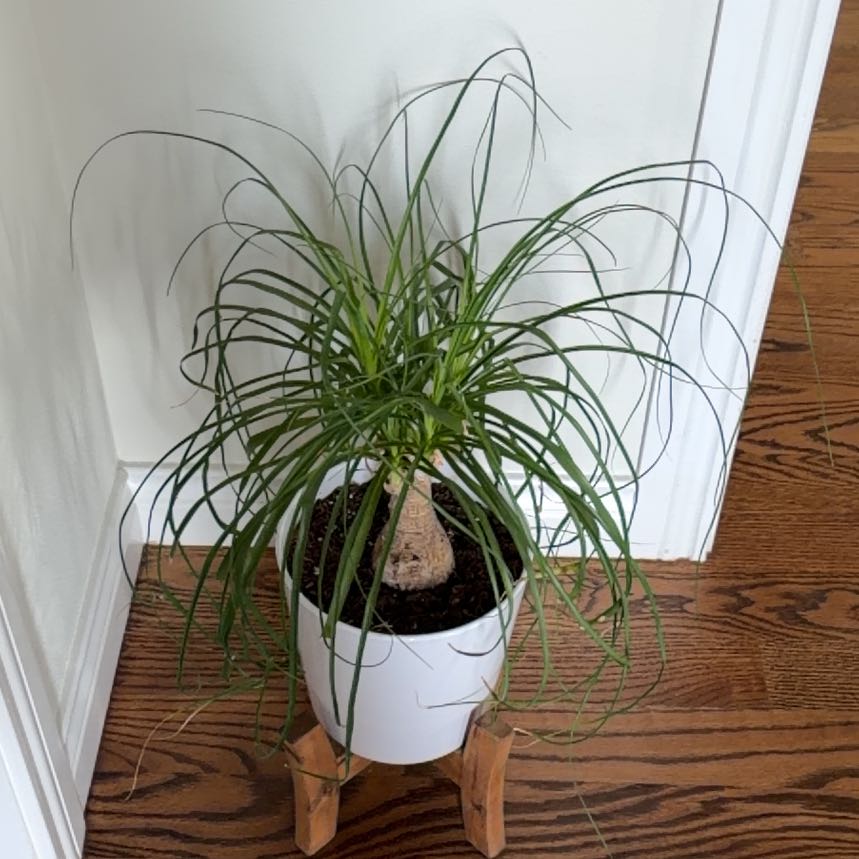
How to Repot a Ponytail Palm
Repot a Ponytail Palm every 4 to 6 years into a pot 1 to 2 inches wider than the current pot. If the plant is tipping over because the caudex has outgrown its base, choose a pot 2 to 3 inches wider for extra stability. Use a gritty cactus or succulent mix and wait about a week before the first watering.

How to Know It's Time to Repot
Ponytail Palms grow extremely slowly and prefer a snug fit, so signs of a truly outgrown pot are subtle. Watch for two or more of these four signals before reaching for a new pot.
-
1The bulbous caudex at the base has expanded against the rim of the pot.
-
2Roots circle the surface of the soil or push out through the drainage holes.
-
3The plant has started tipping because the caudex is too wide for the pot.
-
4The pot has been pushed out of round or cracked by the expanding base.
Ponytail Palms tolerate cramped roots well, so don't repot just because the pot looks small. Wait until at least two of these signs are present, and expect a new pot every 4 to 6 years for a mature plant.
The Best Time of Year to Repot
Ponytail Palms recover slowly, so repot during their active growing season when warmth speeds up root healing. Late spring through early fall is the window.
Avoid repotting in winter, when the plant is essentially dormant and the freshly cut roots are slow to heal. Use the map below to find your window.

How to Choose a Pot and Soil Mix
Pot Size
Move up to a pot 1 to 2 inches wider than the current pot. If your Ponytail Palm has started tipping because the caudex is wider than the pot's base, choose a pot 2 to 3 inches wider for the extra stability. A stability fix, not a root-room fix.
Pot Material
Terracotta is the best fit for Ponytail Palms. The walls breathe, so the gritty soil dries evenly between waterings, and the weight of a terracotta pot also helps balance a top-heavy mature plant.
Plastic and glazed ceramic work too if you fill the bottom with gravel for ballast. Whichever material you pick, make sure the pot has drainage holes. Ponytail Palms rot fast in standing water.
Soil Mix
Use a pre-mixed cactus or succulent soil, or mix your own from one part standard potting soil and one part coarse perlite or pumice. The grit lets water drain through fast and keeps the caudex dry between waterings.
Skip moisture-control formulas, peat-heavy mixes, and standard potting soil on its own. All three hold too much water for these roots.
How to Repot a Ponytail Palm, Step by Step
-
1Let the soil dry out. Stop watering a week or two before you plan to repot. Dry soil falls away cleanly, makes any rotted roots easier to spot, and gives the freshly cut roots a chance to callus before they meet new soil.
-
2Pick the new pot. Choose a terracotta pot that's 1 to 2 inches wider than the current pot. Or 2 to 3 inches wider if the plant is tipping. Make sure it has drainage holes, and layer an inch of fresh gritty mix in the bottom.
-
3Slide the plant out. Lay the pot on its side and gently work the root ball loose. The leaves are top-heavy, so working sideways helps balance the plant as you slide it out. If the plant is stuck, run a butter knife around the inside edge of the pot to release it.
-
4Inspect the caudex and roots. Gently brush away the old soil so you can see the roots and the base of the caudex clearly. Trim away any roots that are black, mushy, or smell sour, using a clean knife. The caudex itself should be firm and tan.
-
5Set it in the new pot. Center the plant with the caudex sitting at the same height it did before. Do not bury the base any deeper. Fill in around the sides with fresh gritty mix, pressing gently as you go to keep the plant upright and balanced.
-
6Wait a week, then water. Do not water immediately. Let the freshly cut roots callus over in dry soil for about a week, then give the plant a thorough drink. Watering wet wounds is the fastest way to rot a Ponytail Palm after a repot.
What to Expect After Repotting
Weeks 1 to 2
Ponytail Palms are slow to show change after a repot. The leaves may look unchanged for the first couple of weeks, which is normal.
Keep the soil dry for the first week, then water normally. Give the plant bright direct or indirect light, and skip fertilizer for now.
Months 1 to 6
A new leaf emerging from the top of the rosette is the signal that the plant has settled in. With this species, that can easily take several months.
Resume your normal watering rhythm and only start light fertilizing once the next active season arrives. Ponytail Palms are happy with very little feeding.
Got More Questions?
About This Article
