How to Grow a Crossvine
Plant Crossvine in full sun to part shade, in well-drained soil, and give it a sturdy structure to climb on from day one. The vine grows fast and can reach 30 to 50 feet, so the support has to be ready for the load. Prune lightly right after the spring bloom fades.

Where to plant
Crossvine is a vigorous semi-evergreen native vine for USDA zones 6 through 9. It climbs 30 to 50 feet by tendrils and small adhesive disks, so the structure decision is locked in at planting.
Sun
Full sun to part shade works well. Six or more hours of direct sun produces the heaviest spring bloom. Less than four hours of sun gives a leafy vine with sparse flowers, though the foliage still climbs and covers a structure nicely.
Drainage
Well-drained soil is important. The vine tolerates a wide range of soils including clay, sand, and rocky ground, but the roots will rot in spots that stay soggy after rain. Dig a one-foot test hole and fill with water. If water sits longer than a day, plant on a slight mound or pick a different spot.
Soil
Average garden soil works. The vine is native to woodland edges and floodplains across the southeastern United States and adapts to most yard conditions. Work a few inches of compost into the planting area to give the roots an easy first year, then leave the surrounding soil alone.
Space and the support
Give the vine a sturdy permanent structure at planting — a fence post, arbor, pergola, or a chain link or wood fence. Trellises sized for clematis or morning glory will collapse under a mature Crossvine within a few years. The vine climbs by tendrils that grab onto small surfaces, plus small adhesive disks that stick to walls and trees. Keep it off wood siding and painted surfaces, since the disks can damage finishes when the vine is removed.
How to plant
Plant in fall or early spring while soil temperatures are cool and rainfall is reliable. Container-grown vines can also go in during the growing season as long as watering keeps up.
-
1Position the support before planting Decide where the structure goes and set it firmly in place. Adjusting a trellis or fence later, after the vine has wrapped onto it, is far harder than getting the position right at planting.
-
2Dig a wide shallow hole Twice as wide as the root ball but only as deep. Place the hole 6 to 12 inches in front of the support so the base of the vine has room to expand without pushing against a wall or post.
-
3Loosen the root ball If the roots are circling tightly inside the nursery pot, gently tease them apart or score the outside with a clean knife. Circling roots keep circling unless you break the pattern at planting.
-
4Set the vine slightly high The top of the root ball should sit about an inch above the surrounding soil. A buried crown rots faster than one planted high, especially in heavier soils.
-
5Train the first growth toward the support Loosely tie the longest shoots to the structure with soft garden twine. The vine takes a few weeks to grab on with its own tendrils, and the early ties prevent the new growth from sprawling on the ground or wandering the wrong direction.
-
6Water deeply and mulch Soak the root zone until the top six inches feel uniformly damp, then mulch two to three inches deep with shredded bark, kept a few inches back from the stems. Mulch holds moisture and reduces watering through the first summer.
Watering and feeding
Watering
Water deeply once a week through the first growing season to help the vine establish, soaking the root zone rather than wetting the leaves. A slow trickle from a hose at the base or a soaker line at the foot of the structure works best.
After the first year, Crossvine is highly drought-tolerant and rarely needs supplemental water in most climates. A deep soak during long summer dry spells keeps the foliage glossy and supports the next year's bloom.
Feeding
Feed once in early spring with a slow-release balanced fertilizer or one labeled for flowering shrubs and vines. Heavy nitrogen pushes leafy growth at the expense of flowers, so keep lawn fertilizer away from the base.
Stop feeding by midsummer so new growth has time to harden off before fall.
Pruning and support
Crossvine blooms on old wood, meaning the flower buds form on stems that grew the previous summer. The single most important pruning rule is to cut only right after the spring bloom fades. Pruning at any other time removes next year's flower buds.
Ongoing tying and training
Through the first two years, check the vine every few weeks during the growing season and tie any wayward shoots loosely back to the structure with soft twine. Once the vine is well established on the support, the tendrils handle most of the work and only occasional redirection is needed.
When to prune
Prune within a few weeks after the last flowers fade in late spring. New flower buds form in summer for the following year, so any later cut takes those buds with it.
What to cut
Remove any dead, broken, or crossing stems at the base. Cut back the tips of long shoots that have escaped the support to bring the vine back to its intended footprint. Take out a few of the oldest, woodiest canes at ground level each year to encourage fresh growth from the base.
Avoid shearing the vine into a hard shape. Crossvine looks best as a relaxed cover on its structure, and shearing removes flower buds along every cut.
Renovating an overgrown vine
If the vine has overrun its space, cut it back hard in late winter — even to within a foot or two of the ground. The plant resprouts vigorously from the base and refills the support within one or two seasons. The trade-off is that the renovation year skips the spring bloom.
Blooming and color
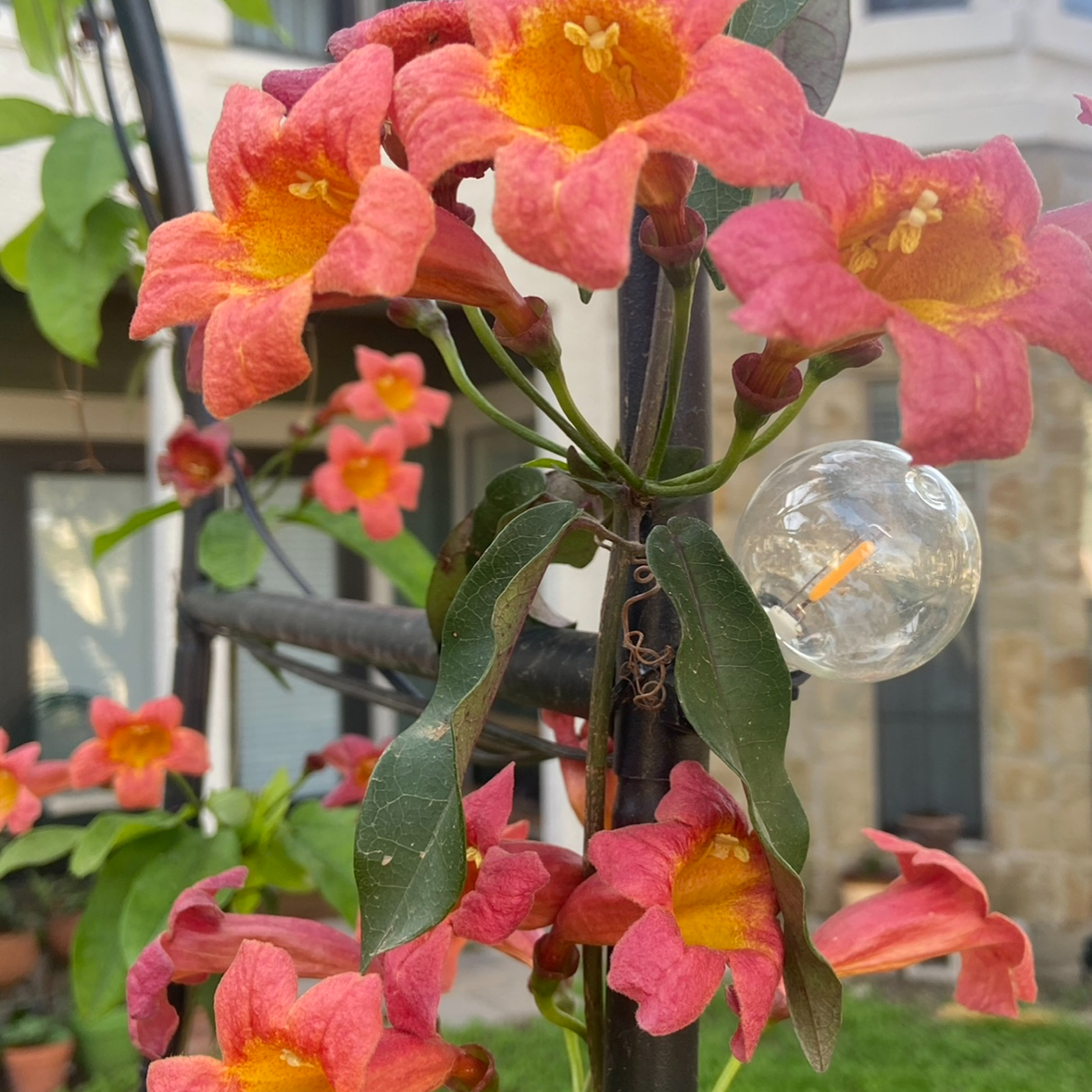
Crossvine is grown for the red-orange trumpet flowers that cover the vine in mid spring and the warm fall foliage color in cooler zones. Hummingbirds work the blooms heavily during the peak weeks.
Bloom timing
Flowers open in mid spring, usually April or May depending on the zone, and continue for three to four weeks. A lighter second flush sometimes appears in late summer in long-season climates. Each trumpet is about two inches long with a yellow throat.
Hummingbird traffic
The trumpet shape and red-orange color are designed for hummingbirds, and a mature vine in full bloom draws birds in steadily through the peak weeks. Plant the vine where the view from a window or seating area catches the show.
Fall color
The semi-evergreen foliage turns purple-bronze through fall and winter in colder zones, then flushes green again in spring. In warmer zones the leaves stay green year-round. The fall color is a secondary feature, less showy than the spring blooms but still a useful cool-season look.
Common problems and pests
Most Crossvine complaints are growth-related — the vine is much more vigorous than the support that was sized for it. Pest pressure is light and disease is rare on a vine in a well-drained sunny spot.
Vine collapses the trellis
A common surprise — Crossvine reaches 30 to 50 feet and weighs a lot at maturity. Replace the failed structure with a heavy-duty arbor, pergola, or chain link fence rated for the load. Light decorative trellises do not work for this vine.
No flowers in spring
Almost always caused by pruning at the wrong time, since the vine blooms on stems that grew the previous summer. A late spring frost can also kill the flower buds without harming the foliage. Confirm the vine is mature enough to flower — young vines may take 2 to 3 years to set their first heavy bloom. Mark the calendar to prune only within a few weeks of the bloom fading.
Vine climbing onto a wall
The vine grips with small adhesive disks and pulls off paint and wood when removed. Keep the vine off house walls by directing the structure away from the building, and prune back any shoots that wander toward siding or trim every few weeks during the growing season.
Aphids on new growth
Small green or black insects clustered on new shoots and the undersides of new leaves in spring. Knock them off with a strong spray of water. Heavier infestations respond to insecticidal soap. Established vines usually grow past aphid damage on their own.
Sooty mold on lower leaves
Black sooty coating on the leaves caused by sap-sucking insects above dripping honeydew. Find and treat the aphid or scale source. Once the insect is under control, the sooty mold washes off the leaves with soapy water and weathers away within a season.
Leaves yellowing in summer
Usually nutrient stress on poor sandy soil or drought stress through a long hot dry spell. Mulch the root zone deeply, water during dry weeks, and apply a slow-release feed in spring if the soil is sandy or thin. Yellow leaves with green veins specifically suggest iron deficiency in alkaline soil, which a chelated iron foliar spray corrects.
Powdery mildew in late summer
White dusty film on the leaves in late summer, especially in humid weather with crowded growth. Improve airflow by thinning crowded stems during the post-bloom pruning. Avoid splashing the leaves when you water, soaking the soil directly instead. Heavy outbreaks respond to a horticultural oil or potassium bicarbonate spray.
Suckers far from the parent vine
Crossvine can spread by underground runners and send up new shoots several feet from the original. Cut suckers at ground level as they appear, or dig them out for transplant if more vines are wanted. A sharp spade edge along the bed line slows underground spread.
Slow growth in deep shade
Less than four hours of direct sun produces a vine that climbs slowly and barely blooms. Limb up overhanging trees if possible, or move the planting to a sunnier spot if the structure can be relocated.
About This Article
