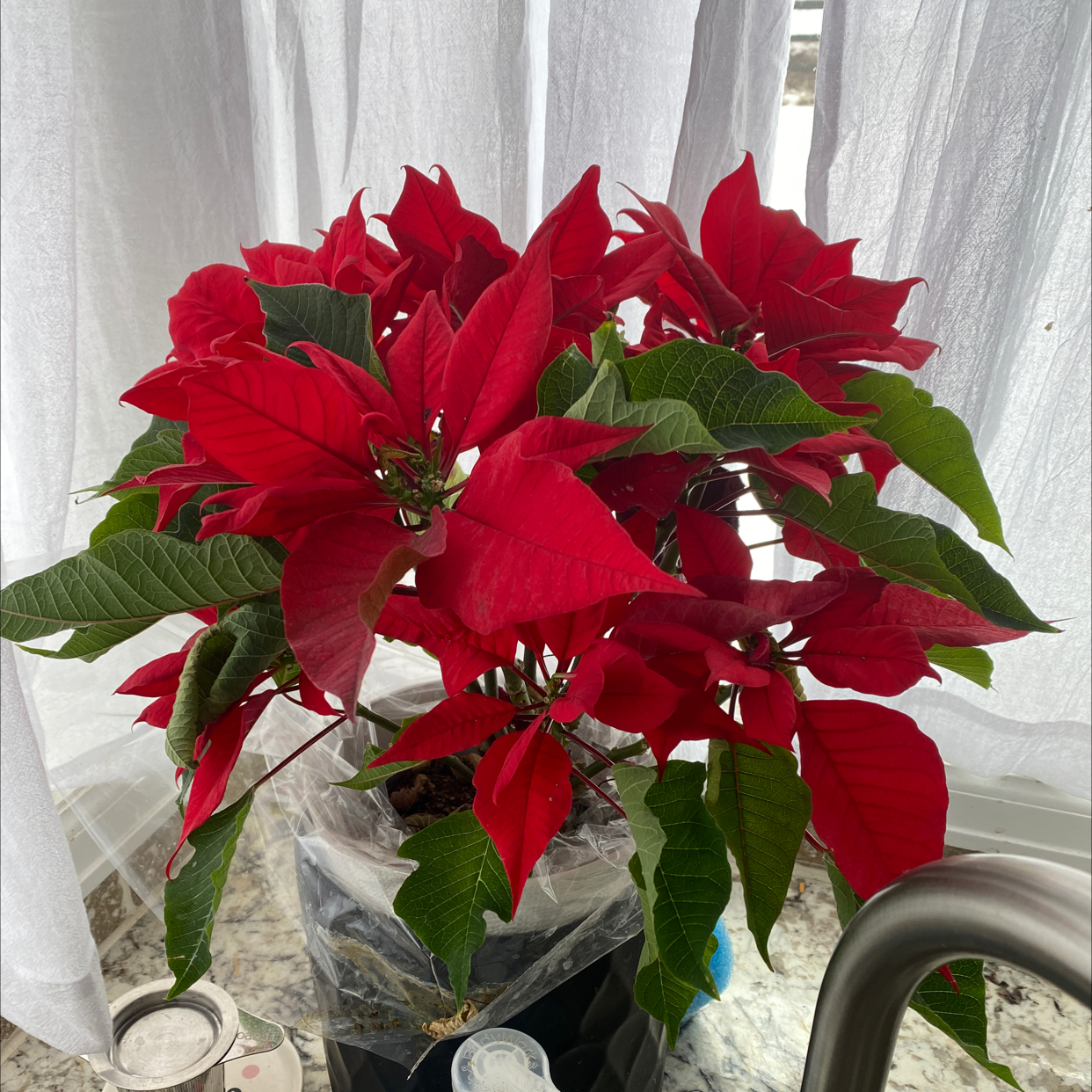
Poinsettia

How to Fertilize Poinsettia

Euphorbia pulcherrima
Reviewed by Kiersten Rankel M.S.
Quick Answer
Use a balanced liquid fertilizer (such as 10-10-10 or 20-20-20) diluted to half strength every two weeks from spring through early fall. Stop feeding entirely once the bracts begin to color up in late fall, and skip winter while the plant rests.

When Should I Start Feeding My Poinsettia?

Because Poinsettias need a strict dark period in fall to trigger bract coloring, your feeding schedule should follow the natural light cycle in your region.

US feeding regions map
Pacific Mar–Oct
Mountain May–Sep
Midwest Apr–Sep
Northeast Apr–Sep
Southeast Mar–Oct
Stay on top of plant care
Get seasonal reminders for watering and fertilizing — personalized for your plants.
Try Greg Free

How Often Should I Fertilize My Poinsettia?

Feed every two weeks from spring through early fall, when the plant is actively producing new leaves and stems. This is the period when your Poinsettia is building the energy reserves it needs for its colorful display later.

Begin tapering in early October. Reduce to once a month at half strength for a few weeks, then stop completely. Feeding during the bract-coloring phase can delay or reduce the color change.

If you see leaf edges turning brown or white crust on the soil surface, you may be feeding too much. Flush the soil with plain water and skip the next feeding. Pale, small new leaves during spring or summer can signal too little fertilizer.

Feeding Calendar
Spring & Summer
Half-strength balanced liquid every 2 weeks
Early Fall
Half-strength monthly, then stop before dark treatment begins
Late Fall & Winter
No feeding while bracts color and through dormancy

What Is the Best Fertilizer for Poinsettia?

A balanced liquid fertilizer with an even NPK ratio like 10-10-10 or 20-20-20 works well for Poinsettias. The equal nutrient spread supports both the lush green foliage that grows through summer and the colorful bracts that develop in fall.

Dilute to half the label rate each time you feed. Poinsettias are sensitive to salt buildup in the soil, so a lighter, more frequent approach is safer than occasional heavy doses.

Liquid fertilizer is the best format because it distributes evenly through the root zone. Slow-release granules can work during the summer growth phase, but switch to liquid in early fall so you can stop feeding quickly when the bract-coloring period begins.

Synthetic
Balanced water-soluble formula that dissolves cleanly. Use 1/2 teaspoon per gallon for Poinsettias.
Affordable liquid concentrate found at most garden centers. Use 3-4 drops per quart for a gentle feed.
Organic
Gentle liquid organic option that won't burn sensitive Poinsettia roots. Apply full strength every 2 weeks.
A mild, slow-release amendment. Mix a thin layer into the top inch of soil when repotting in spring.

How Do I Fertilize My Poinsettia?

1
Water your plant first
Give the soil a thorough watering about an hour before fertilizing. Dry roots are more vulnerable to fertilizer burn, especially with Poinsettias.
2
Dilute to half strength
Mix your balanced liquid fertilizer at half the label concentration. For most products, that means about 1/4 teaspoon per gallon of water.
3
Pour evenly over the soil
Apply the diluted solution around the base of the plant until it begins to drain from the bottom. Avoid splashing the leaves and bracts, as fertilizer residue can cause spots.
4
Let it drain completely
Never let the pot sit in the runoff. Empty the saucer after 15 minutes to prevent root rot and salt buildup.
5
Stop before dark treatment
When you begin providing 14 hours of uninterrupted darkness each night (usually early October), stop all feeding. Nutrients during this phase can interfere with bract coloring.

Got More Questions?

Can I use coffee grounds on my Poinsettia?
It is best to avoid coffee grounds. Poinsettias prefer slightly acidic to neutral soil, and coffee grounds can lower the pH unpredictably. They also retain moisture and may encourage fungal issues in the dense root zone.
What happens if I over-fertilize my Poinsettia?
You will likely see brown, crispy leaf edges and a white salt crust on the soil surface. In severe cases the lower leaves drop prematurely. Flush the pot with plain water several times and skip feeding for a month.
Should I fertilize my Poinsettia during the holidays?
No. During the winter display period (November through February), the plant is not actively growing. Feeding now wastes fertilizer and risks salt damage to the roots.
Can I keep fertilizing to make the bracts stay red longer?
Fertilizer will not extend bract color. The bracts are modified leaves that color in response to long dark nights, not nutrients. Feeding during this phase can actually push new green growth that dilutes the display.
Do I need a special Poinsettia fertilizer?
No. Any balanced, water-soluble houseplant fertilizer works fine. The key is to dilute it and stick to the schedule, not to buy a specialty product.
Stay on top of plant care
Get seasonal reminders for watering and fertilizing — personalized for your plants.
Try Greg Free

About This Article

Kiersten Rankel M.S.
Botanical Data Lead at Greg · Plant Scientist
About the Author
Kiersten Rankel holds an M.S. in Ecology & Evolutionary Biology from Tulane University. A certified Louisiana Master Naturalist, she has over a decade of experience in science communication, with research spanning corals, cypress trees, marsh grasses, and more. At Greg, she curates species data and verifies care recommendations against botanical research.
See Kiersten Rankel's full background on LinkedIn.
Editorial Process
Fertilizer recommendations verified against Euphorbia pulcherrima growth data from Greg's botanical database, cross-referenced with USDA hardiness zone data and published horticultural research.
9,732+ Greg users growing this plant
USDA hardiness zones 9a–11b